24 Ugly Animals with Names, Pictures, and Reasons They Look This Way.

Ugly animals are species whose bodies look unfamiliar to people because evolution optimized them for pressure, camouflage, burrowing, scavenging, signal display, or survival in extreme habitats.

24
Species
72
Photos
5
Critically endangered
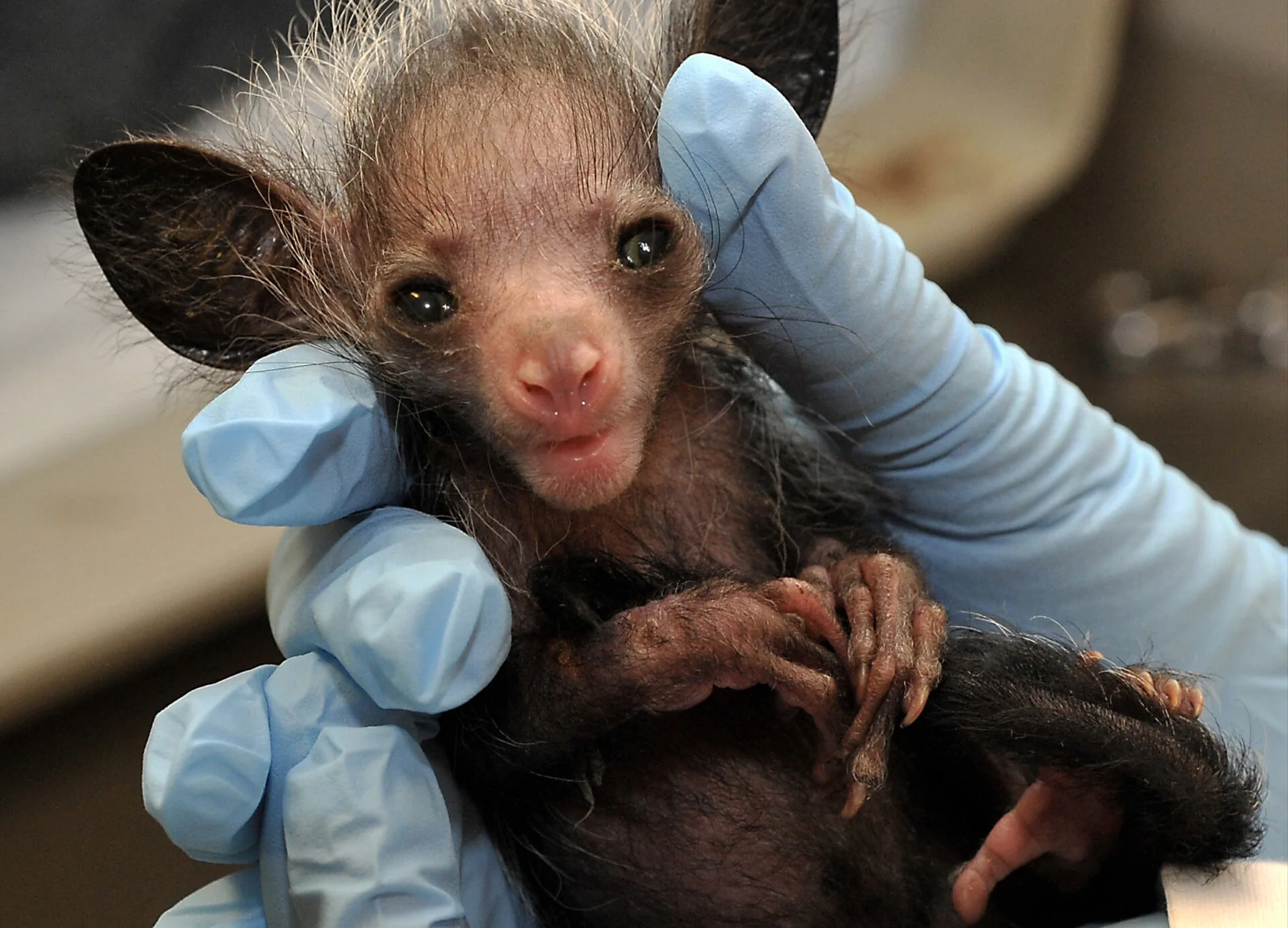
Aye-aye close up showing large ears, staring eyes, and thin fingers
Featured profile EN

Ugly mammals

Aye-aye

Daubentonia madagascariensis

Definition and context

What are ugly animals, exactly?

Ugly animals is a human label for species whose faces, skin, mouths, noses, or proportions look unfamiliar to people. Their appearance still follows function: pressure resistance, camouflage, sensory specialization, burrowing, scavenging, or mate signaling.

This encyclopedia covers 24 such species. You can filter the cards by category, skim the names and photos, and jump to any full profile for habitat, conservation status, and the specific biological trait that explains why each animal looks the way it does.

The list

Ugly animals list, filterable by type.

Filter by category, skim the cards, and select any animal to jump directly to its full profile and three-photo gallery further down the page.

Blobfish resting on the deep seafloor with a soft sagging body Aye-aye close up showing large ears, staring eyes, and thin fingers Star-nosed mole on damp soil showing its dark fur and pointed snout Goblin shark head in side view showing long snout and exposed teeth Naked mole rat on the ground showing wrinkled skin and protruding incisors Deep-sea anglerfish swimming in darkness with lure above its head Pink axolotl resting on a log with feathery external gills Male proboscis monkey portrait showing long drooping nose and reddish fur Saiga antelope in grassland showing its bulbous downturned nose Bald uakari portrait showing scarlet face and short pale fur Hammer-headed bat portrait showing oversized muzzle and broad ears Titicaca water frog on a rock showing loose skin folds around its body Purple frog with rounded body and pointed snout on damp ground Matamata turtle in water showing leaf-like head flaps and flat shell Alligator snapping turtle underwater with ridged shell and heavy head Close view of a Chinese giant salamander face with tiny eyes and wide mouth Close view of a California condor head with orange skin and hooked beak Monkfish on the seafloor showing broad head and camouflaged skin Male elephant seal resting on a beach with inflated nose and heavy body Giant anteater walking with long snout, shaggy coat, and bushy tail Warthog face showing tusks, wart pads, and coarse bristles Angolan free-tailed bat face showing flattened nose and large ears Black rain frog front view with round body and frowning face Dong Tao chicken side view highlighting bulky body and oversized legs

Conservation status legend

LC Least Concern
NT Near Threatened
VU Vulnerable
EN Endangered
CR Critically Endangered
DD Data Deficient

Each card links to a full species profile below, with three photos, habitat, conservation status, and an explanation of the trait that makes it look unusual.

Full profiles

Ugly animal profiles with all 72 photos.

Every species is documented with three original photos, its scientific name, natural habitat, conservation status, and a precise explanation of the specific trait that makes it look the way it does.

Facts reviewed against IUCN Red List searches, institutional species profiles, and cited research.

Fish Data Deficient

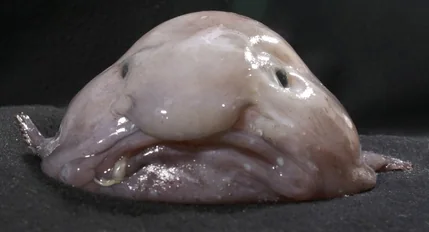
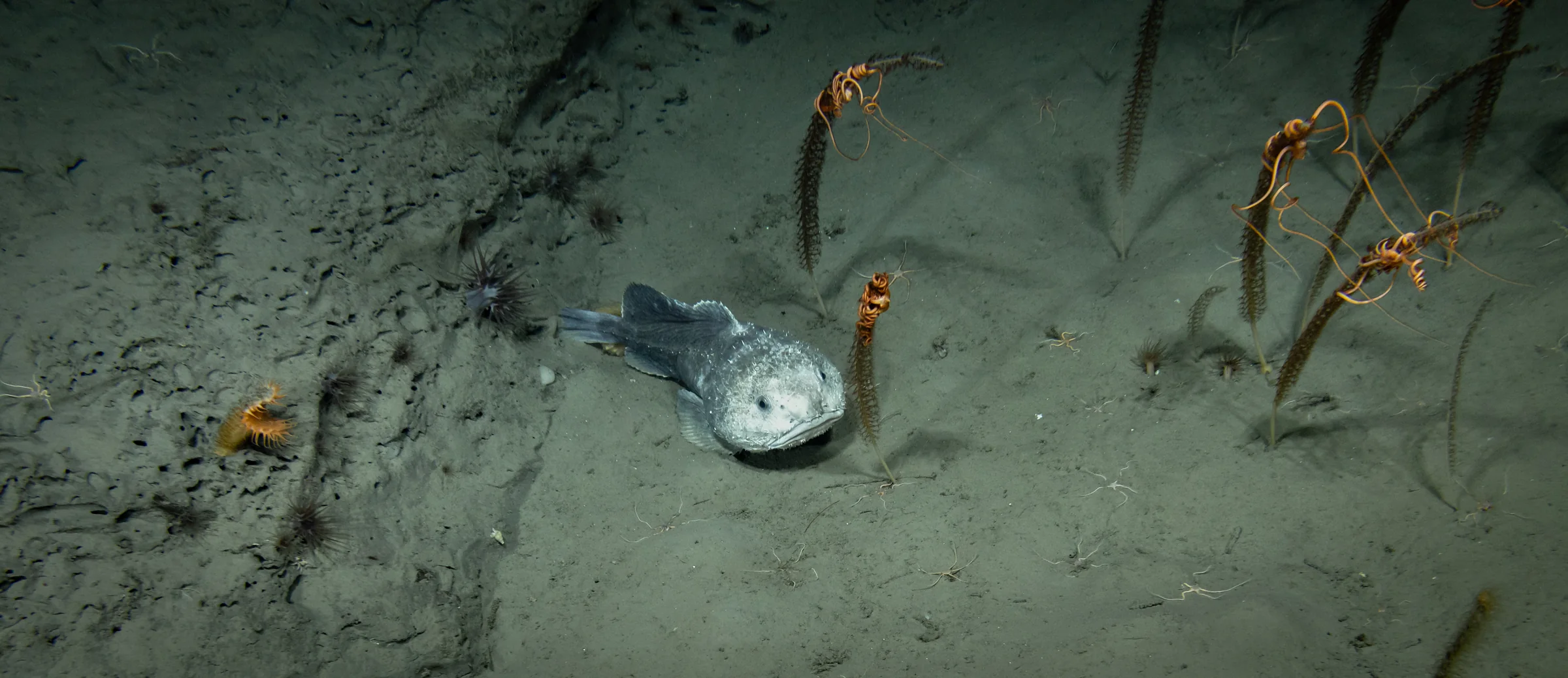
Blobfish

Psychrolutes marcidus

Why it looks ugly

Gelatinous sagging body and drooping facial structure

The blobfish lives at 1,200m depth where pressure reaches 120 atmospheres. Its body density nearly equals seawater, which removes the need for a swim bladder. The drooping gelatinous appearance occurs at the surface. In its habitat it resembles a more typical fish.

Fun fact It has almost no muscle mass and drifts above the seafloor, eating what passes in front of it.

Category
Fish
Status
Data Deficient
Habitat
Deep ocean floor, 900-1,200m depth, Southern Ocean
Mammal Endangered

Aye-aye

Daubentonia madagascariensis

Why it looks ugly

Bat-like ears, rodent incisors, and a skeletal elongated middle finger

The aye-aye is a nocturnal lemur with continuously growing incisors, independently rotating ears, and a middle finger far longer than the others. It taps bark rapidly to detect hollow insect chambers and then extracts prey with that finger.

Fun fact In Malagasy folklore, an aye-aye pointing its long finger at you is considered an omen of death.

Category
Mammal
Status
Endangered
Habitat
Tropical rainforest, Madagascar
Mammal Least Concern

Star-nosed Mole

Condylura cristata

Why it looks ugly

Twenty-two pink fleshy tentacles arranged in a star on the nose

The star-nosed mole has twenty-two nasal tentacles containing around 25,000 sensory receptors. It identifies and consumes prey in roughly 120 milliseconds, making it the fastest-eating mammal known.

Fun fact It can smell underwater by blowing and re-inhaling bubbles against submerged objects.

Category
Mammal
Status
Least Concern
Habitat
Wet lowland soil and marshes, northeastern North America
Fish Least Concern

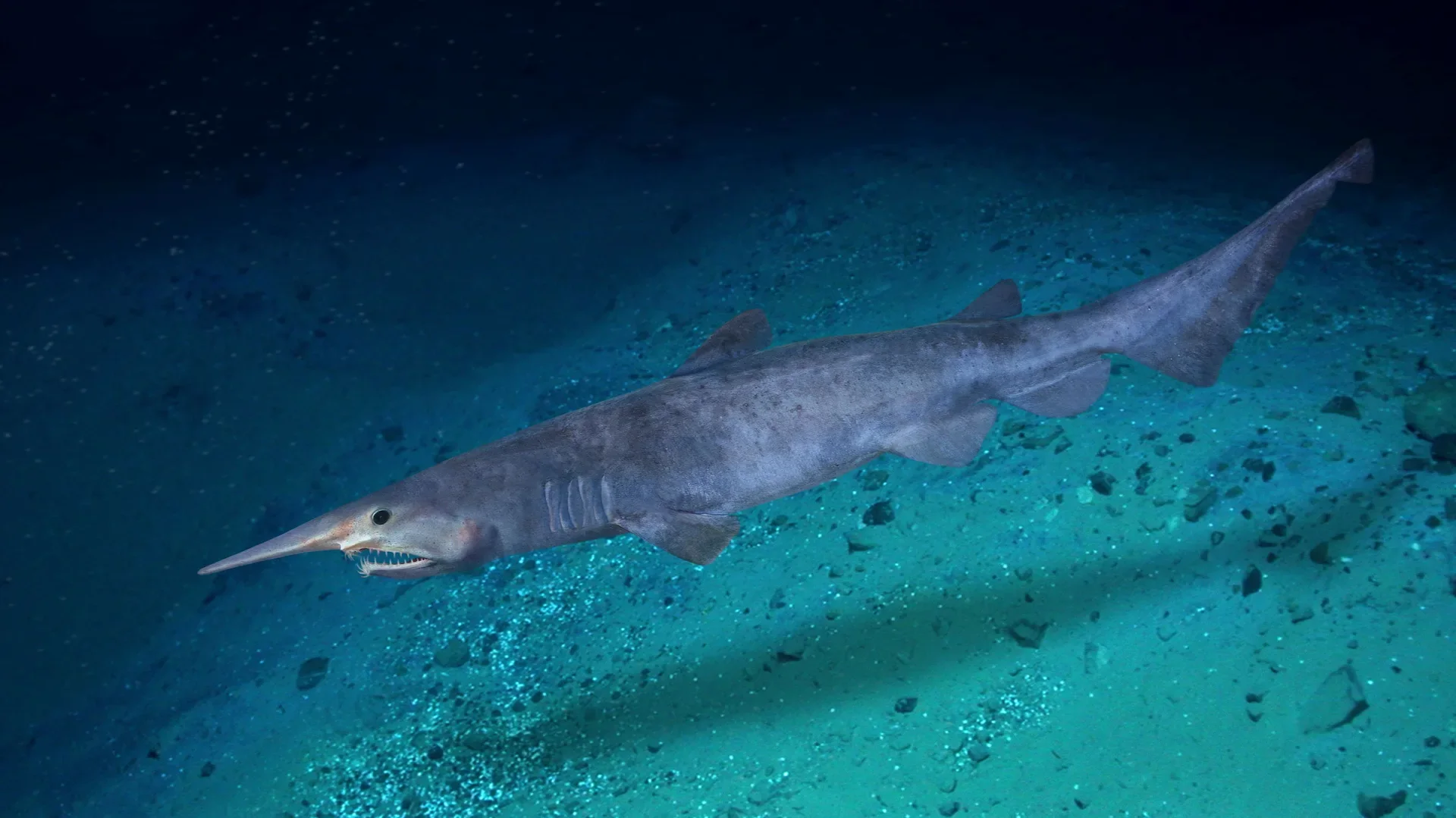
Goblin Shark

Mitsukurina owstoni

Why it looks ugly

A protruding flat rostrum and extendable slingshot jaws

The goblin shark has an elongated rostrum packed with electroreceptors for detecting prey in darkness. Its jaws can launch forward at high speed, allowing it to seize prey without moving the body much at all.

Fun fact Its pink color comes from blood vessels showing through translucent skin.

Category
Fish
Status
Least Concern
Habitat
Deep ocean slope, 270-1,300m depth, worldwide
Mammal Least Concern

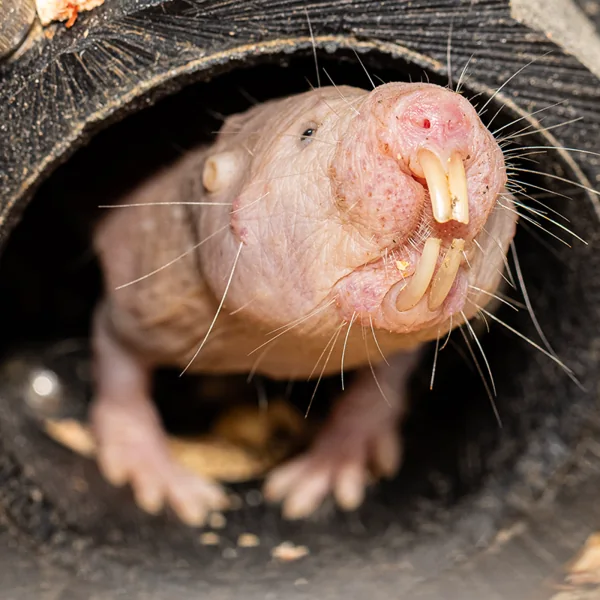
Naked Mole Rat

Heterocephalus glaber

Why it looks ugly

Hairless wrinkled skin and protruding incisors

The naked mole rat is the only cold-blooded mammal. It has unusual pain resistance, remarkable cancer resistance, and extreme tolerance for low oxygen. Its incisors move independently and work almost like two tiny tools.

Fun fact It can survive for many minutes with almost no oxygen by switching its metabolism to a fructose-based pathway.

Category
Mammal
Status
Least Concern
Habitat
Underground tunnel systems, East Africa
Fish Least Concern

Anglerfish

Lophiiformes

Why it looks ugly

A bioluminescent head lure and needle-like inward-pointing teeth

The anglerfish uses a glowing lure that extends from its head to attract prey in complete darkness. In some species the male permanently fuses to the female and becomes a long-term reproductive appendage.

Fun fact After fusing with the female, the male can lose his eyes and internal organs, leaving the testes as the only major remaining function.

Category
Fish
Status
Least Concern
Habitat
Deep ocean, 200-2,000m depth, worldwide
Amphibian Critically Endangered

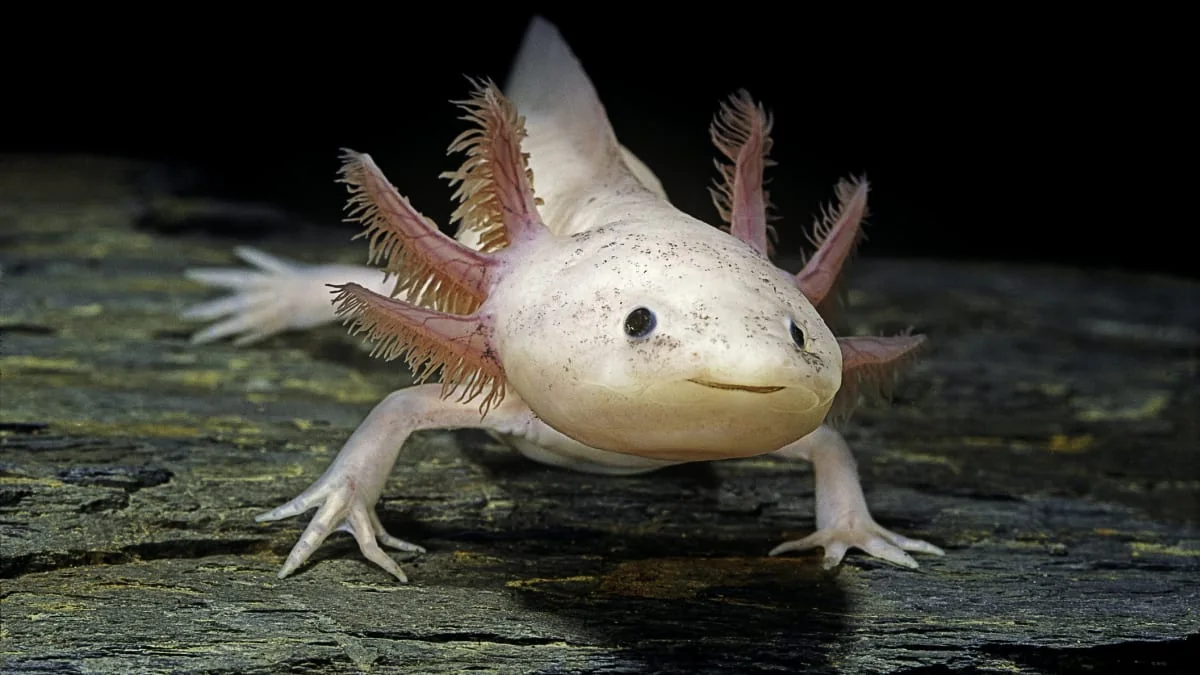
Axolotl

Ambystoma mexicanum

Why it looks ugly

Permanent external gill plumes and a perpetual larval body form

The axolotl is a neotenic salamander that keeps its larval body plan into adulthood. It regenerates limbs, heart tissue, spinal tissue, and parts of the brain with very limited scarring.

Fun fact It can regenerate the same limb repeatedly with little loss of structure or function.

Category
Amphibian
Status
Critically Endangered
Habitat
Lake Xochimilco canal system, Mexico City, Mexico
Mammal Endangered

Proboscis Monkey

Nasalis larvatus

Why it looks ugly

A pendulous overhanging nose reaching 10cm in adult males

The proboscis monkey is an arboreal primate whose males grow an enlarged nose that amplifies calls. Nose size functions in sexual selection and may help signal maturity and dominance.

Fun fact It is a strong swimmer and regularly crosses wide rivers to avoid predators.

Category
Mammal
Status
Endangered
Habitat
Coastal mangrove and riverine forest, Borneo
Mammal Critically Endangered

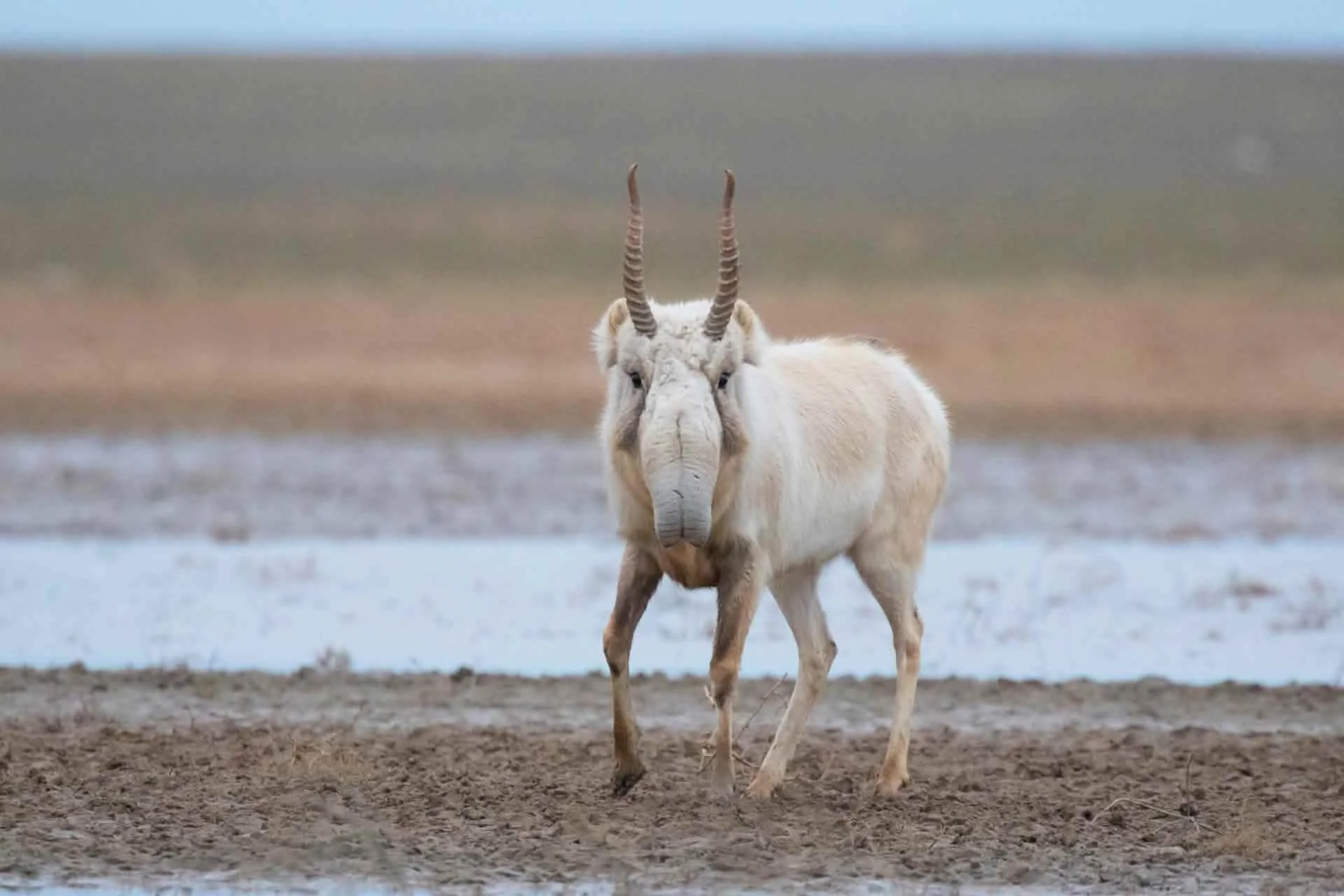
Saiga Antelope

Saiga tatarica

Why it looks ugly

A bulbous drooping proboscis covering the mouth

The saiga antelope has a large downward-facing nose that filters dust during summer migration and warms cold air before it reaches the lungs in winter. It is one of the most distinctive grazing mammals on Earth.

Fun fact A mass die-off in 2015 killed around 200,000 saiga in just a few weeks.

Category
Mammal
Status
Critically Endangered
Habitat
Eurasian steppe grassland, Kazakhstan and Mongolia
Mammal Vulnerable

Bald Uakari

Cacajao calvus

Why it looks ugly

A bright crimson bald head and skeletal scraggly frame

The bald uakari has a hairless scarlet face caused by dense blood vessels close to the skin. Face color helps signal health, since pale individuals are more likely to be sick or parasite-infected.

Fun fact The redder the face, the healthier and more attractive the individual appears to other uakaris.

Category
Mammal
Status
Vulnerable
Habitat
Flooded Amazon rainforest, Brazil and Peru
Mammal Least Concern

Hammer-headed Bat

Hypsignathus monstrosus

Why it looks ugly

An enlarged hammer-shaped head with inflatable nasal pouches

The hammer-headed bat is Africa's largest bat. Males develop oversized heads, resonating vocal structures, and huge lips that help project loud mating calls during lek displays.

Fun fact Females look like fairly ordinary fruit bats. The exaggerated head shape is mostly a male trait.

Category
Mammal
Status
Least Concern
Habitat
Tropical lowland forest, Central and West Africa
Amphibian Critically Endangered

Titicaca Frog

Telmatobius culeus

Why it looks ugly

Excessive loose folds of skin covering the body

The Titicaca frog has loose skin folds that expand surface area and allow greater oxygen absorption from cold, low-oxygen water. It rarely surfaces because that skin does so much of the respiratory work.

Fun fact Researchers describe its lake-floor bouncing behavior as an aquatic version of jumping jacks.

Category
Amphibian
Status
Critically Endangered
Habitat
Lake Titicaca, Peru-Bolivia border, 3,812m altitude
Amphibian Endangered

Purple Frog

Nasikabatrachus sahyadrensis

Why it looks ugly

A bloated dark purple body with a pointed pig-like snout

The purple frog spends most of its life underground and emerges only briefly during seasonal breeding. Its lineage is ancient, and its body is specialized for burrowing and feeding on termites below the surface.

Fun fact Its closest living relatives live in the Seychelles, thousands of kilometers away.

Category
Amphibian
Status
Endangered
Habitat
Underground soil, Western Ghats, India
Reptile Near Threatened

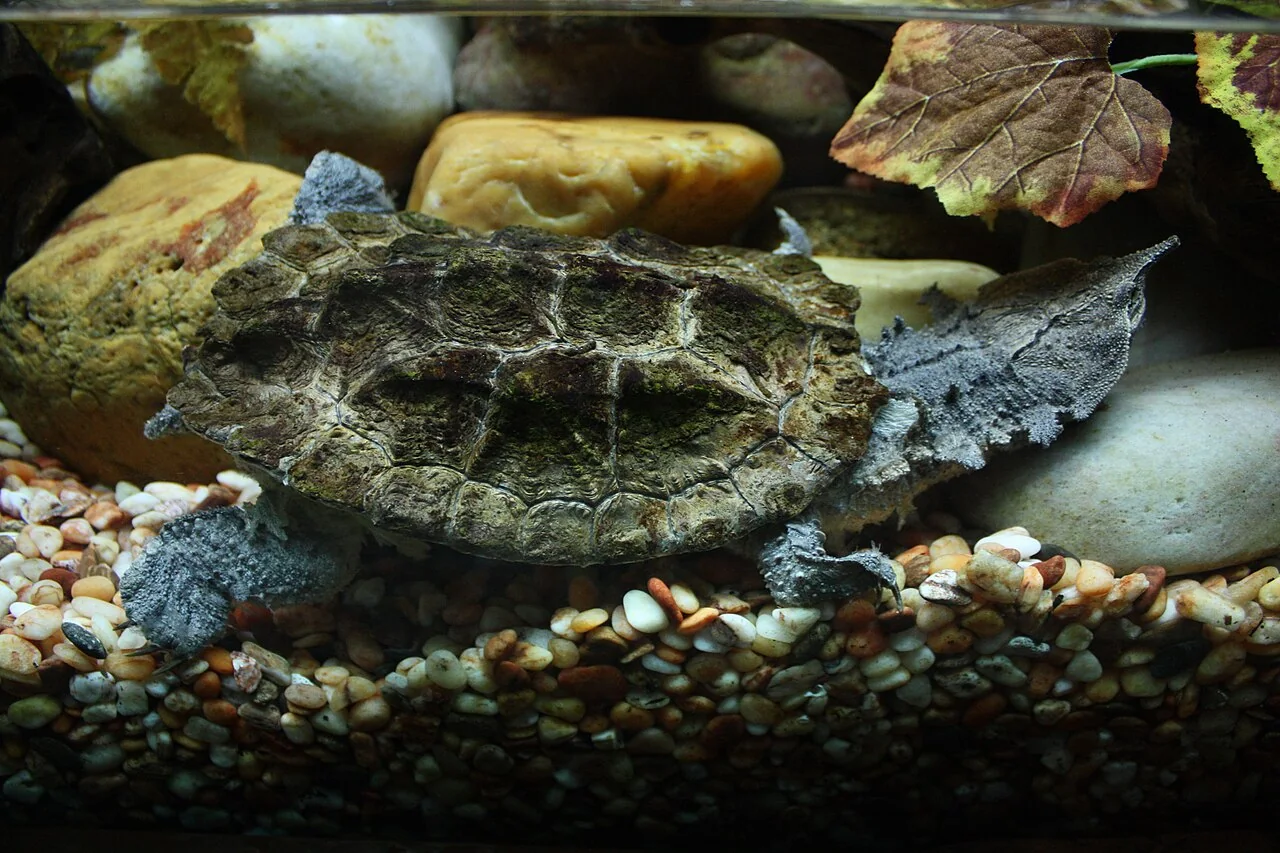
Matamata Turtle

Chelus fimbriata

Why it looks ugly

A flat triangular head with leaf-like skin fringes

The matamata turtle looks like submerged leaf litter. It relies on camouflage and suction feeding rather than speed, drawing prey into its mouth with a rapid expansion of the throat and jaws.

Fun fact It is a weak swimmer and often walks along the riverbed instead of actively swimming.

Category
Reptile
Status
Near Threatened
Habitat
Slow-moving rivers and swamps, Amazon and Orinoco basins
Reptile Vulnerable

Alligator Snapping Turtle

Macrochelys temminckii

Why it looks ugly

A hooked beak, spiked shell, and worm-like tongue lure

The alligator snapping turtle is a giant freshwater ambush predator. It opens its mouth and wiggles a tongue shaped like a worm, luring fish directly into its jaws.

Fun fact Its tongue lure moves reflexively, making the trap convincing even while the turtle stays still.

Category
Reptile
Status
Vulnerable
Habitat
Freshwater rivers and lakes, southeastern United States
Amphibian Critically Endangered

Chinese Giant Salamander

Andrias davidianus

Why it looks ugly

A massive flat body with tiny eyes and deeply folded flanks

The Chinese giant salamander is the largest amphibian on Earth. Its folded skin helps oxygen exchange, and its body is built for life in cold streams and dark underwater refuges.

Fun fact Its distress call resembles a crying infant, which led to the nickname infant fish.

Category
Amphibian
Status
Critically Endangered
Habitat
Rocky cold mountain streams, central and southern China
Bird Critically Endangered

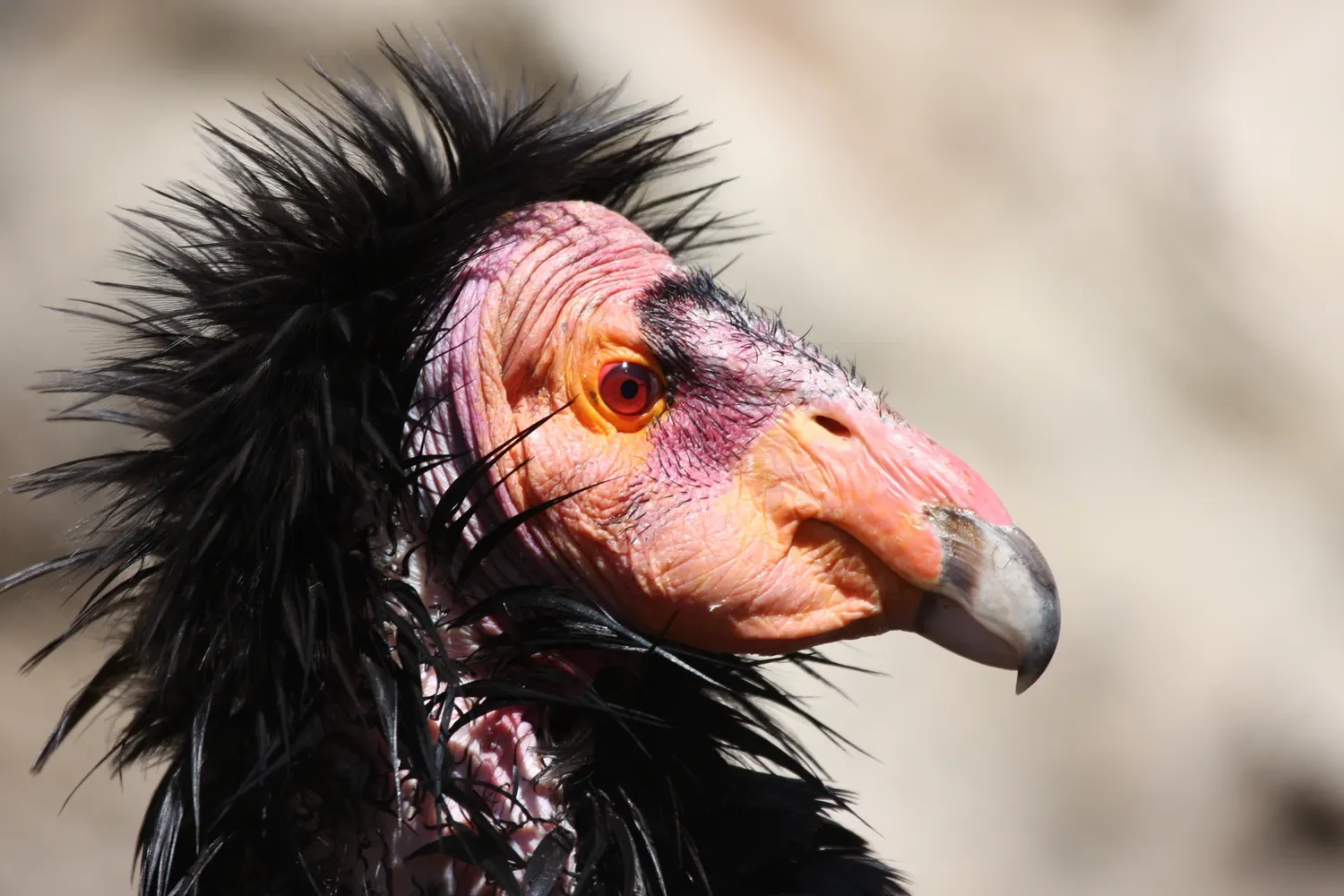
California Condor

Gymnogyps californianus

Why it looks ugly

A bald orange-pink head with loose neck wattles and a fleshy throat pouch

The California condor has one of the largest wingspans of any land bird in North America. Its bald head is an adaptation for scavenging because bare skin stays cleaner when feeding inside carcasses.

Fun fact The entire wild population once disappeared, and every living condor today descends from a captive recovery effort.

Category
Bird
Status
Critically Endangered
Habitat
Rocky shrubland and coniferous forest, western North America
Fish Least Concern

Monkfish

Lophius piscatorius

Why it looks ugly

A huge mouth spanning most of the head and warty camouflage skin

The monkfish lies flat against the seafloor with a body built for ambush. Its mouth opens with powerful suction and can engulf prey surprisingly large compared with its own size.

Fun fact Seabirds have been found intact inside monkfish stomachs.

Category
Fish
Status
Least Concern
Habitat
Sandy ocean floor, 20-1,000m depth, North Atlantic
Mammal Least Concern

Elephant Seal

Mirounga leonina

Why it looks ugly

An inflatable trunk-like proboscis and massive bulk

The southern elephant seal is among the largest carnivorous mammals on Earth. Adult males grow an inflated nasal proboscis that amplifies roaring calls during breeding conflicts.

Fun fact It can sleep during deep dives and then surface automatically when the need to breathe wakes it.

Category
Mammal
Status
Least Concern
Habitat
Subantarctic and subarctic regions, open ocean and rocky beaches
Mammal Vulnerable

Giant Anteater

Myrmecophaga tridactyla

Why it looks ugly

A 60cm elongated snout and a prehensile sticky tongue

The giant anteater has no teeth and feeds with a long sticky tongue that flicks rapidly into ant and termite colonies. Its body is specialized for tearing open nests and consuming insects efficiently.

Fun fact Its forelimb claws are strong enough to defend against large predators such as pumas.

Category
Mammal
Status
Vulnerable
Habitat
Grasslands and tropical forests, Central and South America
Mammal Least Concern

Warthog

Phacochoerus africanus

Why it looks ugly

Facial wart pads, heavy tusks, and a coarse bristle mane

The warthog's so-called warts are protective facial pads that cushion the head during combat. Its tusks are used for digging, defense, and dominance contests, while the mane adds to the species' rough silhouette.

Fun fact Warthogs often graze on their front knees because of their head shape and feeding posture.

Category
Mammal
Status
Least Concern
Habitat
Savanna and open grassland, sub-Saharan Africa
Mammal Least Concern

Angolan Free-tailed Bat

Coleura afra

Why it looks ugly

A flattened pig-like nose disc and oversized wrinkled ears

The Angolan free-tailed bat has a distinctly flattened nasal disc and unusually large ears for its body size. Those structures help shape and direct echolocation as it navigates caves and hunts in darkness.

Fun fact It produces a large range of vocalizations, most of which are beyond human hearing.

Category
Mammal
Status
Least Concern
Habitat
Limestone caves, East and Central Africa
Amphibian Least Concern

Black Rain Frog

Breviceps fuscus

Why it looks ugly

A permanent scowl and a nearly spherical inflated body

The black rain frog has a compact round body, short limbs, and a face that reads as permanently grumpy to humans. It spends most of its life underground and is poorly built for swimming or graceful movement.

Fun fact When disturbed, it emits a squeak that sounds strikingly similar to a rubber toy.

Category
Amphibian
Status
Least Concern
Habitat
Fynbos biome and forest, South African southern Cape
Bird Least Concern

Dong Tao Chicken

Gallus gallus domesticus (Dong Tao)

Why it looks ugly

Enormous scaly legs that can reach 10cm in diameter

The Dong Tao chicken is a Vietnamese domestic breed known for extremely thick legs covered in red and gray scales. It was historically bred for ceremonial feasts and remains visually distinctive because of its heavy build.

Fun fact A premium pair of Dong Tao chicken legs can sell for very high prices in specialty markets.

Category
Bird
Status
Least Concern
Habitat
Dong Tao village, Hung Yen Province, Vietnam (domestic)

The biology of ugly animals

Why animals look ugly to humans.

Ugly appearance is usually a human reaction to useful anatomy. The same trait that looks awkward in a photograph often improves camouflage, oxygen absorption, feeding efficiency, cold-air filtration, echolocation, or mate signaling in the wild.

Deep sea pressure

Bodies built for compression

Blobfish, goblin sharks, anglerfish, and monkfish are shaped by darkness, pressure, and ambush feeding. At the surface they can look collapsed or monstrous because the environment that supports their anatomy has changed.

Camouflage and scavenging

Rough skin has a job

Matamata turtles resemble rotting leaves. California condors keep bald heads cleaner while feeding. Loose skin, bald patches, folds, and strange textures often solve very specific ecological problems.

Burrowing and low oxygen

Underground life reshapes bodies

Purple frogs, naked mole rats, black rain frogs, and Chinese giant salamanders look unusual because they spend much of life below ground or in low-oxygen habitats. Their proportions prioritize digging, gas exchange, and survival.

Signal display

Some ugly traits attract mates

Proboscis monkeys, elephant seals, bald uakaris, and hammer-headed bats carry extreme faces or noses because sexual selection rewards loud signals, visual health cues, and standout display features.

Sources:Blobfish overviewAye-aye species profileTiticaca water frog profileSouthern elephant seal profileLake Titicaca frog physiology

Facts reviewed against IUCN Red List searches, institutional species profiles, and cited research.

Questions

Frequently Asked.
Factually Answered.

No opinion. No hedging. Every answer is factual, specific, and grounded in documented research on ugly animal biology and conservation science.

What is the ugliest animal in the world?

The blobfish is widely cited as the world's ugliest animal because its decompressed surface appearance looks gelatinous and collapsed. In its natural deep-sea habitat, pressure supports its body shape and it resembles a more typical fish.

What are ugly animals?

Ugly animals are not a scientific category. The phrase is a human label for species whose skin, mouths, noses, eyes, or body proportions look unfamiliar or unattractive to people. This guide uses the term as a visual grouping, then documents each species with factual biological data.

Why do some animals look ugly to humans?

Animals look ugly to humans when evolved survival traits diverge from familiar mammal features such as symmetry, fur, smooth skin, or proportionate faces. Deep-sea pressure, camouflage, underground life, and specialized feeding strategies produce bodies optimized for function rather than visual appeal.

Are ugly animals more endangered than beautiful animals?

Some ugly animals are severely threatened, but ugliness itself does not determine extinction risk. Many species on this page are endangered or critically endangered because of habitat loss, pollution, hunting, invasive species, or climate pressure. Their unusual appearance can still contribute to lower public attention.

Which ugly animals on this page are fish?

The fish group on this page includes the blobfish, anglerfish, goblin shark, and monkfish. They are grouped together because people often search for ugly fish separately from ugly mammals, frogs, birds, or reptiles.

Can I see ugly animals with pictures and names on one page?

Yes. This page is designed as a single reference resource with names, scientific names, category labels, conservation status, and photo galleries for 24 ugly animals. Use the filters at the top of the list, then jump to the full profile for any species.

Which ugly animal has the most extraordinary ability?

The naked mole rat has one of the most unusual biological profiles on this page. It survives long periods with almost no oxygen, feels little acid pain in its skin, shows rare cancer resistance, and lives far longer than similar-sized rodents.

How many ugly animals are featured here?

This single-page guide documents 24 ugly animals across fish, mammals, amphibians, reptiles, and birds. The page includes 72 photos total, with three images for each animal profile.

Sources:Blobfish fact profileIUCN Red ListDuke Lemur Center aye-aye profileSmithsonian naked mole-rat profileCharisma and species-reporting bias study

Facts reviewed against IUCN Red List searches, institutional species profiles, and cited research.

Still curious? The answers are in the animals themselves.

Explore all 24 species

Why it matters

Ugly animals still deserve attention.

People usually protect the species they find beautiful first. Animals with smooth fur, expressive eyes, and familiar mammal proportions are easier to market, easier to fund, and easier to remember. Species with exposed skin, distorted noses, loose folds, or scavenger anatomy rarely get the same emotional advantage.

That does not make ugly animals less important. Many fill narrow ecological roles: deep-sea ambush predators, termite specialists, carrion cleaners, oxygen-adapted amphibians, and burrowers built for extreme environments. Their appearance often represents specialized success, not biological failure.

Ugly Animals exists to document these species clearly with photos, scientific names, and factual explanations, so that the animals people find strange or off-putting are at least understood, even when they are not loved.

Sources:IUCN Red ListAnimal charisma and conservation preferences studyCharismatic species research overview

Facts reviewed against IUCN Red List searches, institutional species profiles, and cited research.

Barbora Thiella, wildlife writer and author of Ugly Animals

About the author

Barbora Thiella

Wildlife writer and conservation researcher

Barbora Thiella has spent over a decade documenting species that conservation campaigns routinely overlook. Trained in zoology at Charles University in Prague, she shifted her focus from fieldwork to editorial writing after recognising that most public wildlife content centres on a narrow group of photogenic mammals.

Her writing covers animal biology with an emphasis on functional morphology. In other words, every strange face, loose fold of skin, or protruding jaw exists because it solves a specific problem in a specific habitat. She has contributed to wildlife publications across Europe and has led documentation projects covering amphibians in Central Asia and deep-sea fish in the North Atlantic.

Ugly Animals is her effort to produce a single, factually grounded reference for the species most guides ignore. Each one is documented with the same rigour applied to any flagship species.

Specialisation

Functional morphology and neglected species

Background

BSc Zoology, Charles University Prague

Based in

Prague, Czech Republic