
Deep-sea fish guide
Blobfish: facts, habitat, diet and the truth about its face
The blobfish is famous as the world’s ugliest animal, but its reputation rests on a deep-sea specimen photographed after capture. At depth, a living blobfish keeps a recognisable fish shape.
Jump to the facts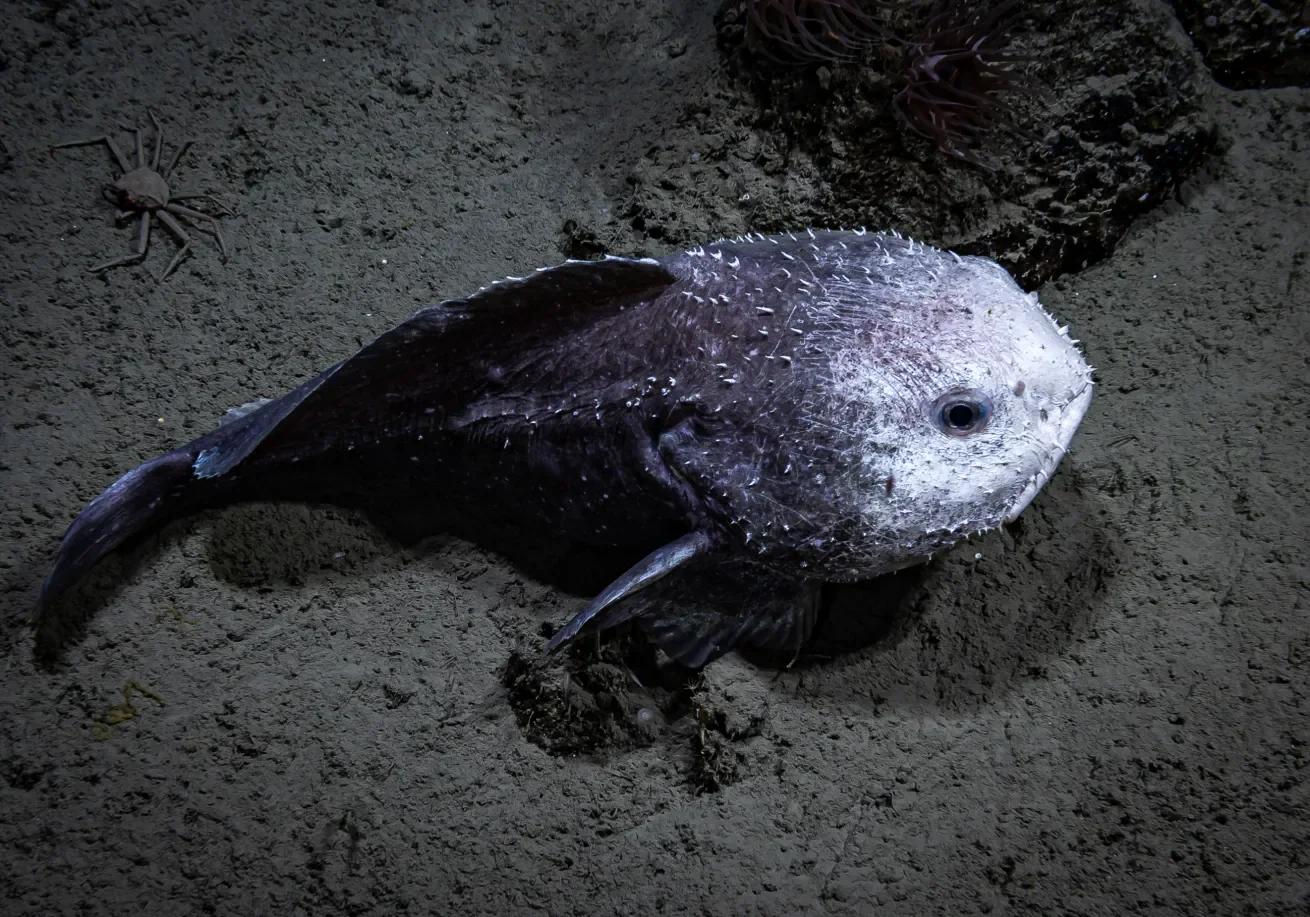
At a glance
Blobfish quick facts
- Common name
- Blobfish or smooth-head blobfish
- Scientific identity
- Several Psychrolutes species share the name
- Family
- Psychrolutidae, the fathead sculpins
- Habitat
- Deep marine water, usually close to the seafloor
- P. marcidus depth
- 600 to 1,200 metres
- P. marcidus length
- Up to 30 centimetres
- Known diet evidence
- Limited; gastropods reported in some relatives
- P. marcidus assessment
- Not Evaluated by the IUCN Red List
Species-level depth, size and assessment data refer to Psychrolutes marcidus. Sources: FishBase and the Australian Museum.
Definition
What is a blobfish?
A blobfish is a soft-bodied marine fish in the family Psychrolutidae, a group also known as fathead sculpins. The common name is used for several species rather than one perfectly defined animal. Many live on or near the seafloor, and some occur at depths far beyond ordinary diving range.
That distinction matters because photographs, measurements and observations from one species are often copied onto another. A careful blobfish guide should name the species whenever the evidence allows it and say when the identification is uncertain.
Two names commonly confused
What is the blobfish’s scientific name?
There is no single answer for every animal called a blobfish. Two names appear most often:
Smooth-head blobfish
Psychrolutes marcidus
FishBase records this species from Australian waters, including southern Australia and Tasmania, at depths of 600 to 1,200 metres.
The famous Mr Blobby specimen
Psychrolutes microporos
The Australian Museum identifies its 2003 NORFANZ specimen as this species. It was collected north-west of New Zealand at 1,013 to 1,340 metres.
The World Register of Marine Species lists both as accepted species in the genus Psychrolutes. The common name is useful for readers, but the scientific name is essential when a claim applies to only one species.
The famous transformation
Why blobfish look different underwater and at the surface
At depth, a blobfish has a broad head, tapered body, visible fins and a recognisable fish shape. The drooping pink face appears after a soft-bodied deep-sea specimen has been caught, hauled through a huge pressure change and removed from the support of the surrounding water.
Pressure is part of the explanation, but the simple claim that pressure alone holds the fish together is incomplete. Nets, rapid decompression, temperature change, gravity and time out of water can all damage or distort soft tissue. The surface photograph is genuine. It is not a portrait of a healthy animal in its normal environment.
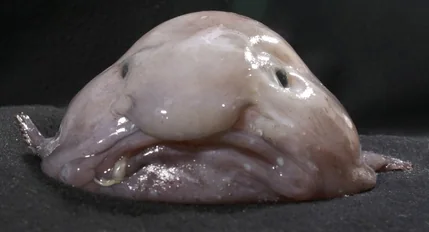
Species identification for many online blobfish images is uncertain. These photographs demonstrate the condition change and are not presented as two photographs of the same individual.
Habitat and distribution
Where do blobfish live?
Blobfishes live in marine waters, often on continental slopes and near the seabed. The family Psychrolutidae occurs across the Atlantic, Indian and Pacific oceans, from about 100 to 2,800 metres according to the Australian Museum. Individual species occupy narrower ranges.
Psychrolutes marcidus is recorded by FishBase from the southwest Pacific in Australian waters, from off New South Wales to southern Australia and Tasmania. Its reported depth range is 600 to 1,200 metres. Mr Blobby, a P. microporos specimen, was collected north-west of New Zealand at roughly 1,013 to 1,340 metres.
A useful rule when reading blobfish facts
A depth or location for one species should not be presented as the range of every blobfish. Check the scientific name before comparing figures.
Feeding
What do blobfish eat?
The honest answer is that the diet of Psychrolutes marcidus is poorly documented. The Australian Museum says little is known about blobfish biology and notes that gastropods have been found in the stomachs of some members of the family.
That evidence supports a cautious statement that at least some blobfishes consume small bottom-dwelling animals. It does not justify a precise universal menu of crustaceans, carrion, sea urchins and whatever happens to drift past. Those popular descriptions often mix observation, inference and details from related species.
Evidence check
What scientists know, and what remains unknown
| Question | Best-supported answer | Confidence |
|---|---|---|
| Are there several blobfish species? | Yes. The name is used across multiple Psychrolutes species and the wider family. | High |
| Does the famous photo show a healthy fish at depth? | No. It shows a captured specimen at the surface. | High |
| What does P. marcidus eat? | Specific diet evidence is limited. | Low |
| How long does it live? | No reliable species-level lifespan is established in the sources reviewed. | Unknown |
| What are its main predators? | No well-supported species-level list is available. | Unknown |
| Is P. marcidus endangered? | It has not been evaluated globally by the IUCN Red List. | High |
Why the blobfish belongs here
Why is the blobfish called the world’s ugliest animal?
In 2013, the blobfish won a public online poll organised by the Ugly Animal Preservation Society and became the group’s mascot. Contemporary reporting records more than 3,000 votes, with 795 cast for the blobfish.
The result was unofficial and deliberately humorous. More importantly, voters reacted to the famous surface image of Mr Blobby. The title therefore says as much about human facial recognition and the circumstances of the photograph as it does about the fish.
Why this profile belongs here
The blobfish connects the idea of ugly animals to habitat, anatomy, evidence and conservation. Its appearance changes outside its environment, its common name hides several species, and its fame grew faster than the science. It is a clear example of why an unusual face needs context.
Explore all 24 ugly animalsConservation
Is the blobfish endangered?
Psychrolutes marcidus is Not Evaluated by the IUCN Red List. This is not a synonym for endangered, safe or data deficient. It means the species has not received a global Red List assessment.
Deep-water fishing and warming oceans are reasonable subjects for research, but the sources reviewed do not establish a population trend or a species-level threat category for P. marcidus. Claims that the blobfish is already endangered should name the species, assessment and evidence.
Common questions
Blobfish FAQ
What does a blobfish look like underwater?
A living blobfish at depth has a broad head, tapered body, dark eyes and visible fins. It still looks soft and unusual, but it keeps a recognisable fish shape. The collapsed pink face in the famous photograph belongs to a specimen removed from deep water.
Why does a blobfish look different at the surface?
Rapid decompression, capture stress, temperature change and removal from water can damage and distort its soft tissues. The surface photograph is real, but it does not show the animal in normal living conditions.
What is the scientific name of the blobfish?
The common name is used for more than one fish. Psychrolutes marcidus is the smooth-head blobfish. The famous Mr Blobby specimen is identified by the Australian Museum as Psychrolutes microporos. Both belong to the family Psychrolutidae.
Is the blobfish endangered?
Psychrolutes marcidus is listed by FishBase as Not Evaluated by the IUCN Red List. That means there is not yet a global Red List assessment for the species. It does not mean the fish is safe, endangered or extinct.
What do blobfish eat?
The precise diet of Psychrolutes marcidus is not well documented. The Australian Museum reports that some fish in the wider blobfish family have been found with gastropods in their stomachs. More specific menu lists online should be treated cautiously unless they identify the species and evidence.
Are blobfish dangerous to humans?
No known evidence suggests that blobfish are dangerous to people. Psychrolutes marcidus is a small deep-water fish that FishBase records as harmless, and people rarely encounter a living one.
Evidence and further reading
Blobfish sources
Claims on this page were checked against museum records, taxonomic databases, a species database and reporting contemporary with the 2013 poll. Where the evidence is limited, the page says so.
Source 1 · Australian Museum
Blobfish (aka Mr Blobby)Used for: Mr Blobby's identity, capture depth, family range and limits of current biological knowledge.
Source 2 · FishBase
Psychrolutes marcidus species summaryUsed for: Accepted common name, distribution, depth, maximum length and assessment status.
Source 3 · World Register of Marine Species
Psychrolutes taxon listUsed for: Accepted names for Psychrolutes species, including P. marcidus and P. microporos.
Source 4 · National Geographic
What blobfish really look like underwaterUsed for: Expert explanation of the tissue damage and shape change caused by capture from deep water.
Source 5 · The Guardian
Blobfish voted world's ugliest animalUsed for: Contemporary report of the 2013 public poll and vote count.