 01Fish
Psychrolutes species
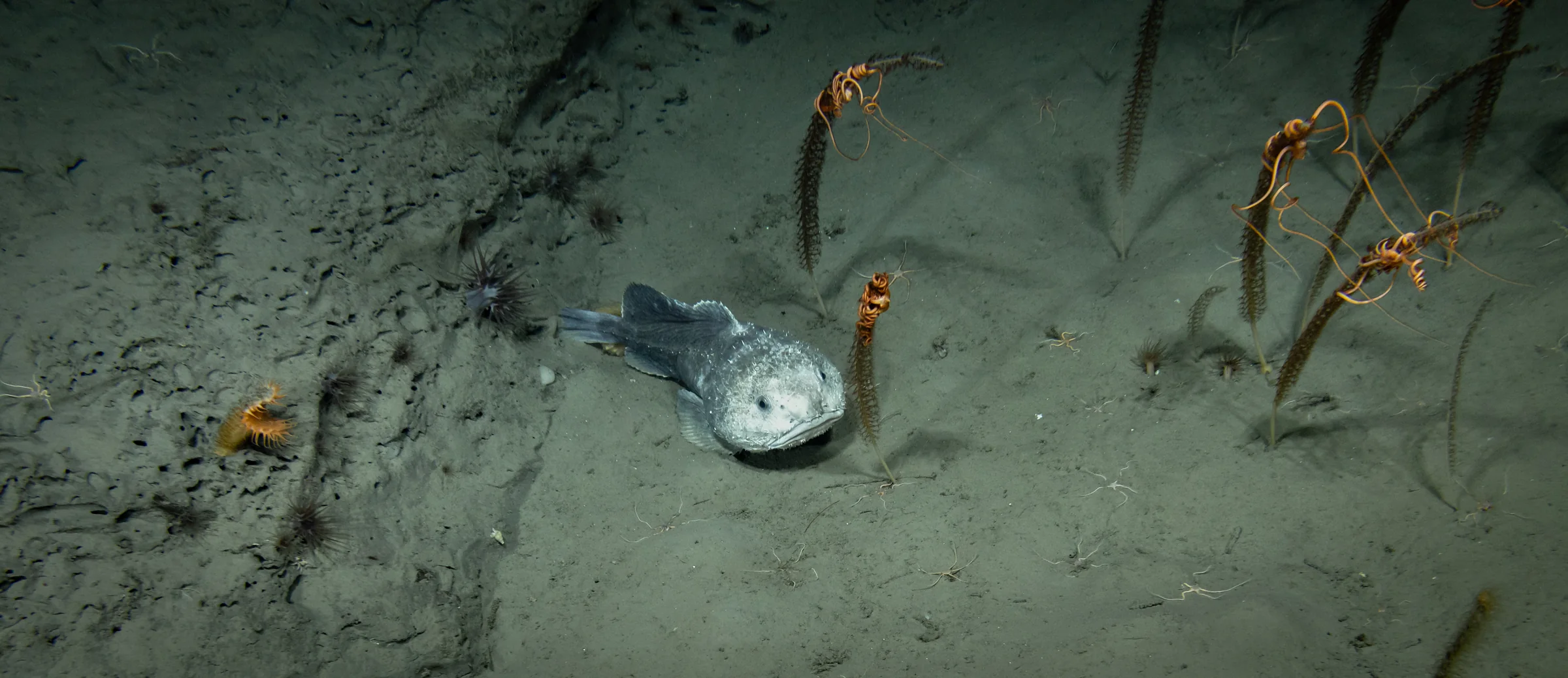
Blobfish
Its soft deep-sea body can lose its shape after capture and rapid decompression.
Read Blobfish profile
Animal group guide
Many fish called ugly are seen outside the conditions that shaped them. Deep water favours energy-saving bodies, wide mouths, sensitive snouts and feeding structures that look extreme at the surface.
What connects them
The fish in this collection include unrelated sharks, bony fish and broad multi-species groups. Their unusual features evolved independently, so a shared appearance does not imply close ancestry.
Food can be difficult to find in the deep sea. Anglerfish bring prey close with a lure, goblin sharks extend their jaws rapidly, and monkfish wait camouflaged on the seabed. Large mouths and teeth are feeding equipment, not decoration.
Pressure and capture also affect how people see deep-water fish. Blobfish tissue is supported by its environment, while many museum images show animals after nets, decompression and removal from water. A responsible comparison separates living anatomy from damage after capture.
Meet the fish
01FishPsychrolutes species
Its soft deep-sea body can lose its shape after capture and rapid decompression.
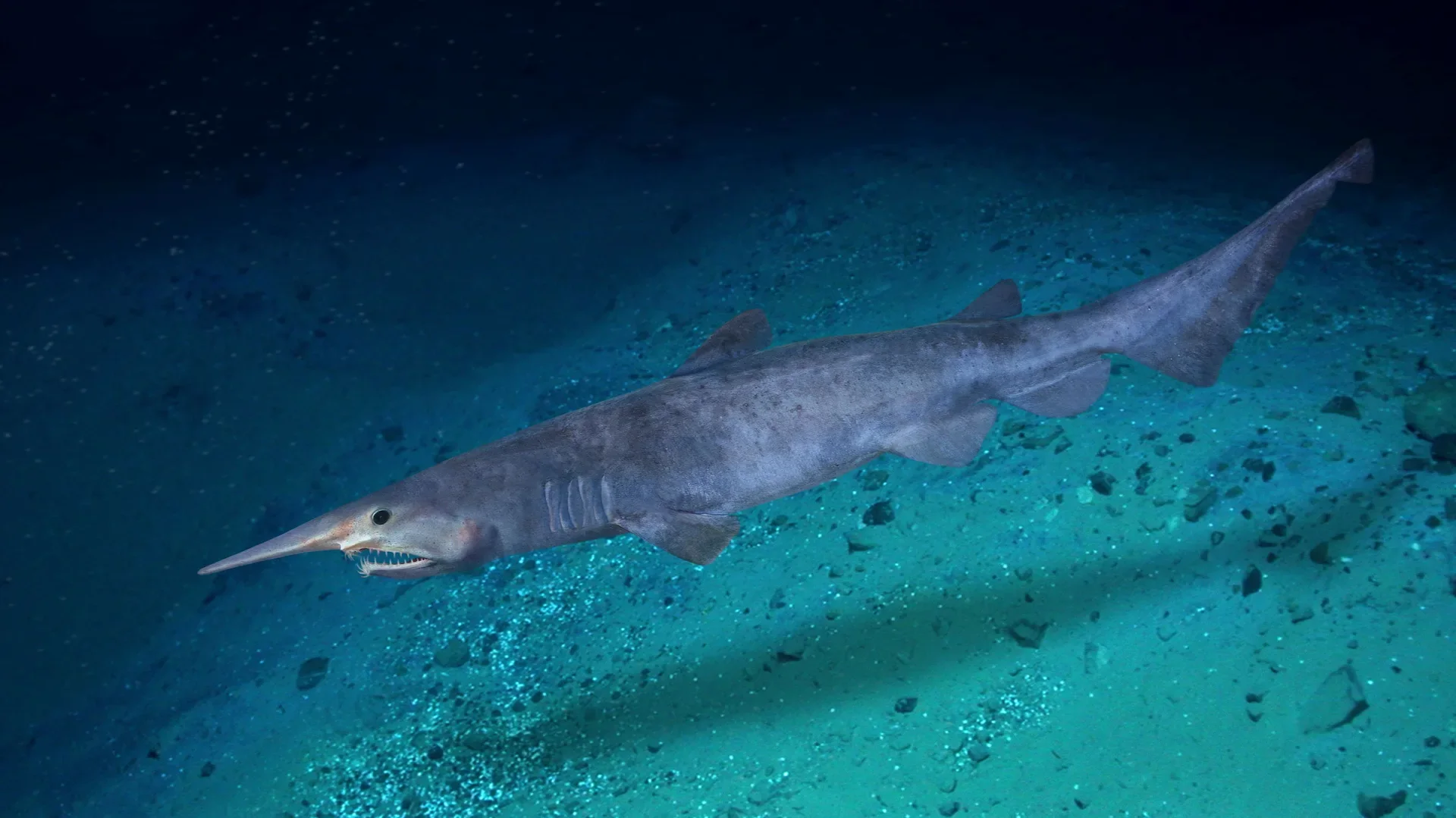
Read Blobfish profile02FishMitsukurina owstoni
A long snout senses prey, while rapidly extending jaws bring that prey into the mouth.
Read Goblin shark profile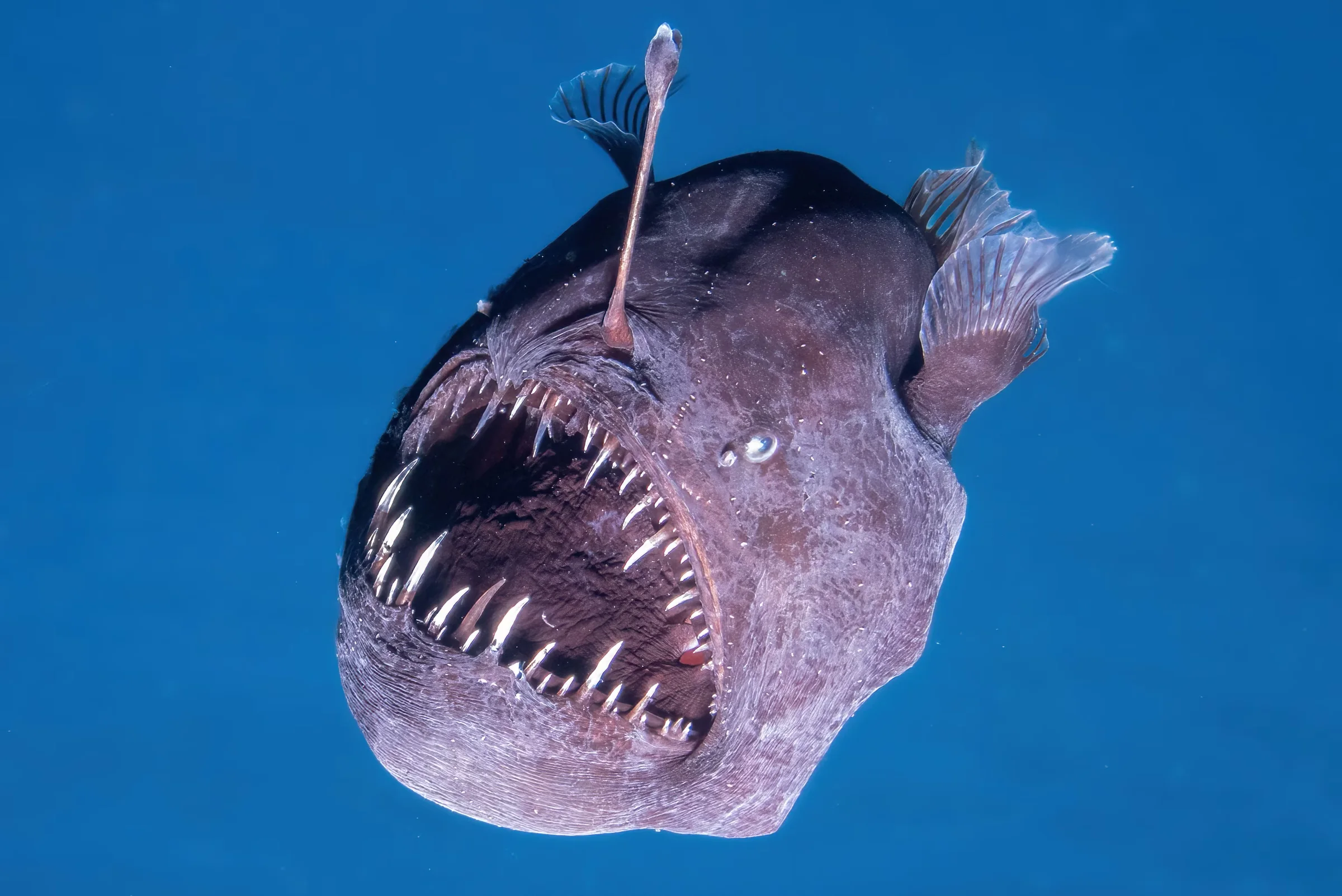 03Fish
Ceratioidei
A luminous lure and a large mouth help it find and seize scarce prey in darkness.
Read Deep-sea anglerfish profile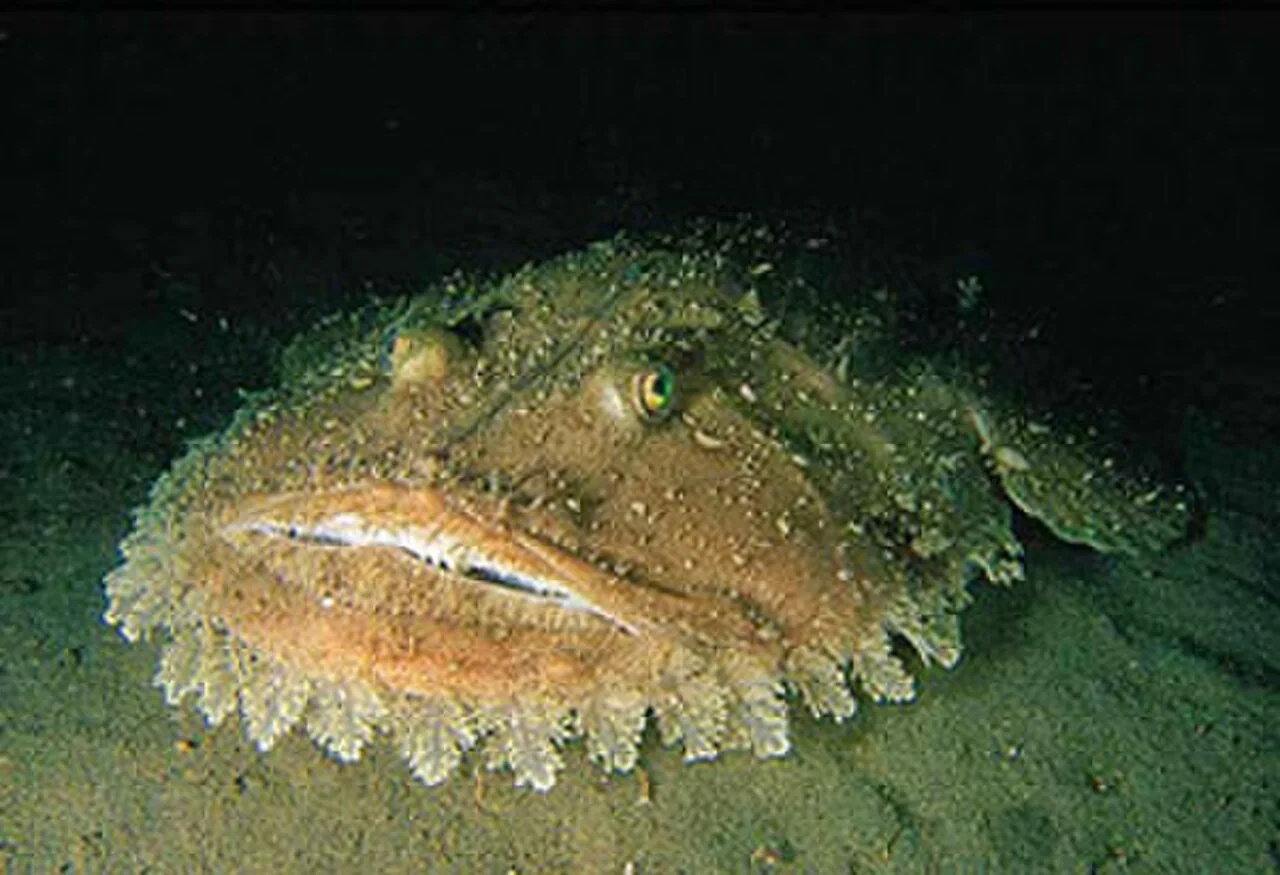 04Fish
Lophius piscatorius
A flattened body, camouflage and a very wide mouth suit an ambush hunter on the seabed.
Read Monkfish profileContinue exploring
See every animal in the collection
Browse all 24 animalsAppearance and function
| Visible feature | Biological role | Examples |
|---|---|---|
| Soft tissue | Reduce energy costs in deep water | Blobfish |
| Protruding jaws | Close distance to prey quickly | Goblin shark |
| Luminous lure | Attract or investigate prey in darkness | Deep-sea anglerfish |
| Wide, flattened head | Ambush prey from the seabed | Monkfish |