Definition and identity
What is a California condor?
The California condor is a giant scavenging bird with long, broad wings adapted for soaring. It searches open country for carcasses and can cover great distances while using rising air to conserve energy.
Condors do not have the grasping talons of an eagle and do not normally kill large prey. Their ecological role begins after another animal has died, when they help remove carrion from the landscape.
California condor biology
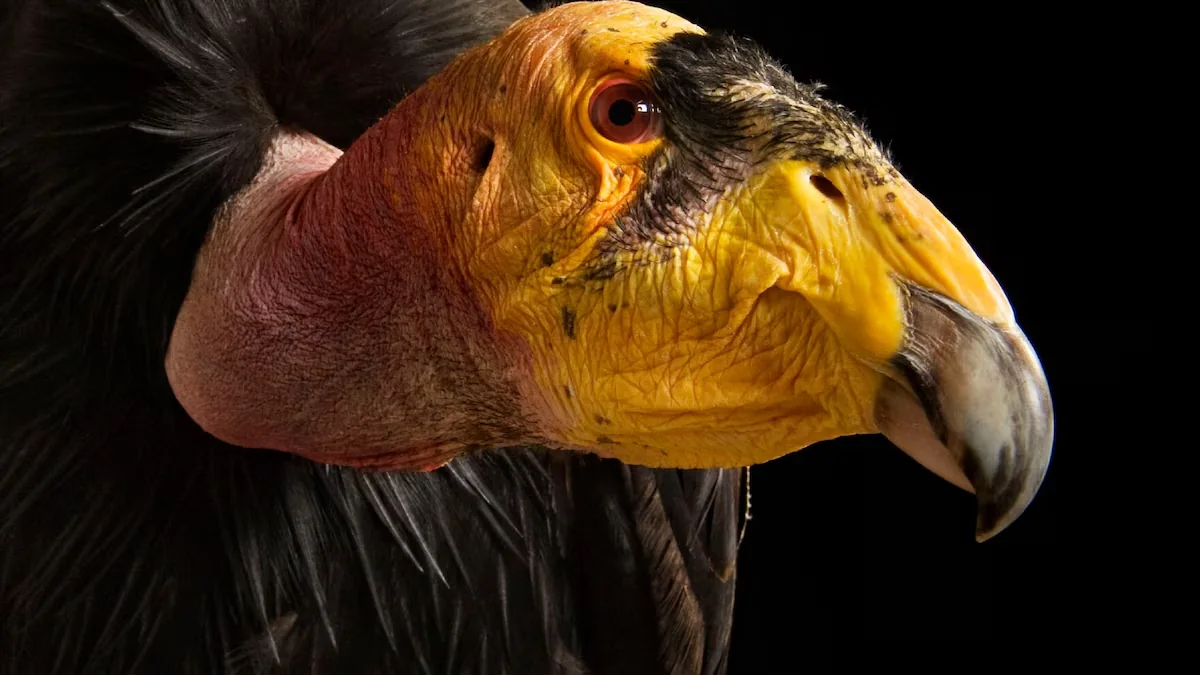
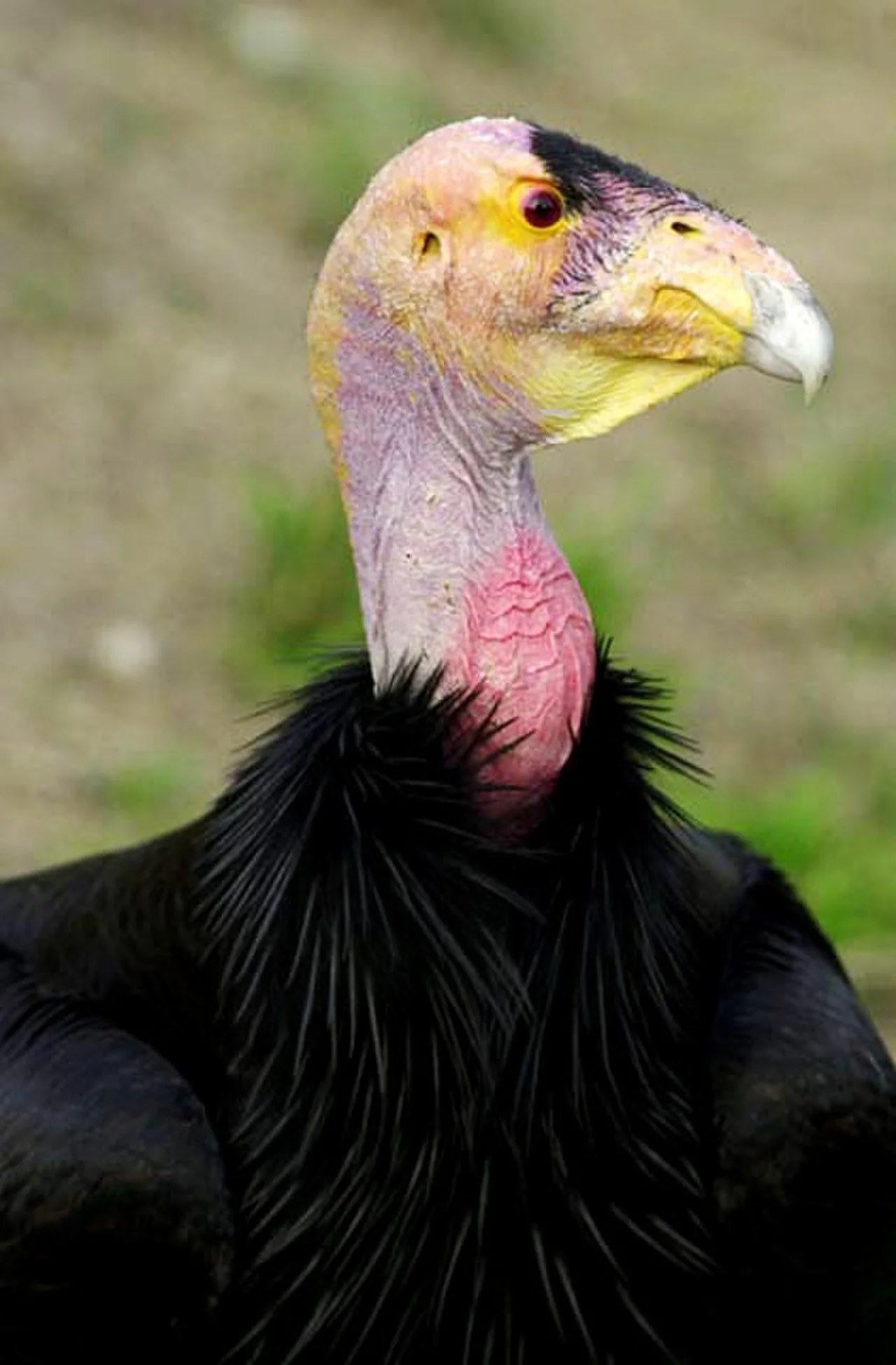
Why is a California condor bald?
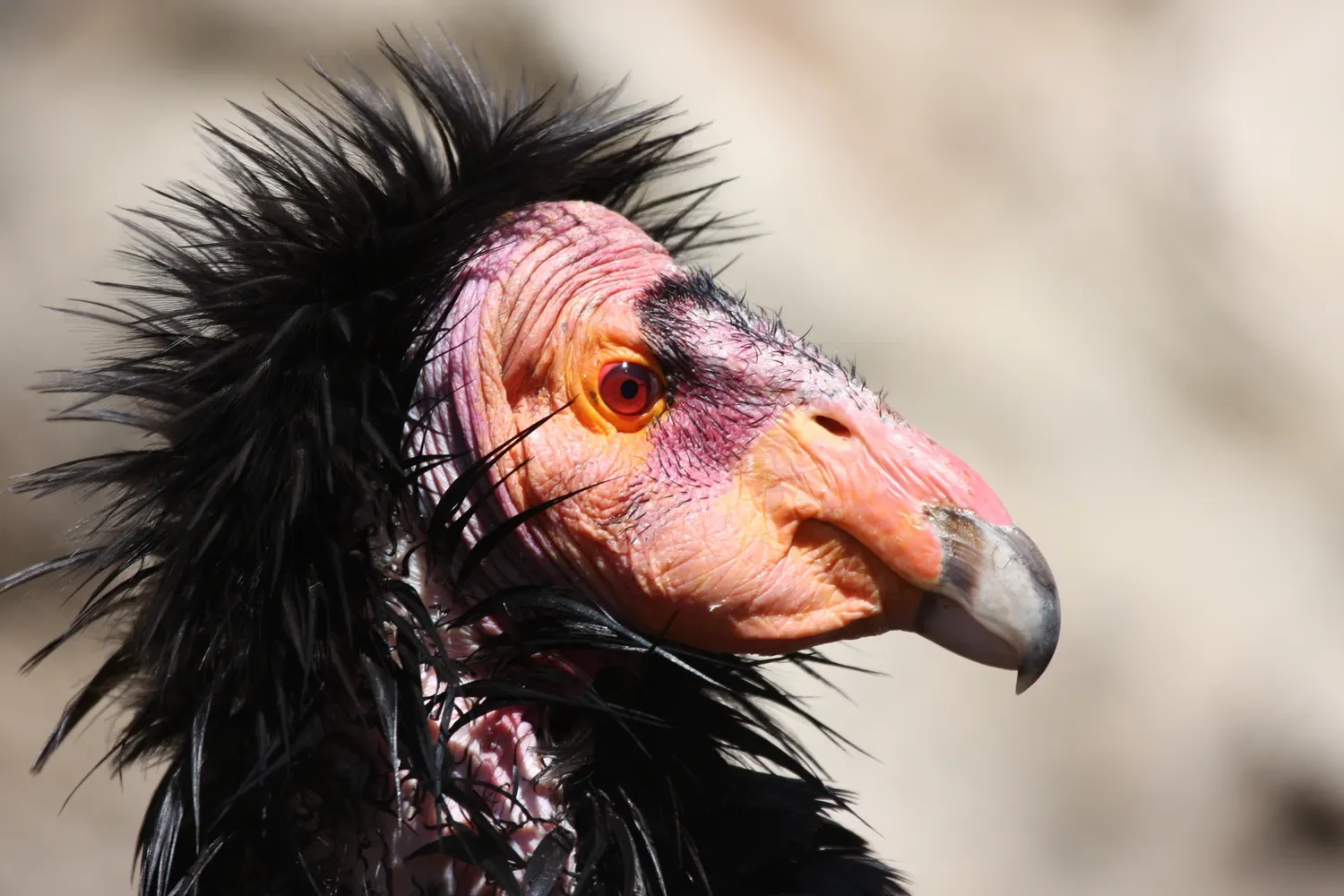
Feathers around the face would be difficult to keep clean when a bird feeds inside a carcass. Bare skin reduces that problem and allows sun and preening to help clean the head after feeding.
Adult head and neck skin can show pink, orange, red, yellow and blue tones. The colours become more intense during excitement and breeding, so the bare head also carries visible social information.
California condor biology
How was the California condor saved?
Only 23 condors survived in 1982. By 1987 all remaining wild birds had entered a captive breeding programme. Releases began again in 1992, and the combined captive and free-flying population later exceeded 500.
That recovery does not make the species independent of management. Released birds are monitored, treated when poisoned and supported by continued captive breeding, nest management and cooperation among agencies, tribes, zoos and conservation groups.
California condor biology
Why is lead still the greatest threat?
Condors can swallow fragments of lead ammunition while feeding on shot animals or discarded gut piles. Lead damages the nervous and digestive systems and may kill a bird without treatment.
The National Park Service identifies lead poisoning as the most significant threat. Microtrash, electrocution and disease also cause losses, but reducing lead exposure is central to a self-sustaining wild population.
Conservation
Conservation status: Endangered
California condors remain protected as Endangered under United States law. Captive breeding prevented extinction and restored several wild flocks, but lead exposure means the population still depends on intensive monitoring and treatment.
Evidence and further reading
California condor sources
Source 1 · U.S. Fish and Wildlife Service
California CondorUsed for: Anatomy, range, population history and recovery programme.
Source 2 · U.S. National Park Service
Threats to California CondorsUsed for: Lead, microtrash and electrocution threats.