Definition and identity
What is a bald uakari?
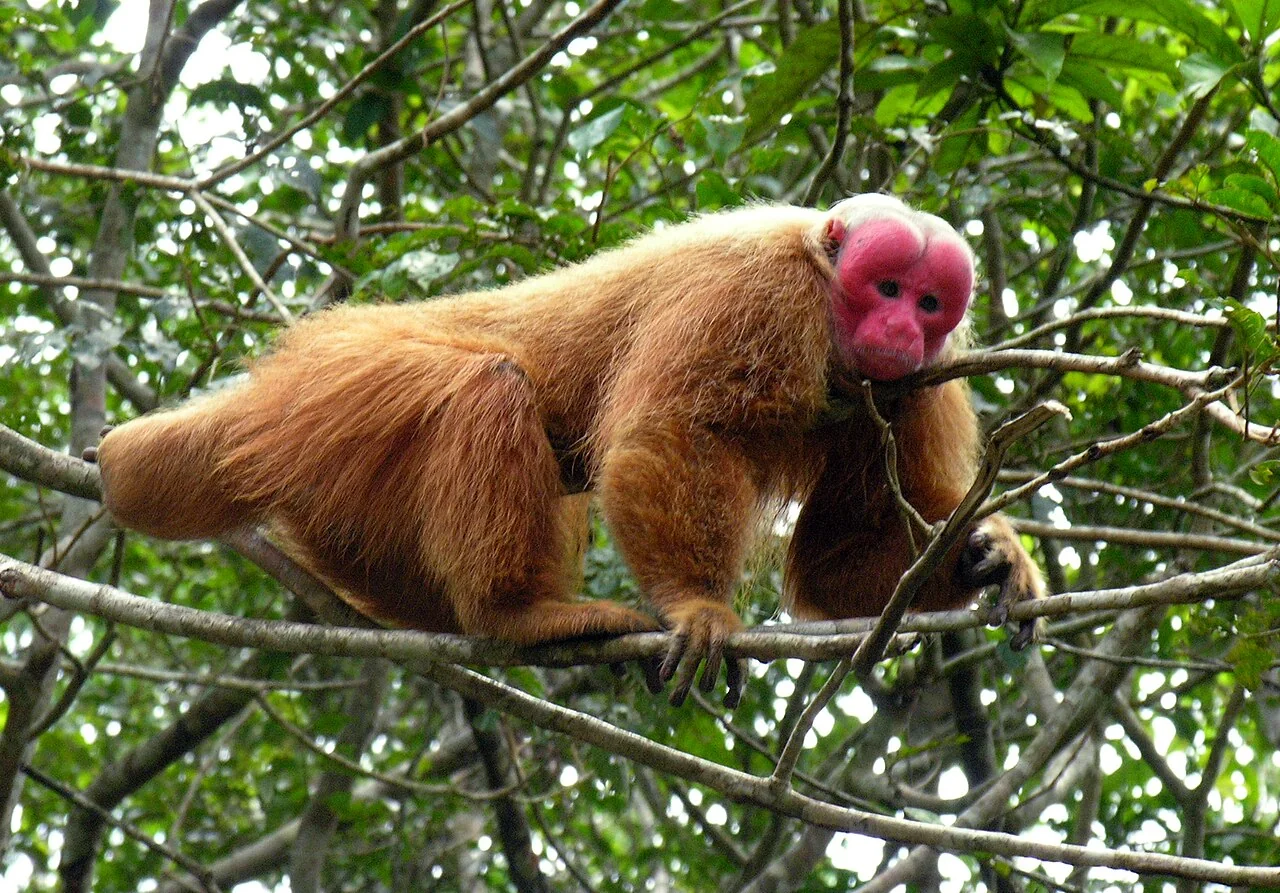
Bald uakaris are medium-sized primates in the genus Cacajao. Unlike many tree-living New World monkeys, they have a short bushy tail that cannot grasp branches.
They move through flooded Amazon forest in social groups and feed heavily on hard or unripe seeds. Strong jaws and specialised teeth help open foods other monkeys may leave until later.
Bald uakari biology
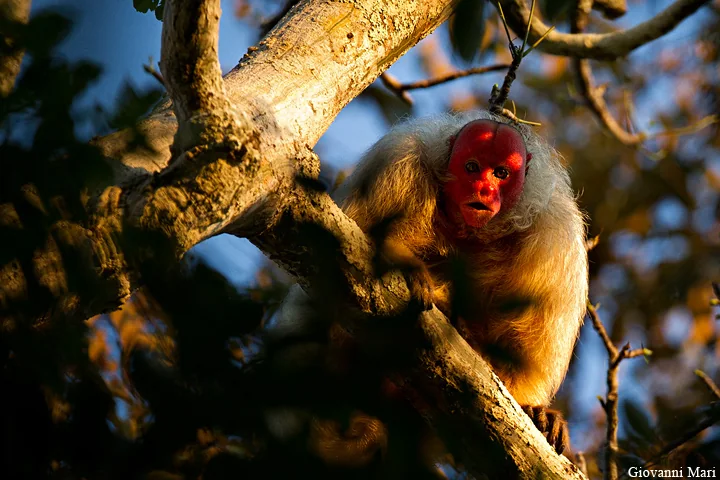
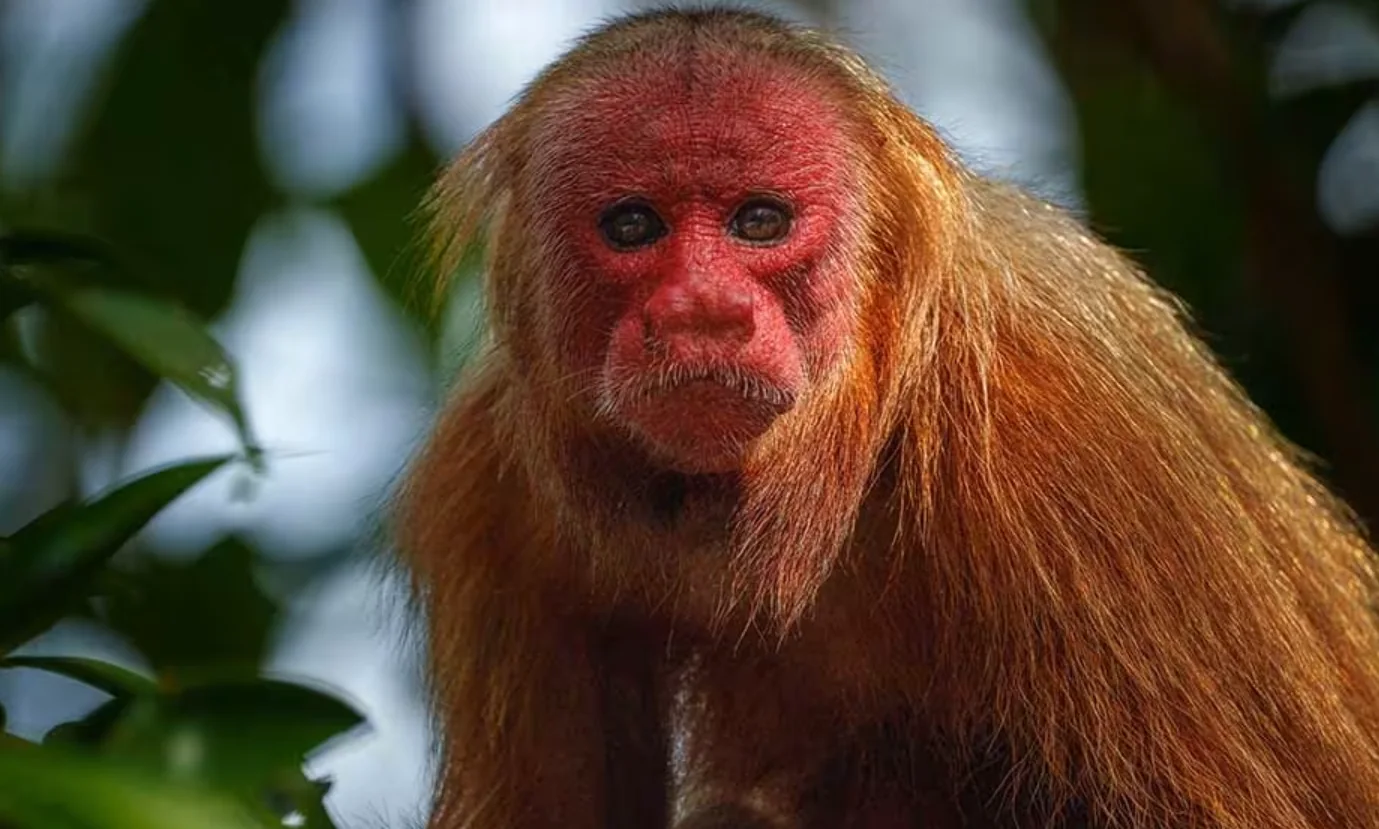
Why is the bald uakari's face red?
Microscopic study found a thin epidermis, little melanin and many large capillaries close to the surface. Blood therefore contributes directly to the visible crimson colour.
Researchers suggest the face may honestly reflect haematological health and could also signal sexual or behavioural state. The mechanism is well supported, while the exact message read by another uakari remains less certain.
Bald uakari biology
How does it live in flooded forest?
Seasonal water changes which trees and foods are accessible. Uakaris travel through the canopy above flooded ground and follow the shifting availability of fruit and seeds.
Their short tail does not prevent agile movement. Long arms, powerful hind limbs and social awareness help them cross gaps and move between feeding trees.
Bald uakari biology
Why is the bald uakari vulnerable?
Hunting and forest loss affect populations across a patchy range. River settlements can make flooded forest accessible to hunters, while logging and land conversion reduce connected habitat.
Several subspecies and regional populations have different distributions. Conservation claims should identify geographic scope rather than treating every red uakari population as identical.
Conservation
Conservation status: Vulnerable
The bald uakari has a decreasing population trend. Protecting flooded forest, reducing unsustainable hunting and keeping river landscapes connected are central to its conservation.
Evidence and further reading
Bald uakari sources
Source 1 · Royal Society Open Science
Proximate Causes of the Red FaceUsed for: Facial skin anatomy and carefully qualified signalling hypotheses.
Source 2 · Wisconsin National Primate Research Center
Uakari FactsheetUsed for: Morphology, range, habitat and feeding ecology.
Source 3 · National Geographic
Bald UakariUsed for: Current conservation category and general species overview.