 01Reptile
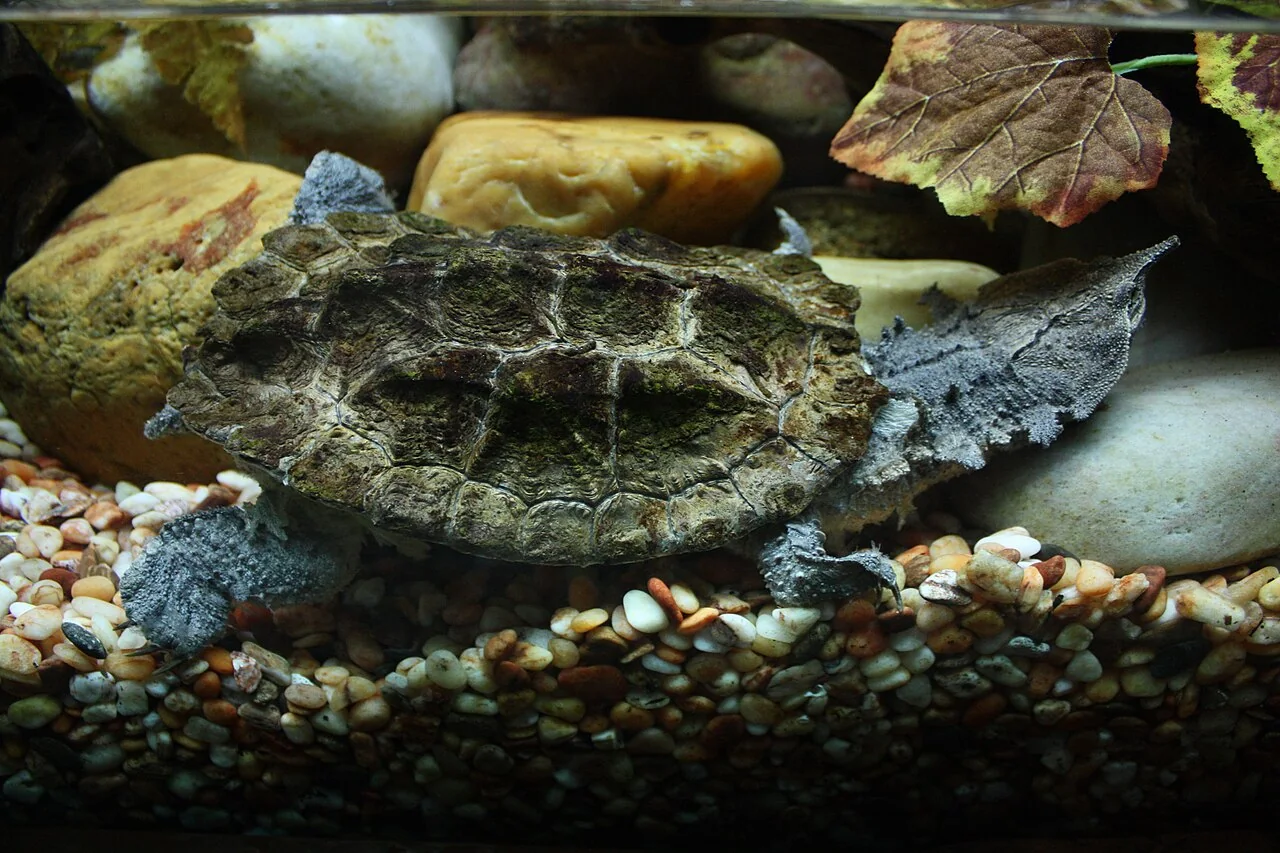
Chelus fimbriata and Chelus orinocensis
Mata mata turtle
Fringed skin and a rough shell break up its outline among leaves on the riverbed.
Read Mata mata turtle profile
Animal group guide
The reptiles in this collection are turtles whose rough outlines work as camouflage. Their shells, heads and jaws help them wait, hide and feed in freshwater habitats.
What connects them
The mata mata and alligator snapping turtle look ancient because their bodies are covered in ridges, fringes and irregular edges. Those outlines are useful in water filled with leaves, roots, mud and broken light.
A mata mata resembles debris and uses rapid suction to draw nearby prey into its wide mouth. An alligator snapping turtle waits with its mouth open and moves a worm-like appendage on its tongue as a lure. Both reduce the need for a long chase.
Calling these turtles ugly misses the visual problem their bodies solve. Smooth, bright surfaces would reveal a stationary predator. Texture makes the animal harder to separate from the riverbed around it.
Meet the reptiles
01ReptileChelus fimbriata and Chelus orinocensis
Fringed skin and a rough shell break up its outline among leaves on the riverbed.
Read Mata mata turtle profile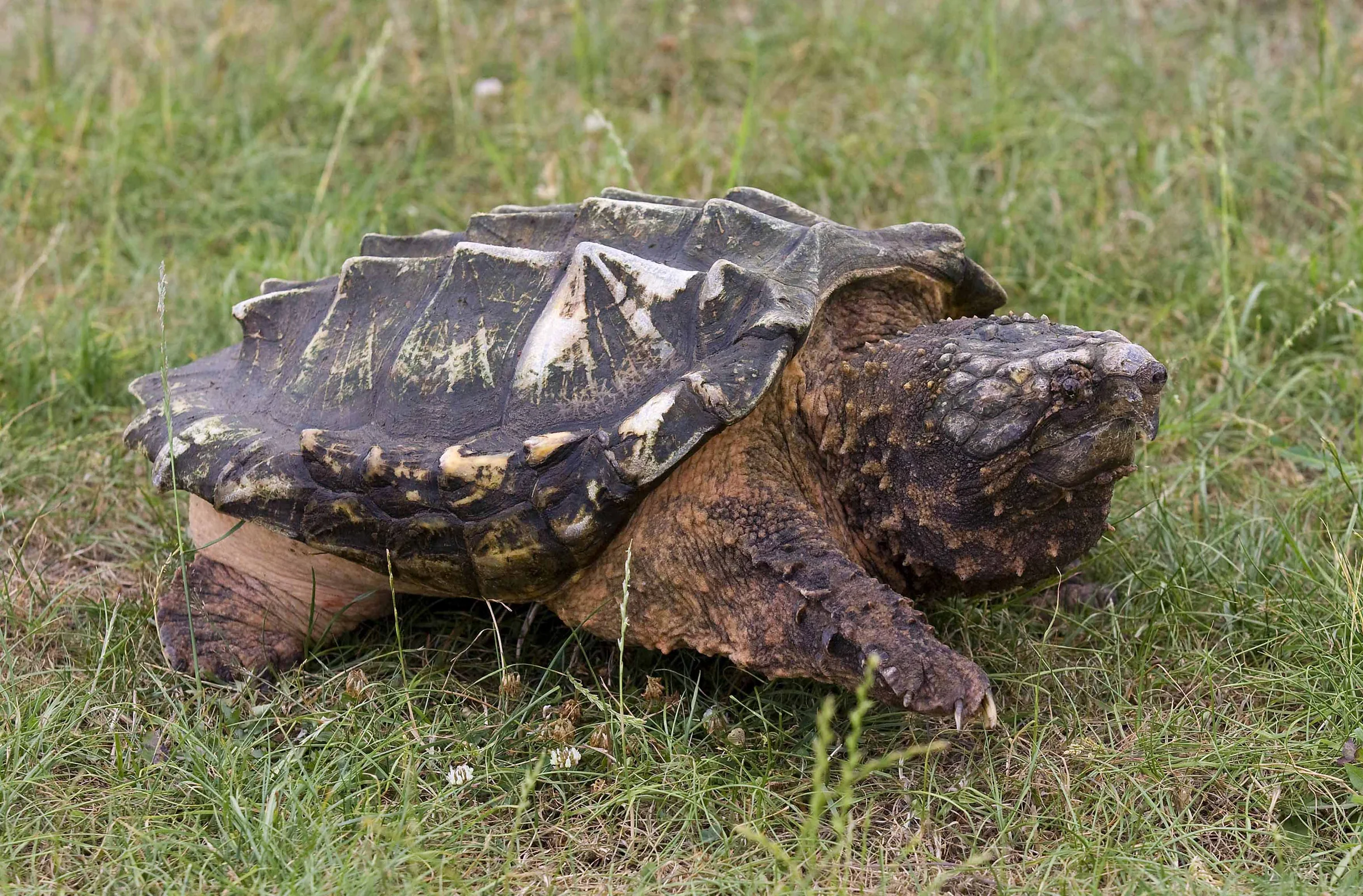 02Reptile
Macrochelys temminckii
A ridged shell provides camouflage, while a worm-like tongue lure draws fish close.
Read Alligator snapping turtle profileContinue exploring
See every animal in the collection
Browse all 24 animalsAppearance and function
| Visible feature | Biological role | Examples |
|---|---|---|
| Fringed skin | Break up the outline of the head | Mata mata turtle |
| Ridged shell | Blend with submerged wood and debris | Both turtles |
| Very wide mouth | Create suction around nearby prey | Mata mata turtle |
| Tongue lure and hooked jaws | Bring fish within striking range | Alligator snapping turtle |