Definition and identity
What is a naked mole-rat?
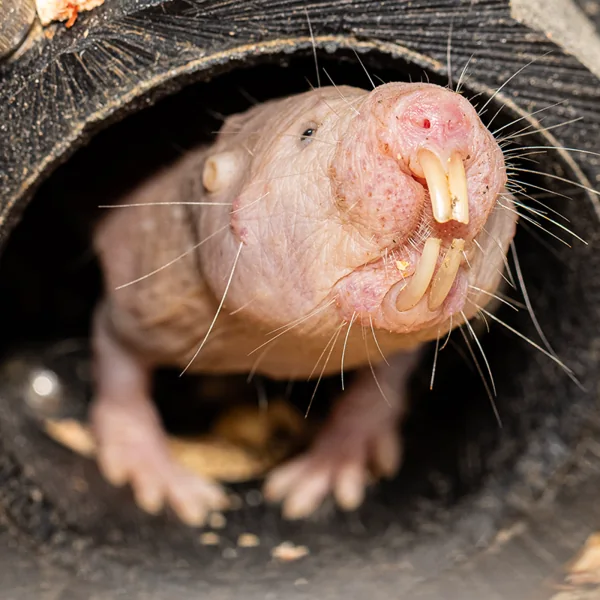
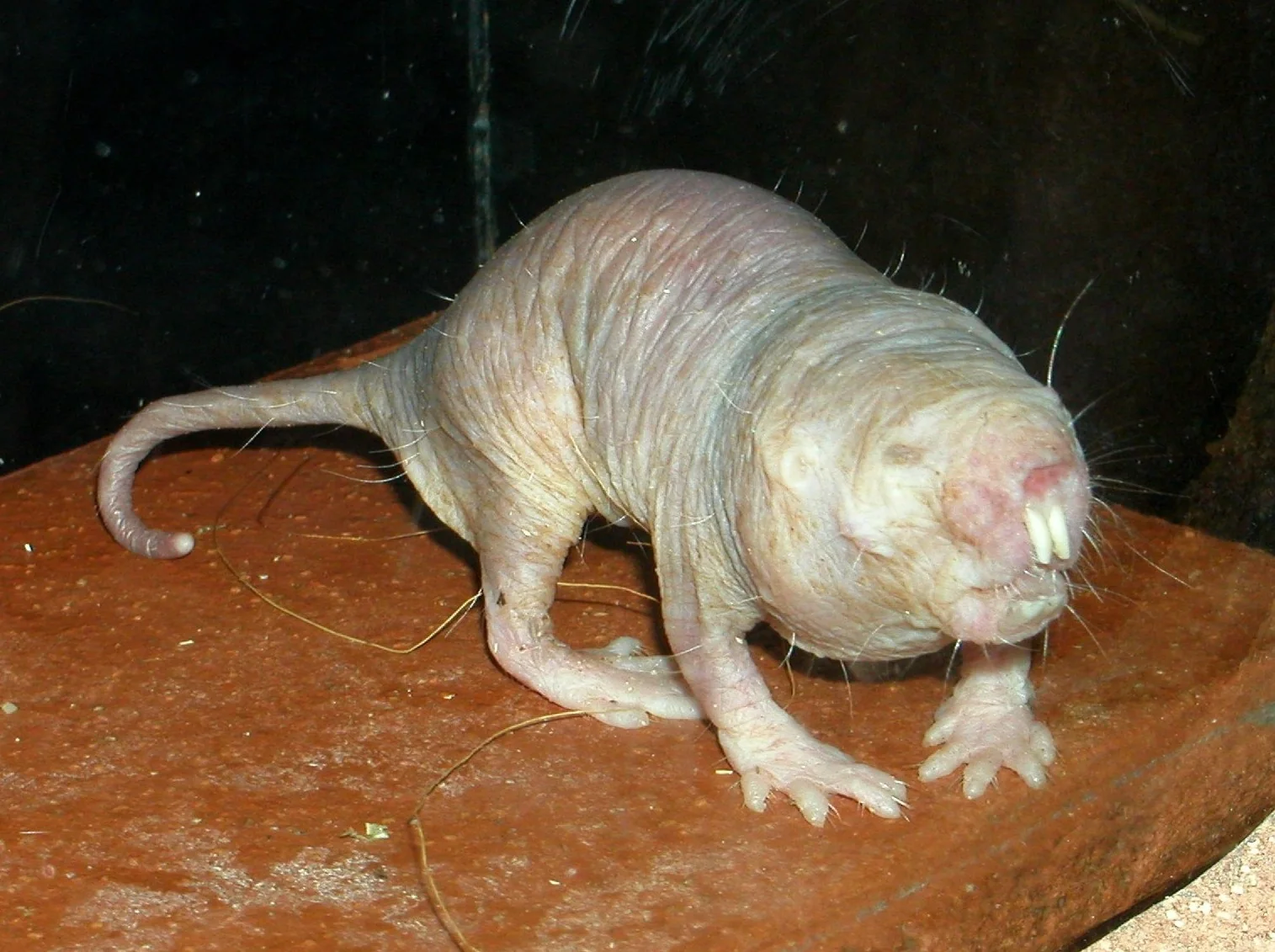
A naked mole-rat is neither a true mole nor completely naked. It is an African rodent in the family Bathyergidae. Most of its body has very sparse hair, but tactile hairs remain on the face and body.
Colonies excavate extensive burrow systems containing feeding tunnels, nest chambers, food storage and toilet areas. The stable underground climate reduces the need for the dense coat expected on a surface mammal.
Naked mole-rat biology
Why does it have exposed teeth and wrinkled skin?
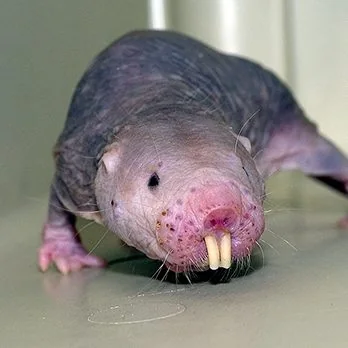
The incisors sit outside the closed lips, allowing the animal to bite soil while keeping much of that soil out of its mouth. Strong jaw muscles make the teeth effective digging tools as well as feeding tools.
Loose skin and short limbs help the body turn and pass others in narrow tunnels. Naked mole-rats can move backward almost as readily as forward. Their appearance makes more sense when the tunnel, rather than open ground, is treated as the animal's normal space.
Naked mole-rat biology
How does a naked mole-rat colony work?
A colony contains a breeding female, a small number of breeding males and many non-breeding members. Workers dig, carry food, maintain chambers and defend the tunnel system. This reproductive division of labour is commonly described as eusociality.
Individuals do not fit into perfectly rigid insect-like castes. Size, age, social position and current needs can influence behaviour. Research continues to refine how specialised different non-breeding roles really are.
Naked mole-rat biology
What do naked mole-rats eat, and how long do they live?
Naked mole-rats feed mainly on underground roots and tubers. A large plant structure can support the colony over time because the animals may eat part of it without destroying the entire food source.
They are exceptionally long-lived for rodents of their size. Smithsonian records note animals living in human care for 30 years, while the maximum lifespan remains uncertain. This does not mean every individual lives that long or that the species never develops cancer.
Conservation
Conservation status: Least Concern
The species is widespread enough to be assessed as Least Concern. Local colonies can still be affected by land use and persecution, but current evidence does not place the species among globally threatened mammals.
Evidence and further reading
Naked mole-rat sources
Source 1 · Smithsonian's National Zoo
Naked mole-ratUsed for: Anatomy, colony structure, diet, range and longevity limits.
Source 2 · Smithsonian's National Zoo
Naked Mole-rat Cam FAQsUsed for: Observed colony behaviour and breeding hierarchy.
Source 3 · Animal Diversity Web
Heterocephalus glaberUsed for: Independent range, feeding and IUCN status context.