
What does endangered mean here?
Risk categories describe assessed extinction risk at a stated scale. A global IUCN category, a national legal listing and a local population trend are not interchangeable. For example, the California condor is federally listed as Endangered in the United States. Its recovery has been substantial, yet the lead threat remains.
We have not included every animal with an odd face. A species with no assessment is not automatically endangered, and a recovering species can move to a less severe category. The examples below are selected for clear, documented conservation questions rather than a dramatic appearance.
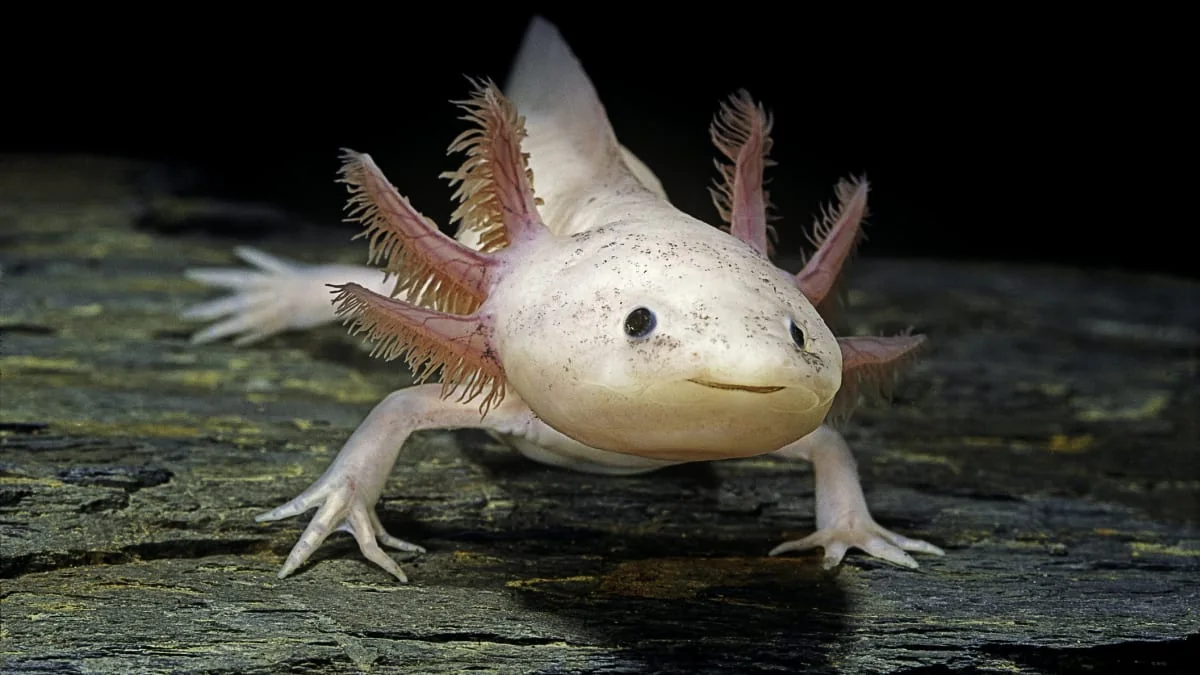
Axolotl: a familiar aquarium animal with a narrow wild home
The axolotl keeps its external gills as an adult and has become a popular image in games and aquariums. Wild Ambystoma mexicanum is a different conservation question from captive abundance. Its remaining native habitat is the Xochimilco wetland system in Mexico City, where pollution, habitat loss and invasive fish threaten survival. Conservation International describes the species as Critically Endangered.
Protecting captive animals cannot substitute for restoring the water and vegetation that support a wild population. The distinctive gills make the animal recognisable, but the state of the canals explains its risk.
California condor: recovery with a persistent poisoning threat
California condors nearly disappeared in the twentieth century. Captive breeding and releases returned them to the wild, but they remain federally listed as Endangered. The U.S. Fish & Wildlife Service identifies lead fragments from ammunition in carcasses as the leading known cause of death for free-flying birds.
The condor's bare head is linked to its scavenging way of life. Its conservation story is not about that appearance. It is about preventing exposure while a slow-breeding species continues to recover.
Chinese giant salamander: one familiar name, several lineages
The Chinese giant salamander has a broad head, loose skin and a largely aquatic body. The Amphibian Survival Alliance describes it as Critically Endangered, while research has revealed multiple distinct lineages behind the familiar name. That makes indiscriminate releases from farms especially problematic for recovery.
Conservation has to preserve the right animals in the right river systems, not merely increase the number of salamanders carrying a common label. Taxonomy matters because it changes what a successful recovery would protect.
Not every unusual animal on this site is endangered
The saiga antelope's global assessment improved to Near Threatened after conservation gains. Psychrolutes marcidus, one of the fishes called blobfish, has not received a global IUCN risk assessment. These cases belong outside an endangered-only list, even though their appearances attract attention.
Status can change. Use the linked species profiles and source organisations for current context rather than assuming one list stays correct forever.