Definition and identity
What is a Chinese giant salamander?
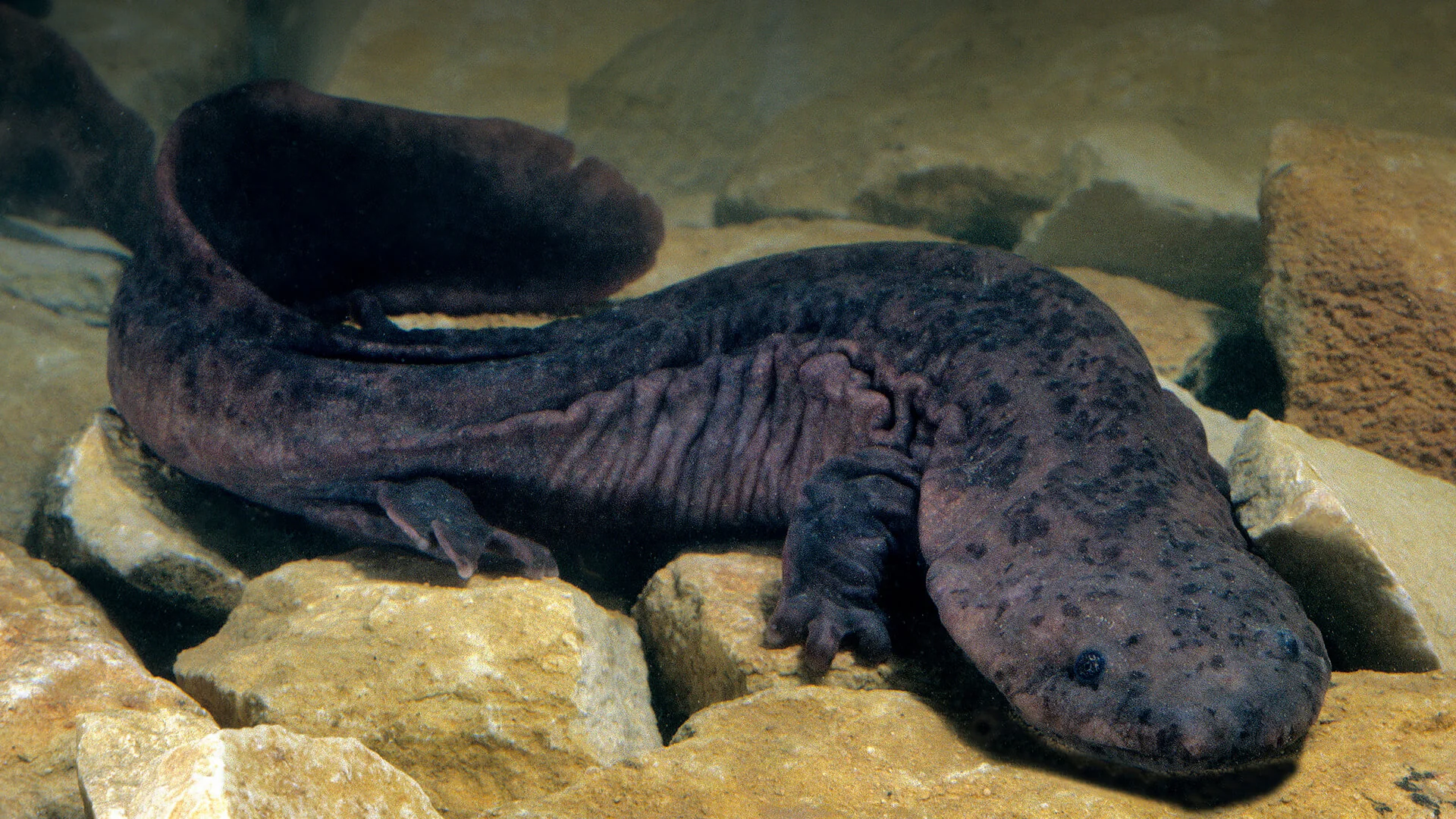
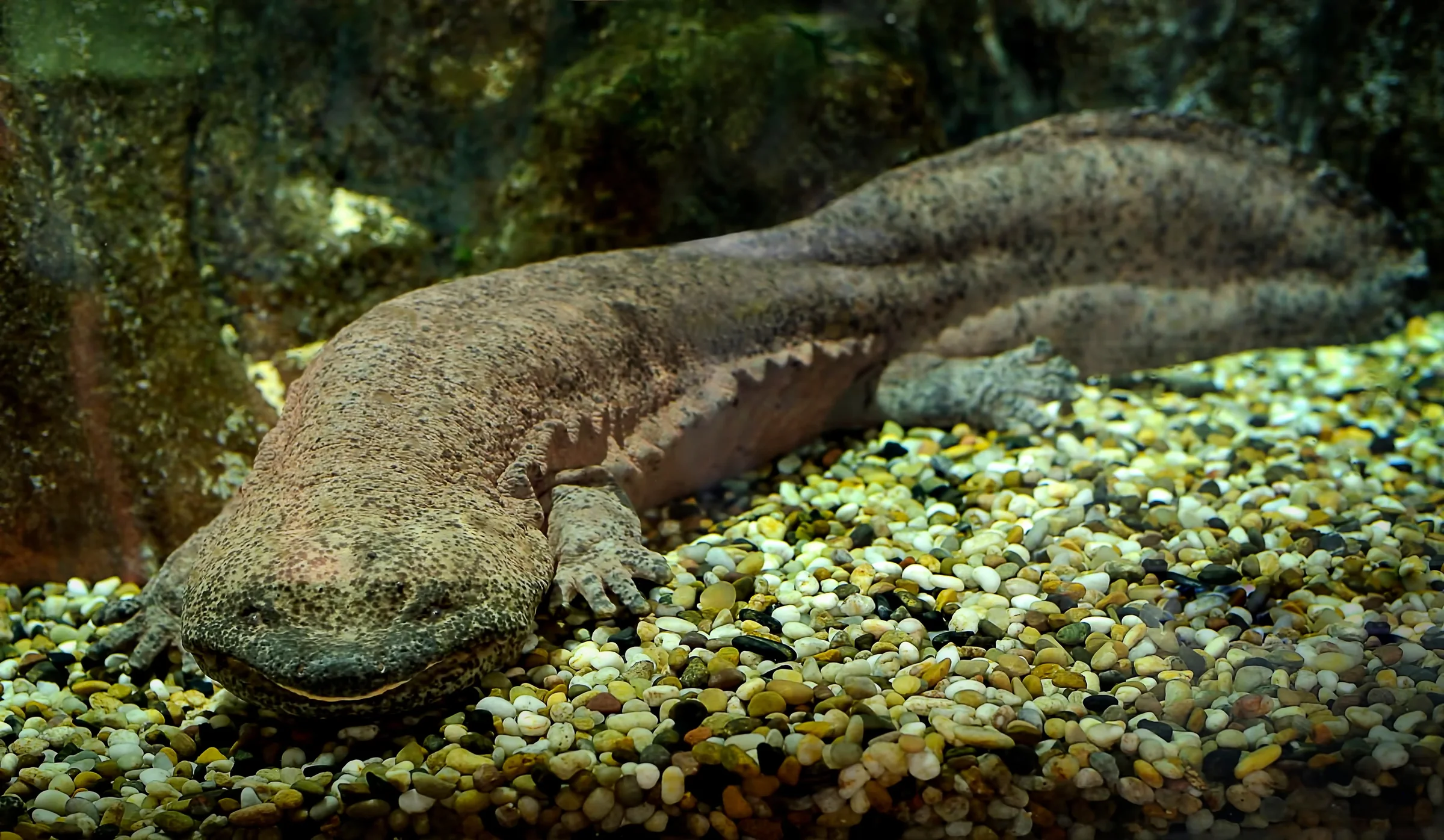
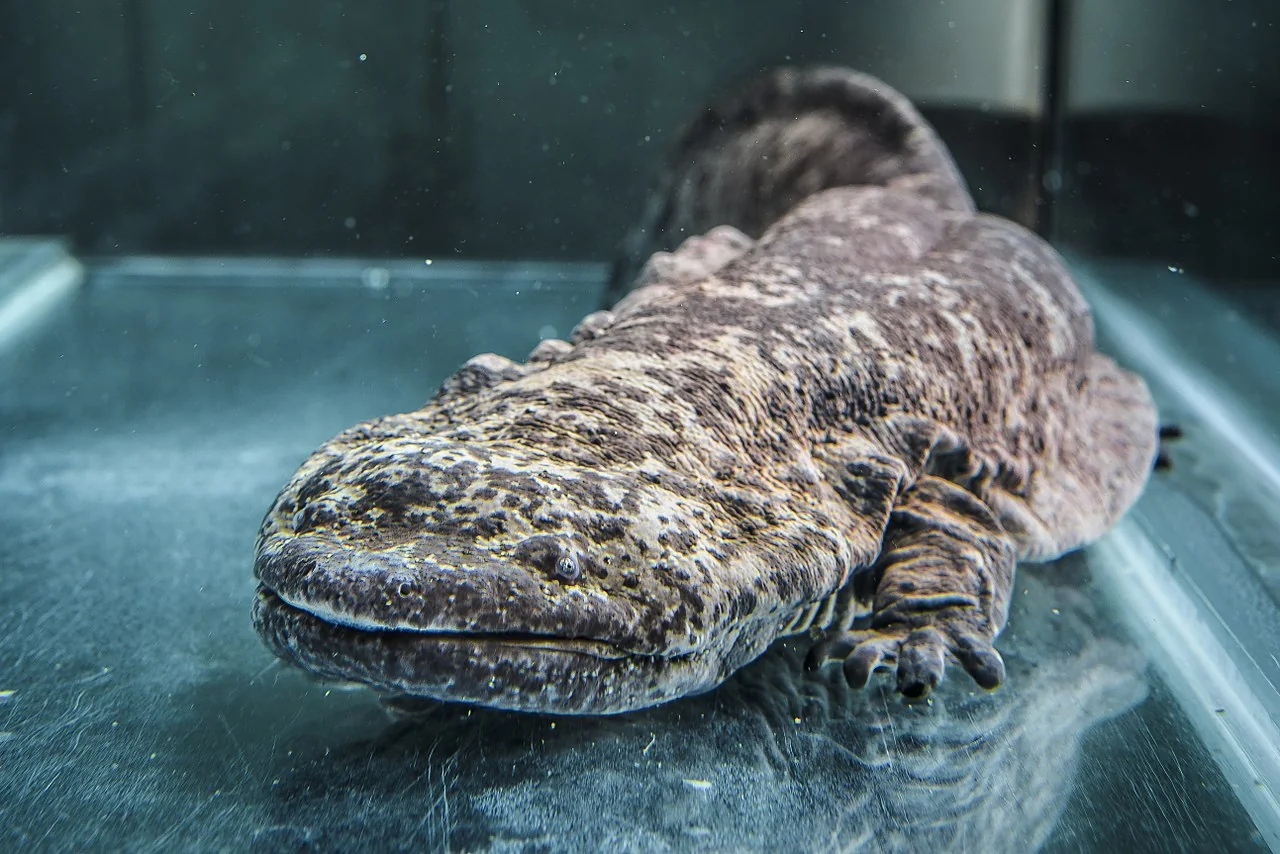
Chinese giant salamanders belong to the family Cryptobranchidae, alongside the Japanese giant salamander and North American hellbenders. Adults remain aquatic and may reach extraordinary lengths compared with other amphibians.
The broad head and compressed body fit under rocks and into river cavities. Small eyes provide limited vision, so touch, smell and vibration detection are especially important when hunting at night.
Chinese giant salamander biology
How do its folded skin and sensory nodes work?
Loose folds increase skin area exposed to flowing water. Oxygen crosses the porous surface, making clean, well-oxygenated habitat essential to respiration.
Sensory nodes detect pressure changes and movement. A salamander can remain concealed and still notice prey moving nearby, then seize it with a rapid sideways movement of the mouth.
Chinese giant salamander biology
Is there only one Chinese giant salamander species?
Older accounts treated giant salamanders across China as Andrias davidianus. Genetic work on historical specimens indicates several deeply separated lineages, including the South China giant salamander, Andrias sligoi.
This matters because conservation breeding moved animals far beyond their original river basins. Mixed ancestry, disease and releases into the wrong region can complicate attempts to restore locally adapted wild populations.
Chinese giant salamander biology
Why did Chinese giant salamanders decline?
Commercial harvesting for food, habitat damage, dams, water pollution and disease contributed to a severe collapse. Farmed animals may be numerous, but they do not demonstrate that genetically appropriate wild populations are secure.
Effective recovery requires protecting rivers, identifying surviving lineages and preventing poorly planned releases. Taxonomy is therefore part of conservation practice, not just a change of names.
Conservation
Conservation status: Critically Endangered
The traditional Andrias davidianus complex has suffered extreme wild declines. Newly recognised lineages require region-specific management, genetic screening and protection of clean, connected mountain rivers.
Evidence and further reading
Chinese giant salamander sources
Source 1 · London Zoo
Chinese Giant SalamanderUsed for: Habitat, anatomy, sensory biology and conservation status.
Source 2 · Zoological Society of London
New Giant Salamander SpeciesUsed for: Taxonomic revision and implications for conservation releases.
Source 3 · San Diego Zoo Wildlife Alliance
Chinese Giant SalamanderUsed for: River ecology and threats.