Definition and identity
What is a Titicaca water frog?
This large frog is endemic to the Lake Titicaca basin on the border of Peru and Bolivia. Adults remain underwater rather than dividing their time between land and water like many familiar frogs.
The lake sits roughly 3,800 metres above sea level. Cold water can hold oxygen, but the thin high-altitude atmosphere creates a demanding respiratory environment that shaped the frog's unusual skin and behaviour.
Titicaca water frog biology
How do the skin folds help it breathe?
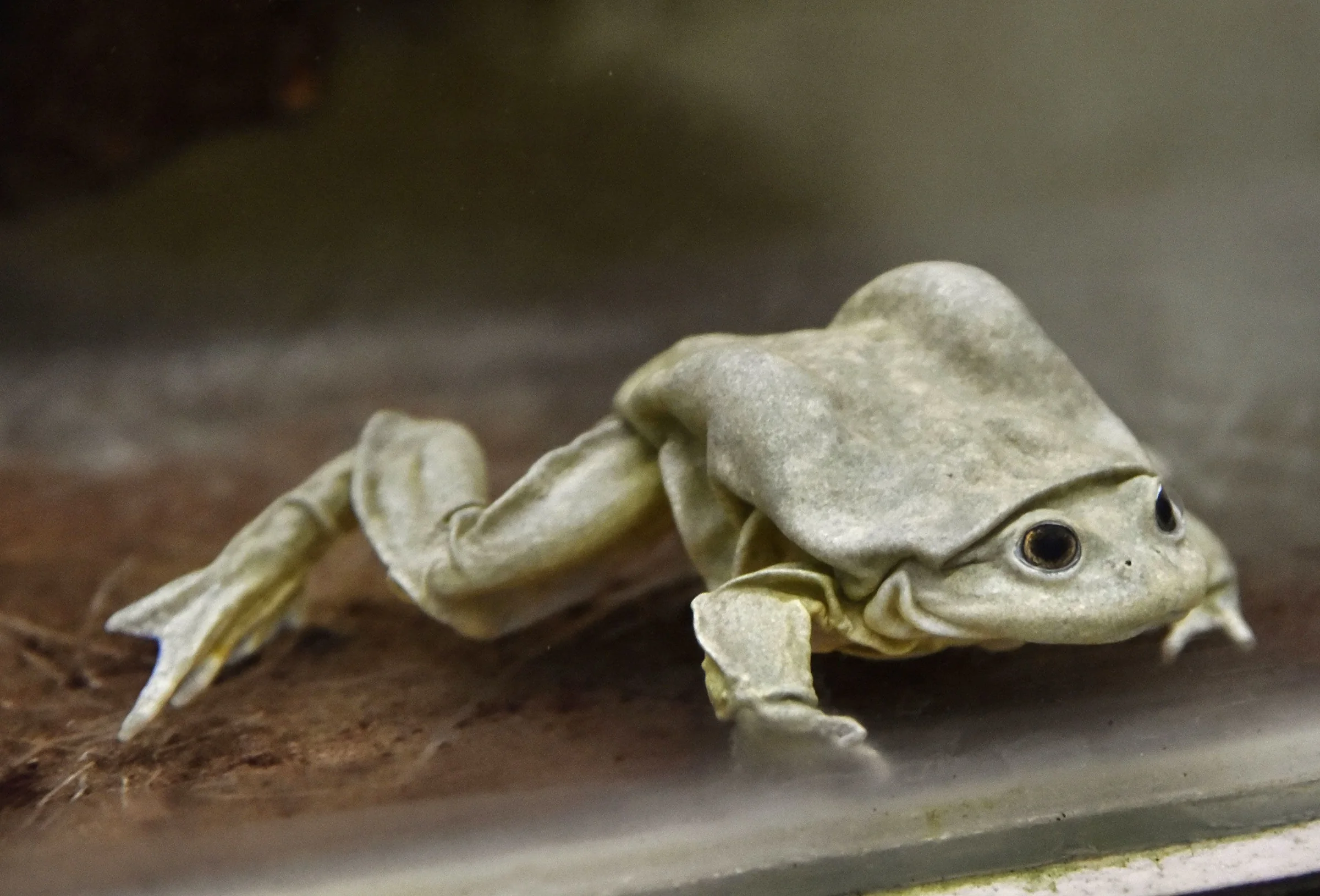
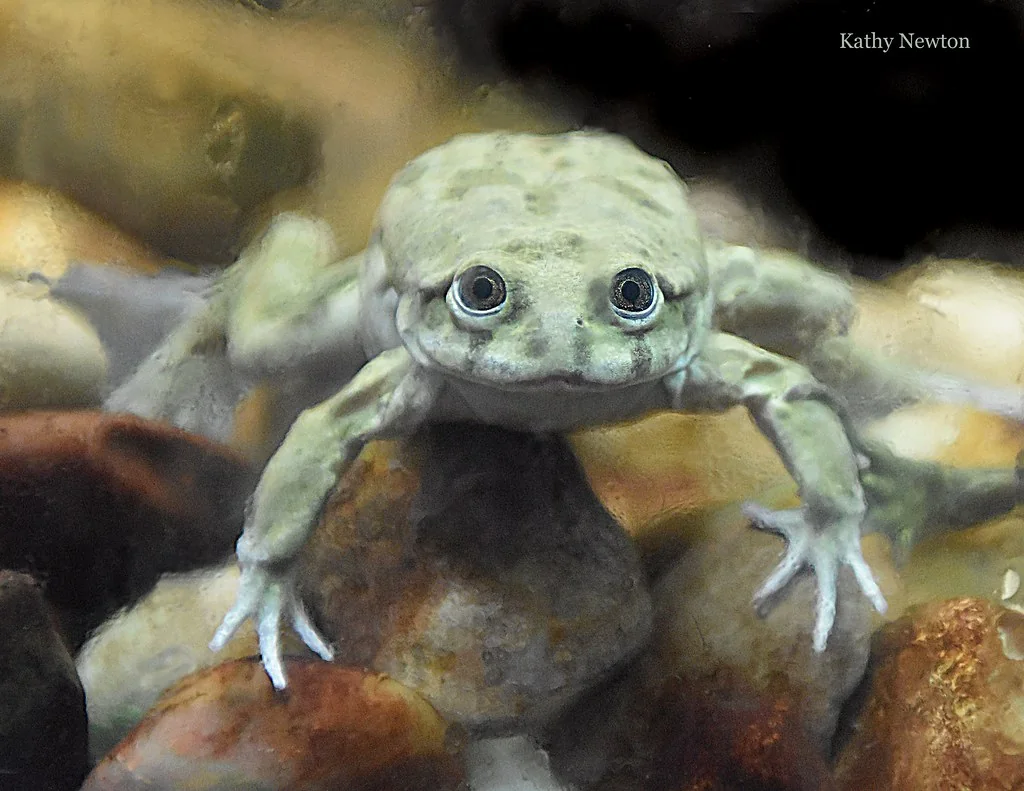
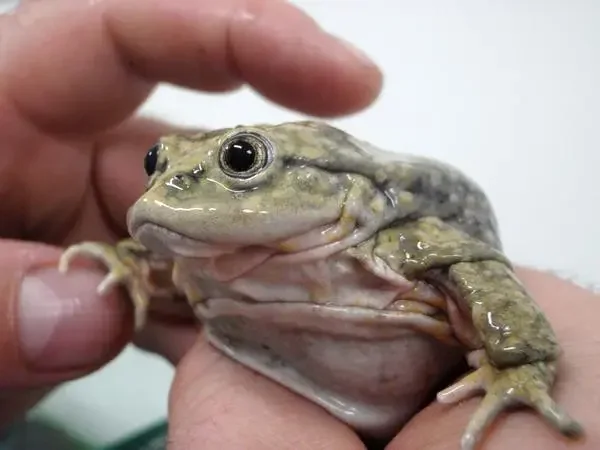
Amphibians can exchange gases through moist skin. The Titicaca water frog carries extensive folds along its sides, back and legs, increasing the surface area in contact with oxygenated water.
It can also rock or perform push-up-like movements that move fresh water across the skin. Its lungs are reduced compared with those of many frogs, reflecting reliance on cutaneous respiration.
Titicaca water frog biology
Why does it look baggy?
Out of context, the folds can look like an oversized skin suit. Underwater they are a working respiratory structure attached to a relatively streamlined body.
The appearance is an especially clear example of habitat changing the value of a feature. More skin may look excessive to a person but provides more area for life-sustaining gas exchange.
Titicaca water frog biology
Why is the Titicaca water frog endangered?
Pollution from settlements, industry and agriculture degrades lake habitat. Overharvest, introduced species, disease and other changes to the Titicaca ecosystem add pressure across its restricted range.
Conservation requires work on both sides of an international border. Monitoring, habitat protection, community programmes and assurance populations in zoos all support recovery, but clean lake water remains fundamental.
Conservation
Conservation status: Critically Endangered
The frog is restricted to the Lake Titicaca basin and faces pollution, harvesting, invasive species and disease. Zoo programmes can protect genetic and husbandry knowledge, but long-term recovery depends on improving the lake ecosystem.
Evidence and further reading
Titicaca water frog sources
Source 1 · American Museum of Natural History
Telmatobius culeusUsed for: Accepted scientific name and verified distribution in Peru and Bolivia.
Source 2 · Denver Zoo Conservation Alliance
Amphibians in NeedUsed for: Skin respiration, pollution sensitivity and binational conservation work.
Source 3 · Zoo Berlin
Titicaca Water Frog ConservationUsed for: Skin function, range, status and threats.
Source 4 · Animal Diversity Web
Telmatobius culeusUsed for: Aquatic biology, elevation and respiratory anatomy.
Source 5 · Prague Zoo
Rare and Remarkable Titicaca Water FrogsUsed for: High-altitude respiratory context and conservation.