Definition and identity
What is an aye-aye?
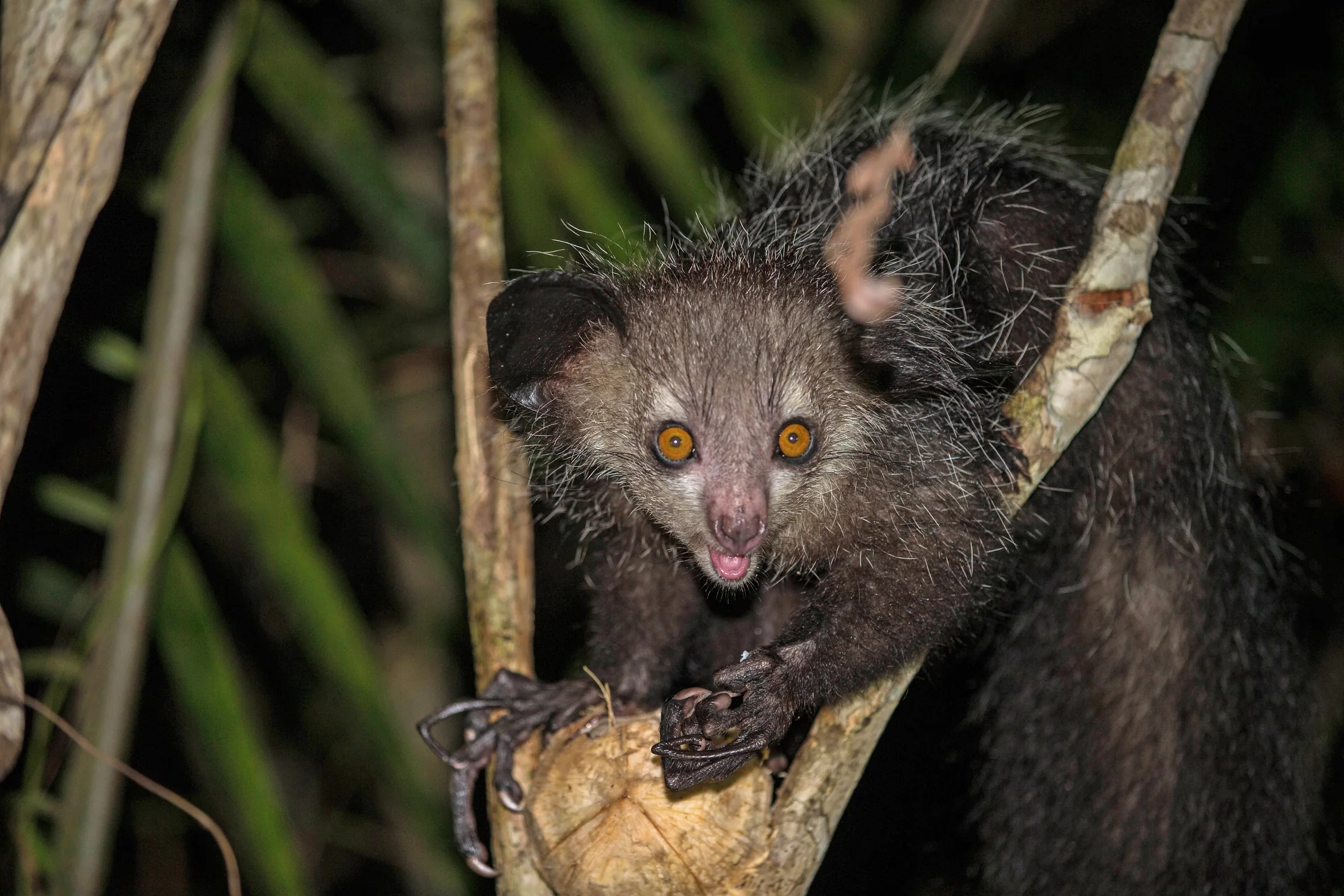
An aye-aye is a lemur, not a rodent, bat or separate type of mammal. It is the only living species in the family Daubentoniidae. Its combination of a bushy tail, mobile ears, large eyes, clawed fingers and rodent-like incisors makes it difficult to compare with more familiar primates.
The animal spends much of its time in trees and is active at night. Aye-ayes occur in several forest types across Madagascar, including primary and secondary rainforest, deciduous forest and some cultivated landscapes.
Aye-aye biology
Why does the aye-aye have such a long finger?
The aye-aye's third finger is thin, elongated and unusually flexible. During percussive foraging, the animal taps wood and listens for acoustic changes that can reveal a hollow chamber or moving larva. Large, sensitive ears help interpret those sounds.
After locating food, the aye-aye gnaws an opening with its continuously growing front teeth. It then inserts the middle finger and uses the flexible tip to extract the contents. The same finger can scoop soft fruit, seeds or nectar, so it is a multi-purpose feeding tool rather than a single-use probe.
Aye-aye biology
Why do people call the aye-aye ugly?
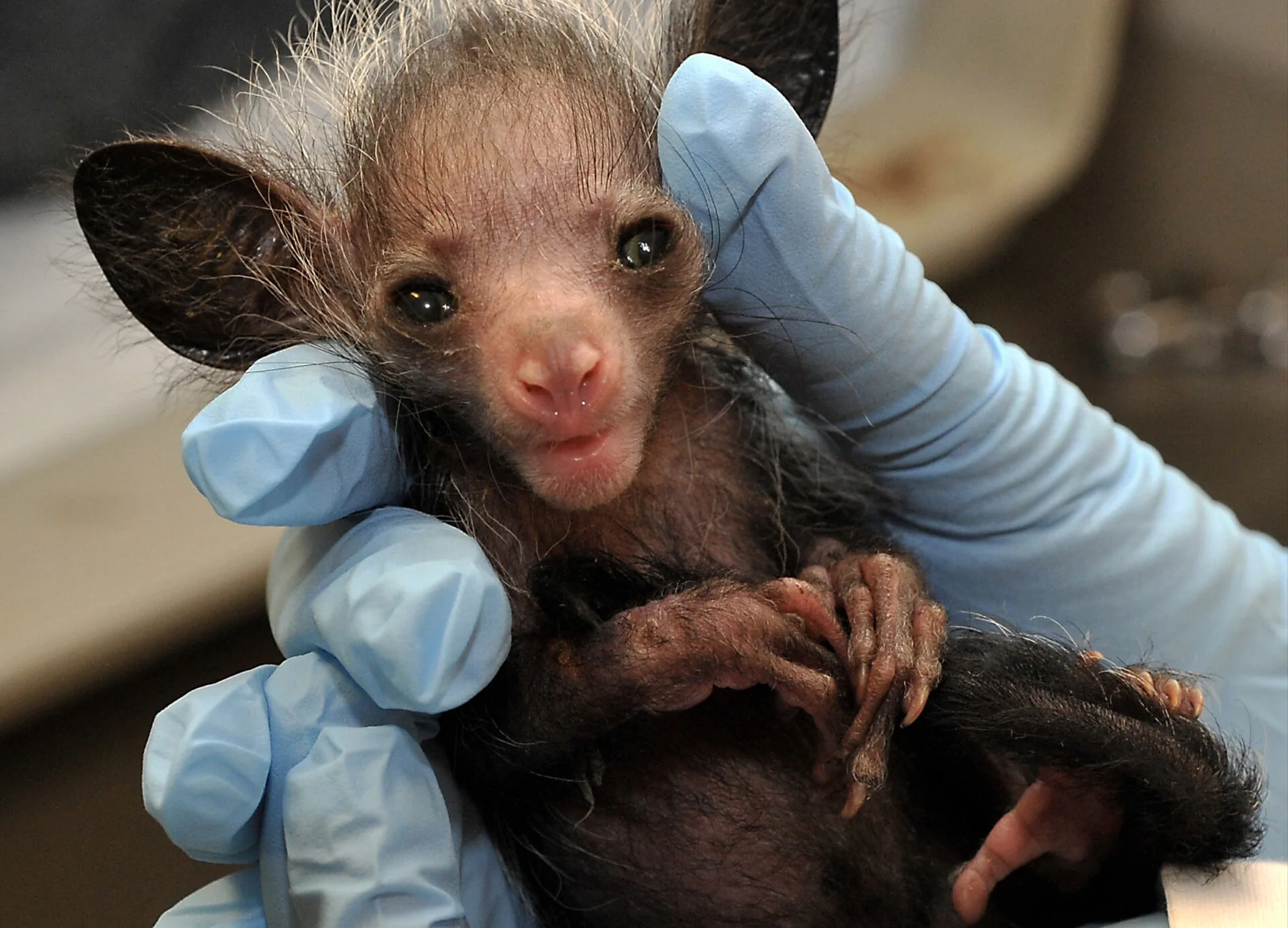
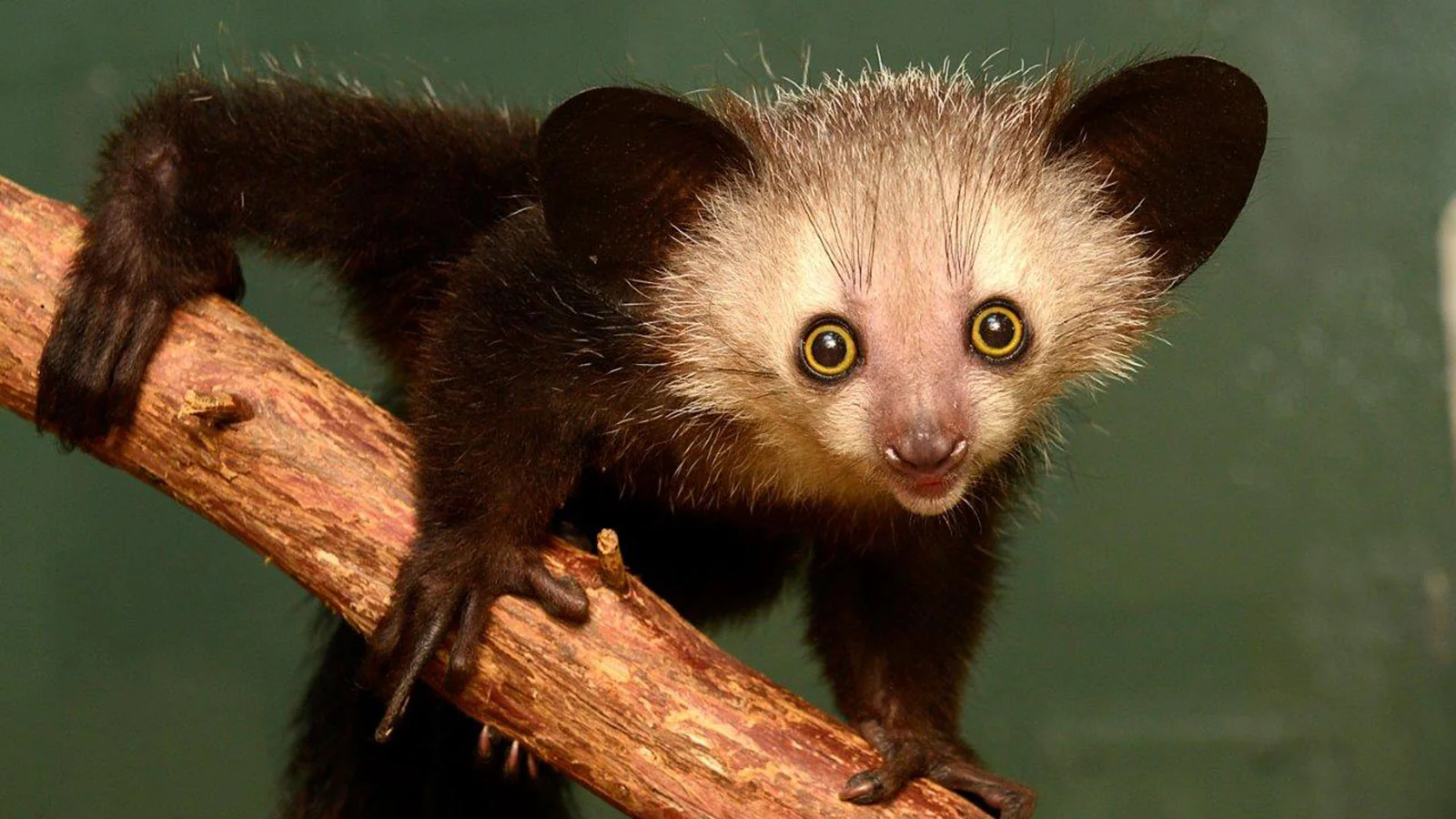
People often react to the aye-aye's sparse facial hair, orange eyes, exposed teeth and very thin finger. Those features resemble several unrelated animals at once and do not match the rounded face people commonly associate with a lemur.
Each prominent feature has context. Large eyes and ears support nocturnal activity, incisors open hard material, and the long finger reaches food hidden from most other primates. Its appearance is a visible record of an unusual feeding niche.
Aye-aye biology
What do aye-ayes eat and how do they live?
Aye-ayes eat a varied diet that can include wood-boring insect larvae, seeds, nuts, fruit, nectar and other plant material. The exact balance changes with location and available foods.
They rest during the day in nests made from leaves and branches, then travel and forage at night. Individuals are generally solitary while feeding, although their home ranges can overlap and they communicate through scent and sound.
Conservation
Conservation status: Endangered
Habitat loss and killing by people are important threats. In some areas aye-ayes are treated as crop pests or associated with harmful beliefs. Their wide distribution across Madagascar does not remove the risks created by fragmented forest and direct persecution.
Evidence and further reading
Aye-aye sources
Source 1 · Duke Lemur Center
Aye-ayeUsed for: Current conservation status and specialised feeding overview.
Source 2 · Animal Diversity Web
Daubentonia madagascariensisUsed for: Taxonomy, distribution, habitat, anatomy and diet.