Definition and identity
What is a proboscis monkey?
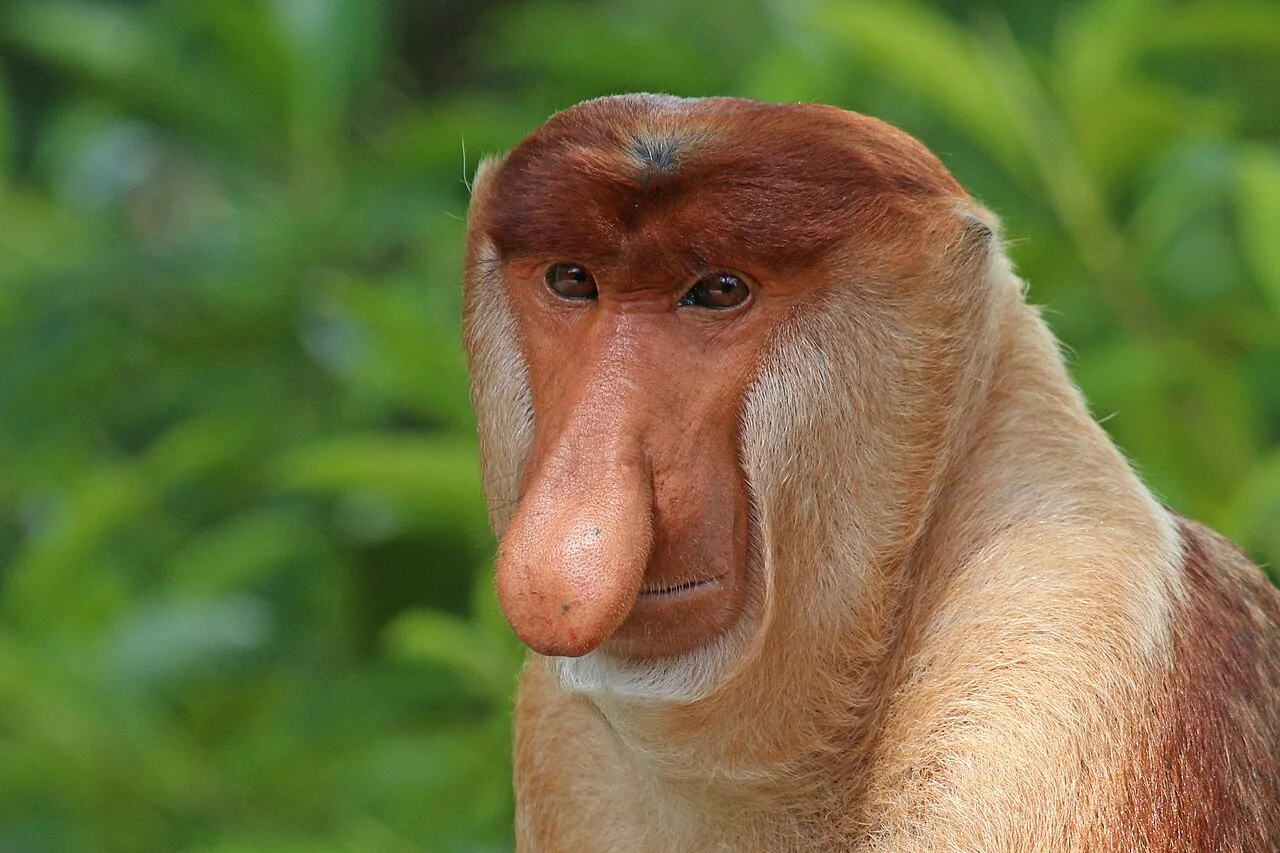
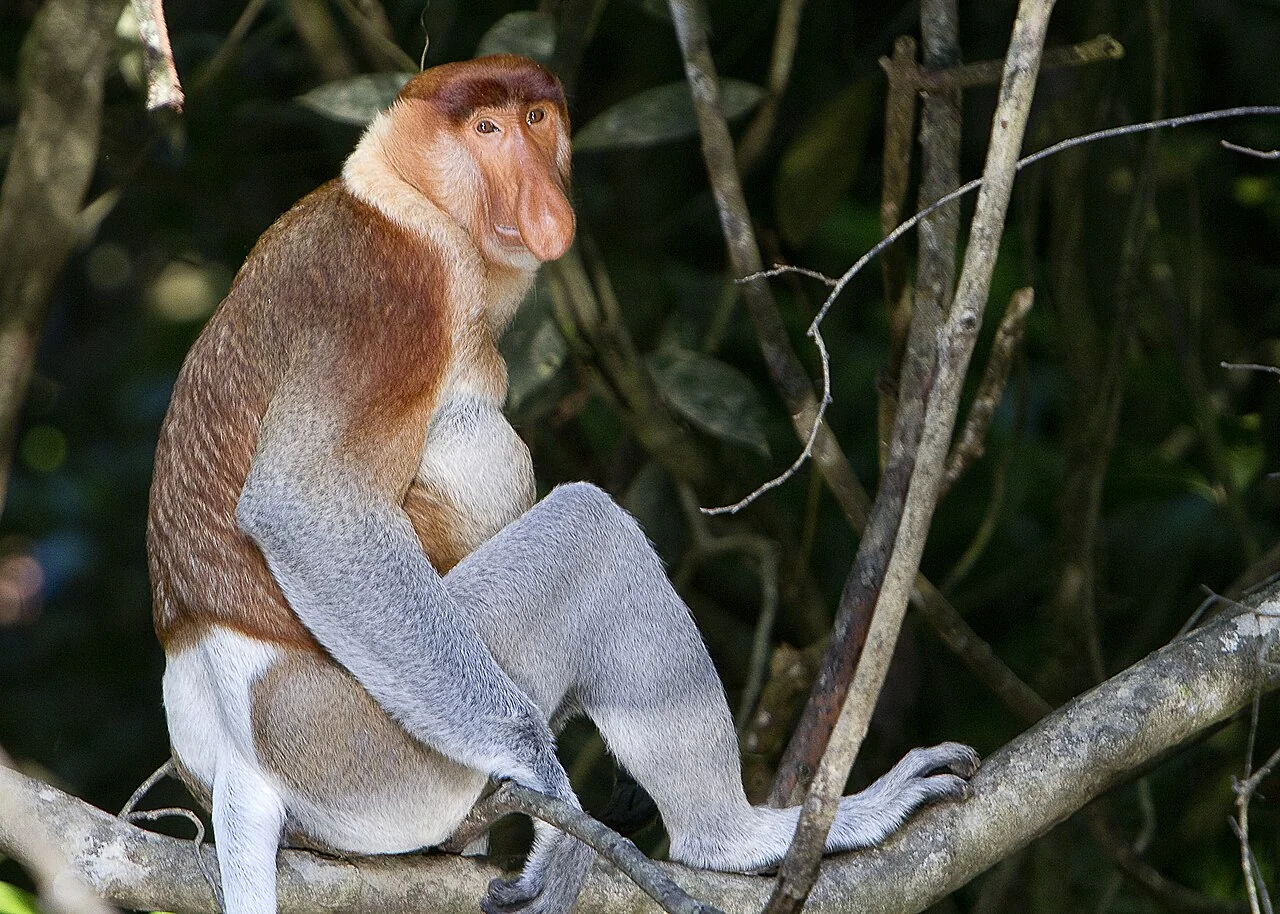
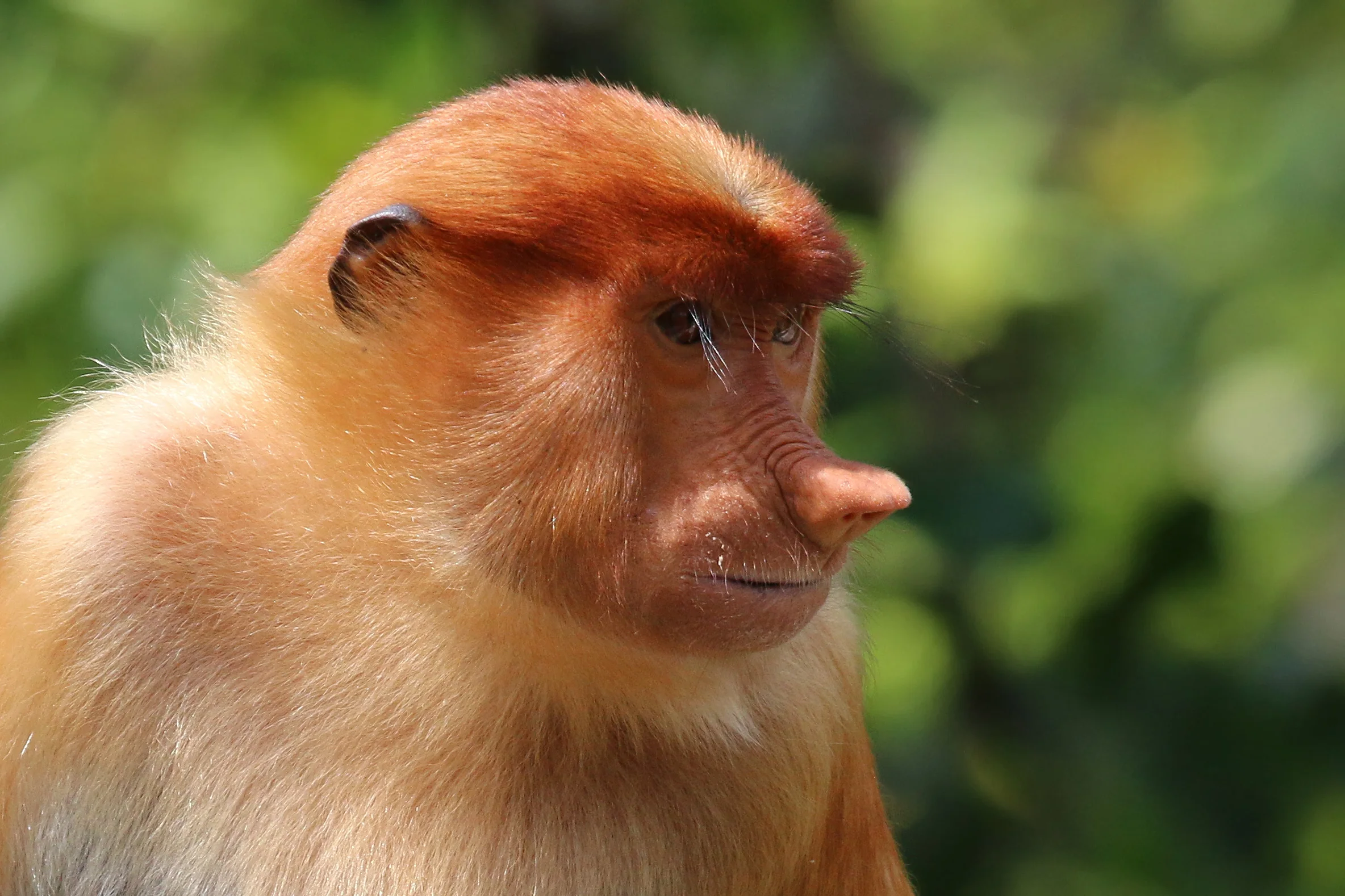
The proboscis monkey is a large, reddish-brown leaf monkey in the family Cercopithecidae. It is endemic to Borneo and is strongly associated with forests near rivers, estuaries, mangroves and swamps.
Males are substantially larger than females and have the most pronounced noses. Infants are born with blue facial skin that changes colour as they develop.
Proboscis monkey biology
Why does the proboscis monkey have such a big nose?
The enlarged nose is most developed in adult males, which points to a role in sexual and social signalling rather than a general breathing requirement. A larger nose makes the male's face more conspicuous and affects the acoustic properties of calls.
Research and field observations link male calls with group coordination, warnings and interactions with rivals. The nose should not be described as a simple loudspeaker with one proven purpose; it is part of a broader display involving body size, sound and social position.
Proboscis monkey biology
Where do proboscis monkeys live, and can they swim?
Proboscis monkeys live in coastal and riverside habitats across Borneo. Groups often sleep near water and move through the canopy during the day.
They are capable swimmers and can cross rivers when necessary. Partly webbed digits and strong swimming behaviour are unusual among primates, but water also exposes them to crocodiles and makes intact riverside forest essential.
Proboscis monkey biology
What do proboscis monkeys eat?
Their diet is dominated by leaves, seeds and unripe fruit, with seasonal changes and occasional invertebrates. A specialised multi-chambered stomach supports fermentation of fibrous plant material.
The rounded belly is therefore connected to digestion rather than obesity. Captive or wild diets rich in ripe sugary fruit can be unsuitable for a digestive system adapted to leaves and less sugary foods.
Conservation
Conservation status: Endangered
Loss and fragmentation of mangroves, swamp forest and riverine habitat are major threats. Hunting also occurs in parts of the range. Because the species depends closely on lowland waterways, conversion of those habitats can isolate groups quickly.
Evidence and further reading
Proboscis monkey sources
Source 1 · Animal Diversity Web
Nasalis larvatusUsed for: Taxonomy, distribution, habitat, anatomy, diet and social behaviour.
Source 2 · Wisconsin National Primate Research Center
Proboscis monkey factsheetUsed for: Range, riverside habitat, diet, appearance and swimming behaviour.
Source 3 · Science Advances
Nasalization by Nasalis larvatusUsed for: Original research on male nose size, call resonance and social signalling.
Source 4 · World Wildlife Fund
Life Among the MangrovesUsed for: Mangrove habitat, feeding and habitat-loss context.
Source 5 · IUCN Red List
Proboscis monkey species searchUsed for: Current global conservation category reference.