 01Amphibian
Ambystoma mexicanum
Axolotl
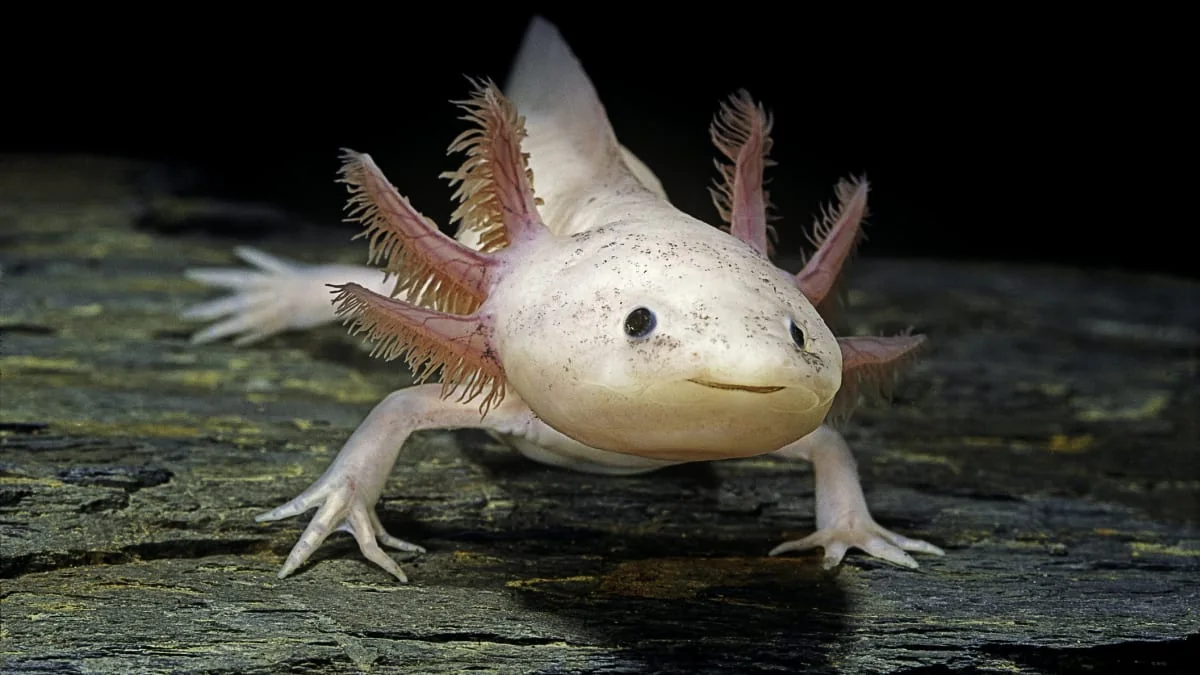
It normally keeps its larval form as an adult, including its feathery external gills.
Read Axolotl profile
Animal group guide
Amphibian skin and body shape respond directly to moisture, oxygen, temperature and the need to hide. Features that look unfinished or exaggerated often make sense only in the animal's habitat.
What connects them
Amphibians exchange water and gases through permeable surfaces, so skin is central to how they live. The folds of the Titicaca water frog increase available surface area, while the axolotl keeps external gills and other juvenile traits throughout adult life.
Other species are shaped by concealment. The purple frog has a compact body and pointed snout for burrowing. The black rain frog has short, strong limbs and a round body that work underground better than they would in a long jump.
Unusual amphibians are also conservation reminders. Restricted ranges, freshwater pollution, introduced predators, harvesting and habitat change can affect species whose entire wild distribution fits within one lake system or mountain region.
Meet the amphibians
01AmphibianAmbystoma mexicanum
It normally keeps its larval form as an adult, including its feathery external gills.
Read Axolotl profile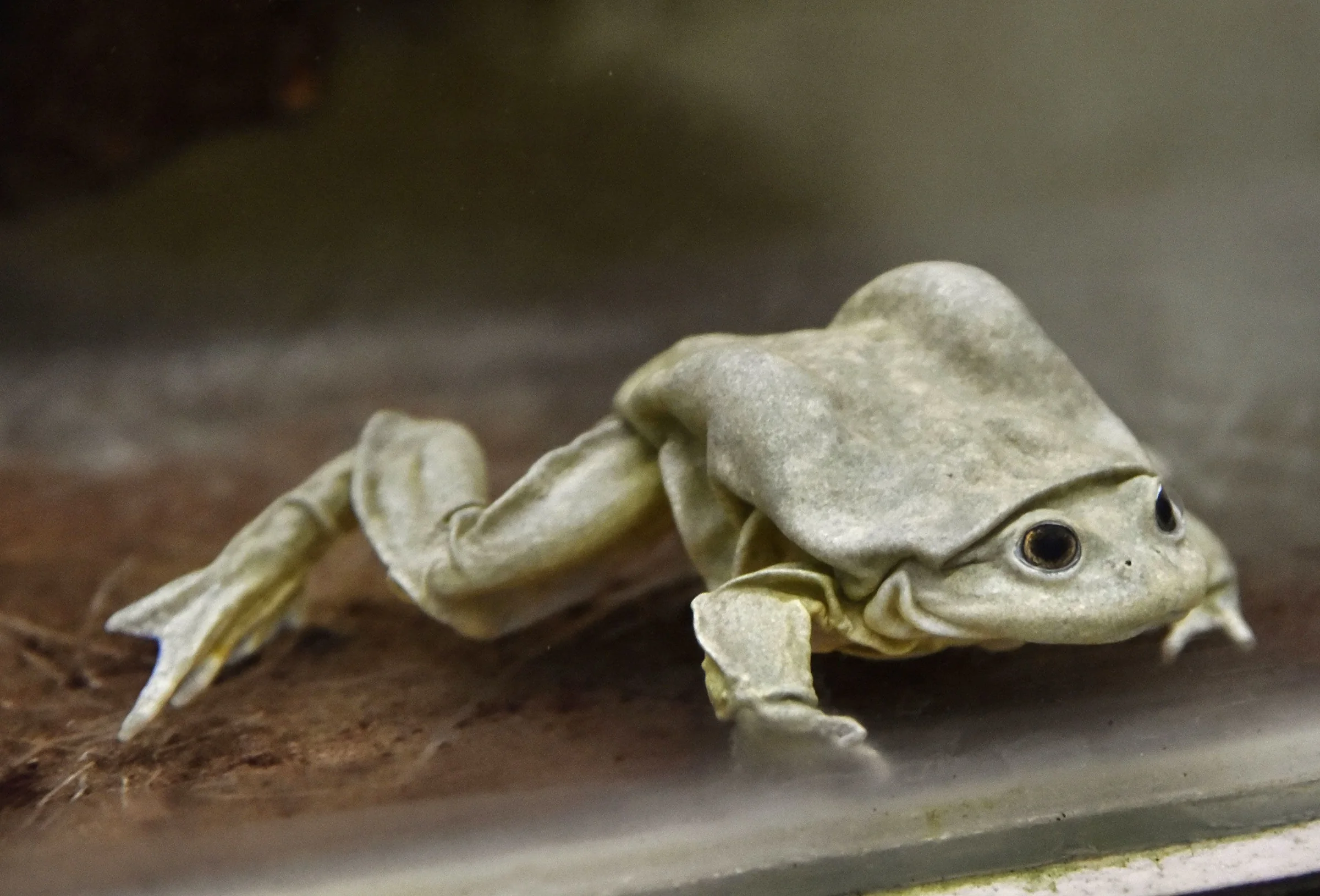 02Amphibian
Telmatobius culeus
Loose skin folds increase the surface available for gas exchange in cold, high-altitude water.
Read Titicaca water frog profile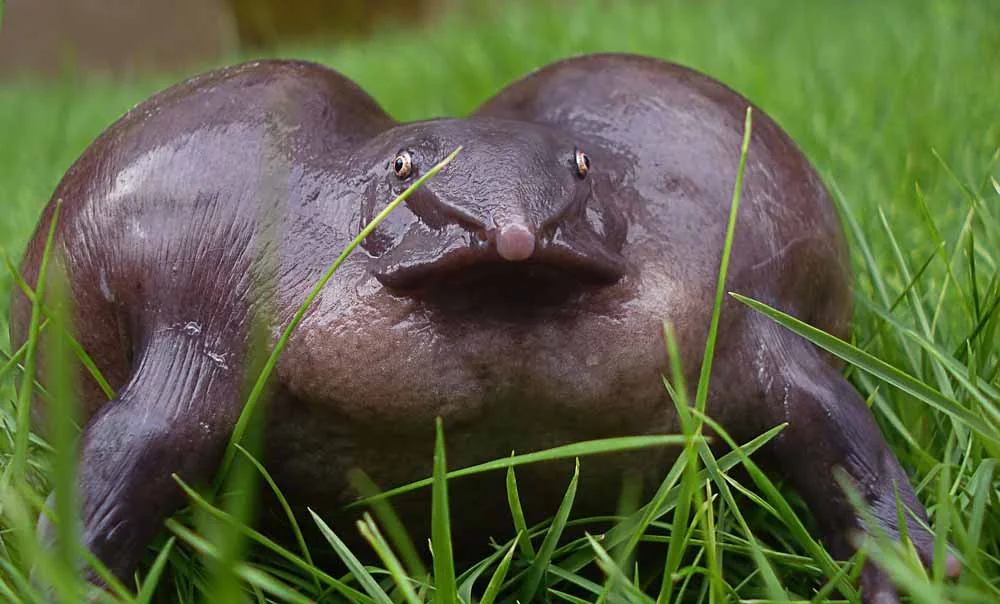 03Amphibian
Nasikabatrachus sahyadrensis
A compact body, strong limbs and pointed snout fit a life spent mostly underground.
Read Purple frog profile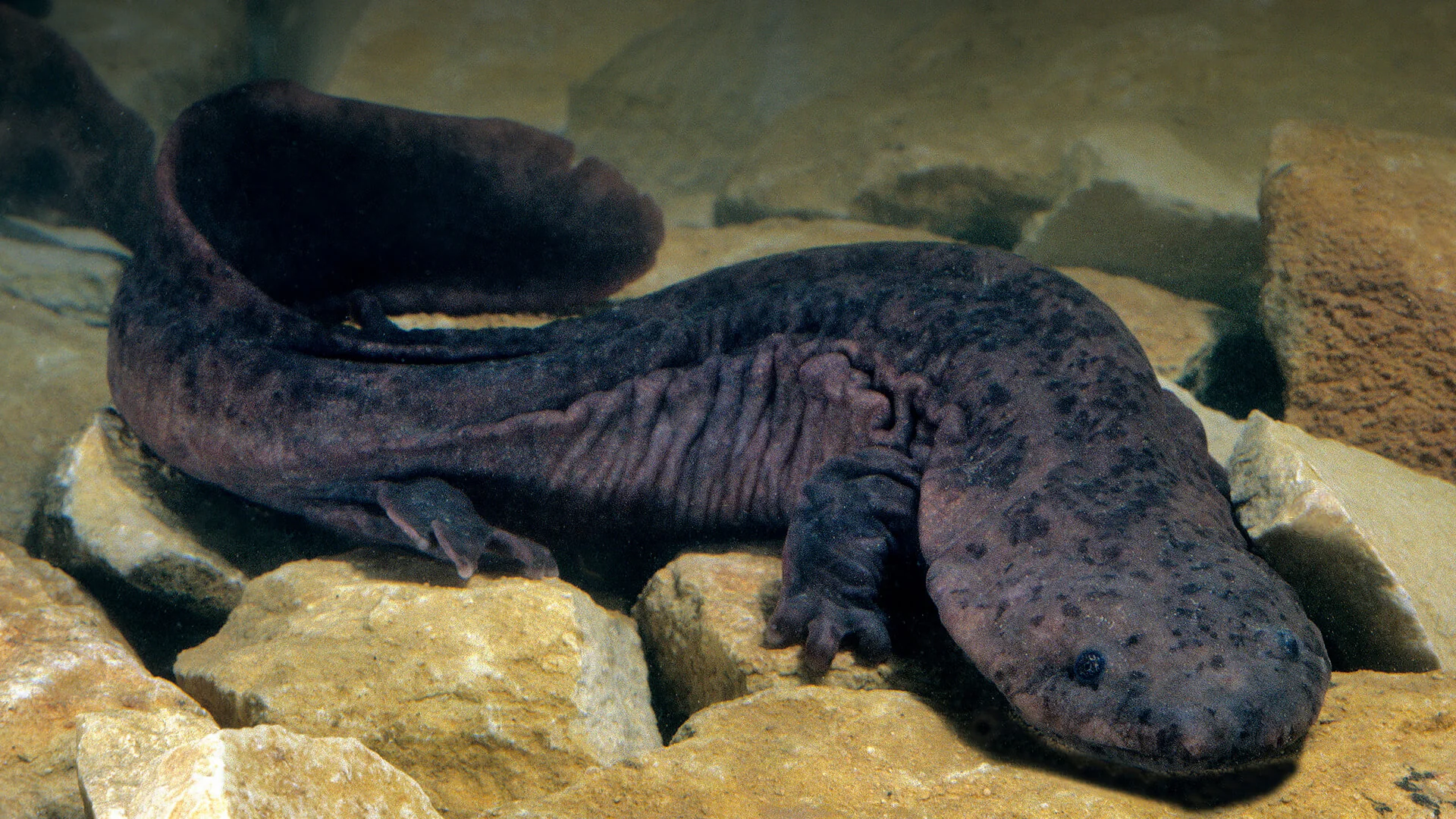 04Amphibian
Andrias davidianus
Its flattened body and folded skin support an almost entirely aquatic life.
Read Chinese giant salamander profile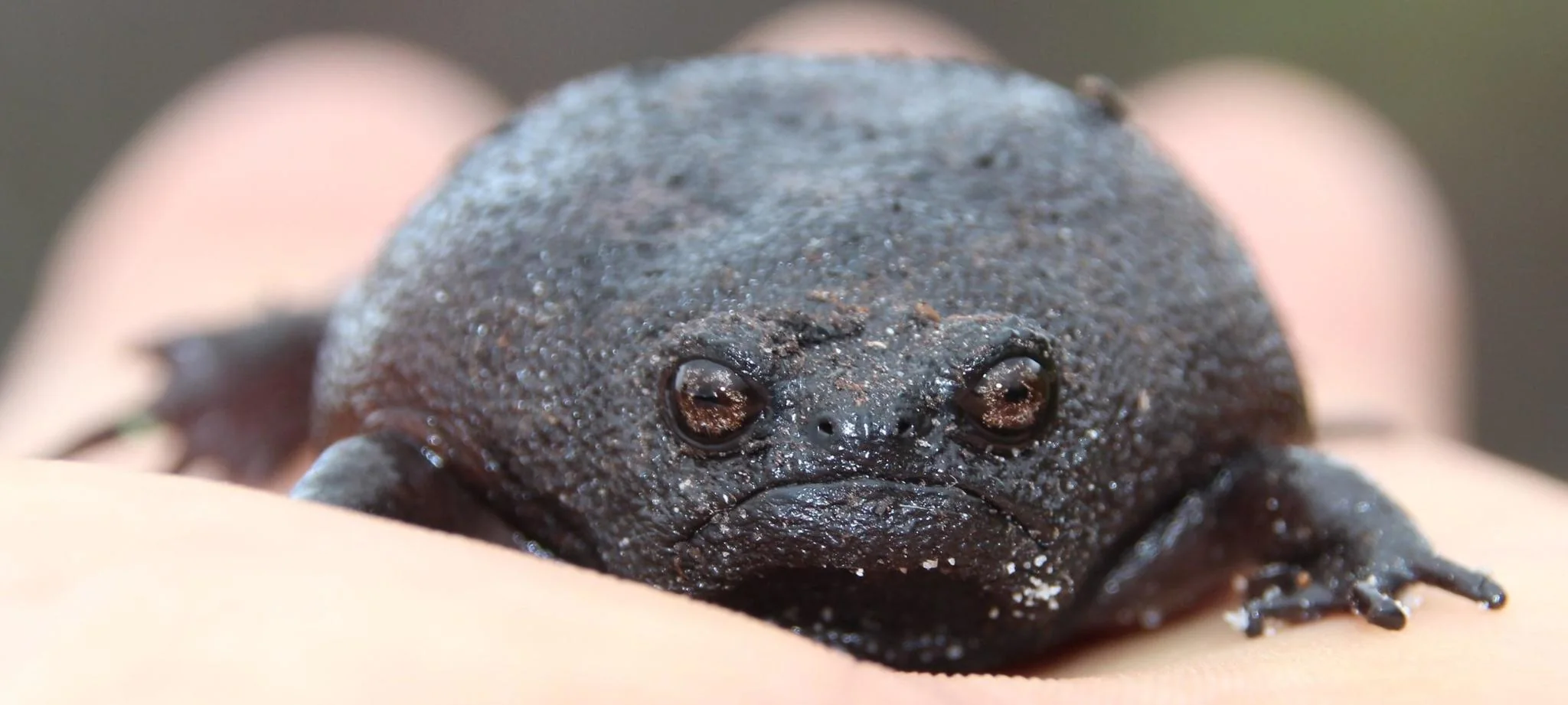 05Amphibian
Breviceps fuscus
Its rounded body and short powerful limbs are built for digging, not long jumps.
Read Black rain frog profileContinue exploring
See every animal in the collection
Browse all 24 animalsAppearance and function
| Visible feature | Biological role | Examples |
|---|---|---|
| External gills | Take oxygen from water while retaining an aquatic form | Axolotl |
| Loose skin folds | Increase surface area for gas exchange | Titicaca water frog |
| Pointed snout and strong limbs | Move and feed underground | Purple frog |
| Compact, rounded body | Fit a burrowing rather than jumping lifestyle | Black rain frog |