Definition and identity
What is a black rain frog?
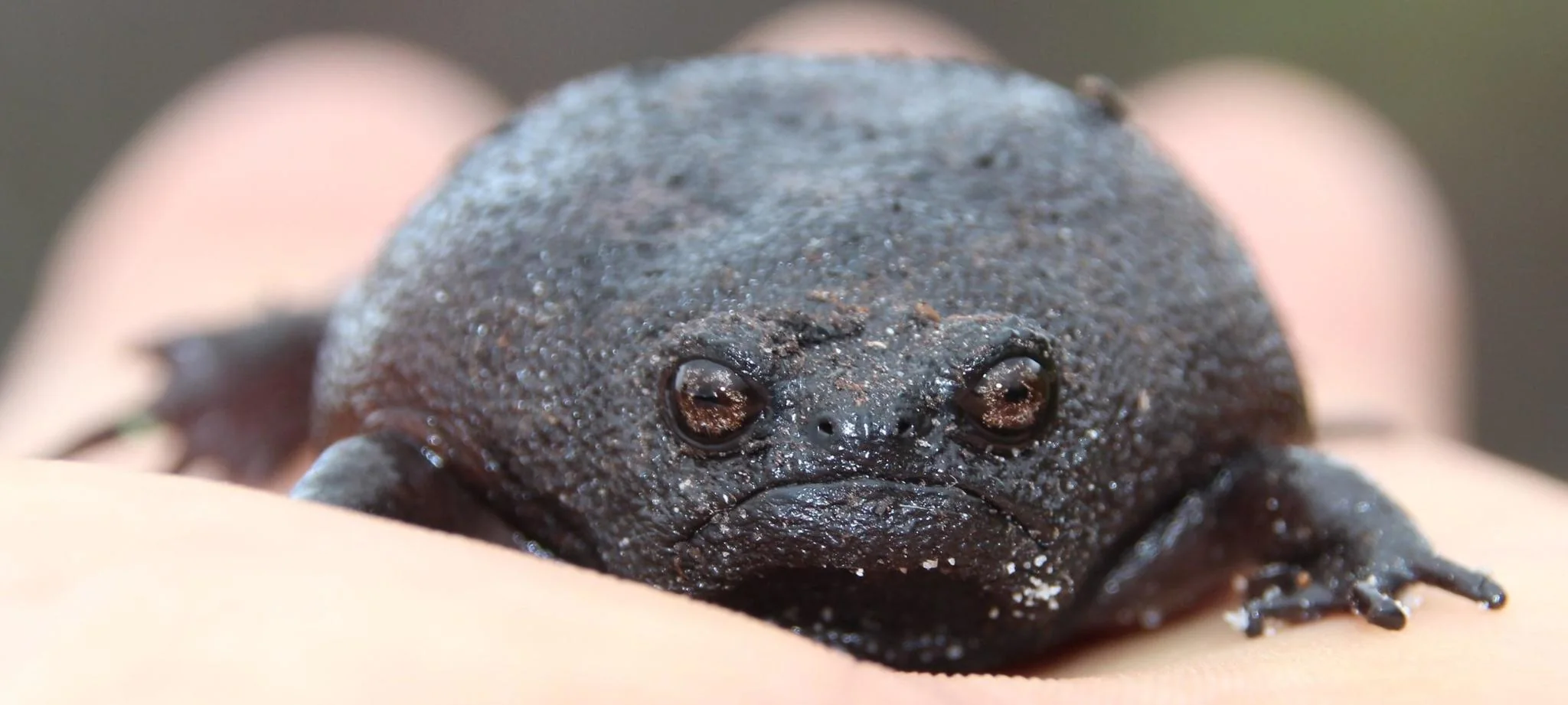
The black rain frog is one of several short-headed frogs in the genus Breviceps. It is endemic to a limited part of South Africa and may also be called the plain rain frog or brown short-headed frog.
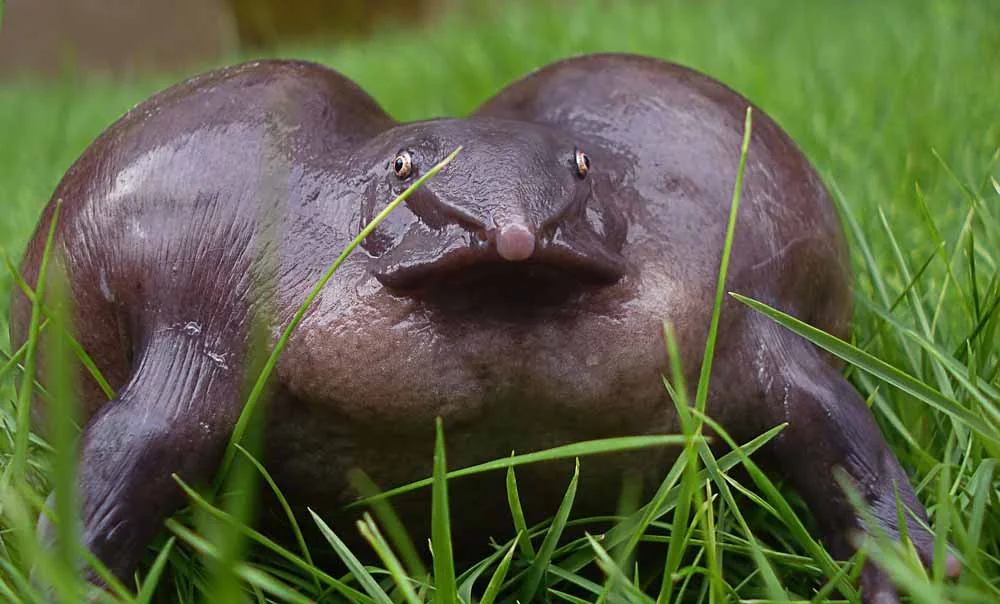
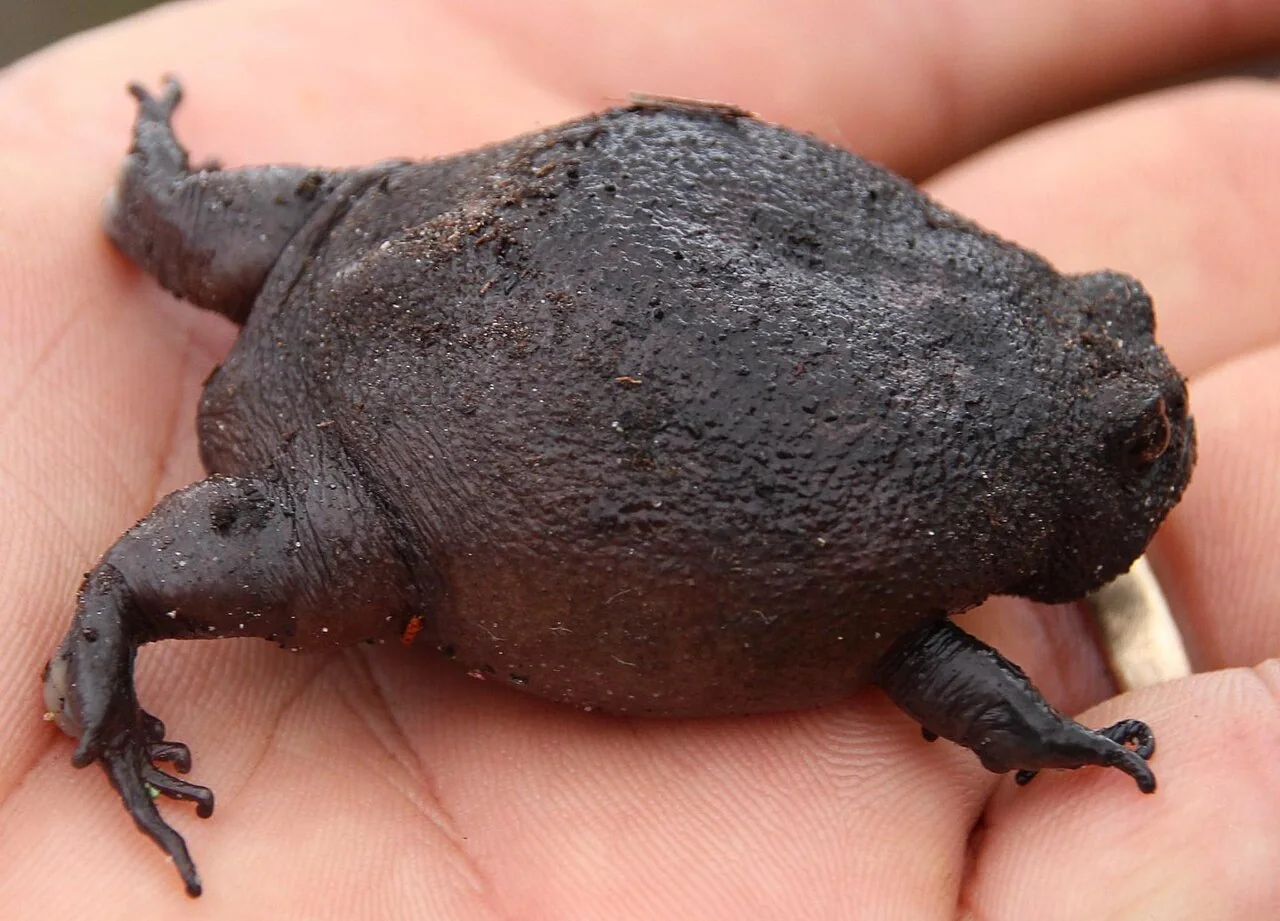
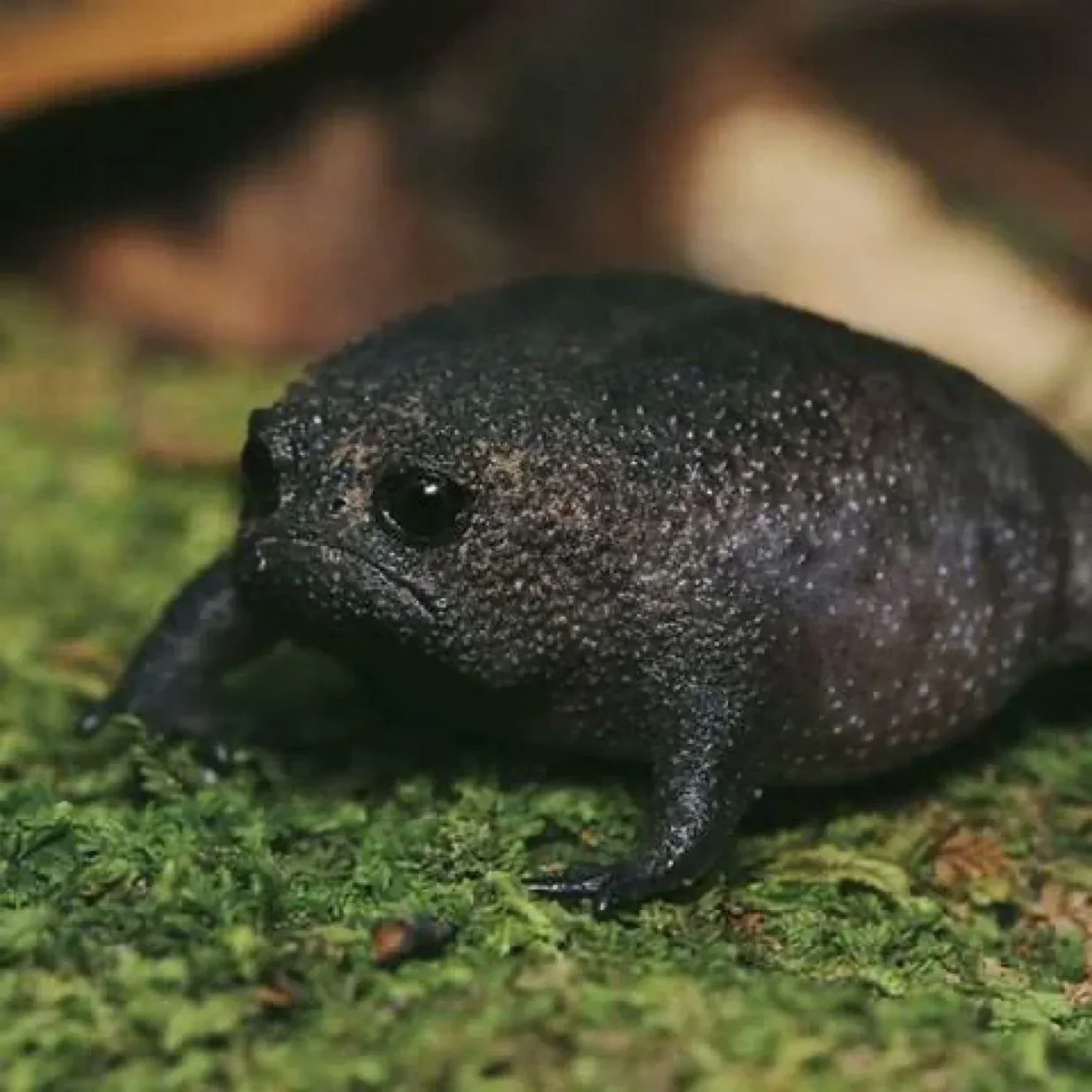
Dark colour, granular skin and a flattened face produce the familiar online portrait. The mouth does not show sadness or anger because human emotional expressions cannot be read directly from frog anatomy.
Black rain frog biology
How is the black rain frog built for digging?
Its limbs are short and strong, trading jumping distance for leverage against soil. The frog burrows backwards and spends much of its time sheltered below the surface.
Rain and moisture make surface activity safer. The common name reflects the association between rain frogs and wet-weather calls or emergence, not a need to live permanently in open water.
Black rain frog biology
Why does a black rain frog puff up?
Rain frogs can inflate their bodies when threatened. A larger, rounder shape can be harder to swallow and may brace an animal inside a narrow burrow.
Inflation reinforces the comical appearance people share online, but it is a defensive response. Observers should avoid handling or provoking a frog merely to produce the pose.
Black rain frog biology
Where does the black rain frog live?
The species occurs in the southern Cape Fold Mountains, where it uses fynbos, forest edges and soil that remains suitable for burrowing. It does not require a permanent pond for its everyday life.
SANBI lists the species as Least Concern. That category indicates a current assessment, not immunity from local fire changes, plantation activity, road building or habitat disturbance.
Conservation
Conservation status: Least Concern
South Africa's national assessment lists Breviceps fuscus as Least Concern. Its restricted regional distribution still makes responsible habitat management and accurate species identification worthwhile.
Evidence and further reading
Black rain frog sources
Source 1 · American Museum of Natural History
Breviceps fuscusUsed for: Accepted taxonomy, range and common names.
Source 2 · South African National Biodiversity Institute
Species Status: Breviceps fuscusUsed for: National conservation category.
Source 3 · World Wildlife Fund
Meet the Black Rain FrogUsed for: Range, appearance and seasonal calling context.