Definition and identity
What is a purple frog?
The purple frog belongs to an ancient and distinctive amphibian lineage and was formally described in 2003. Local communities already knew the animal, but its underground life made it easy for formal zoology to overlook.
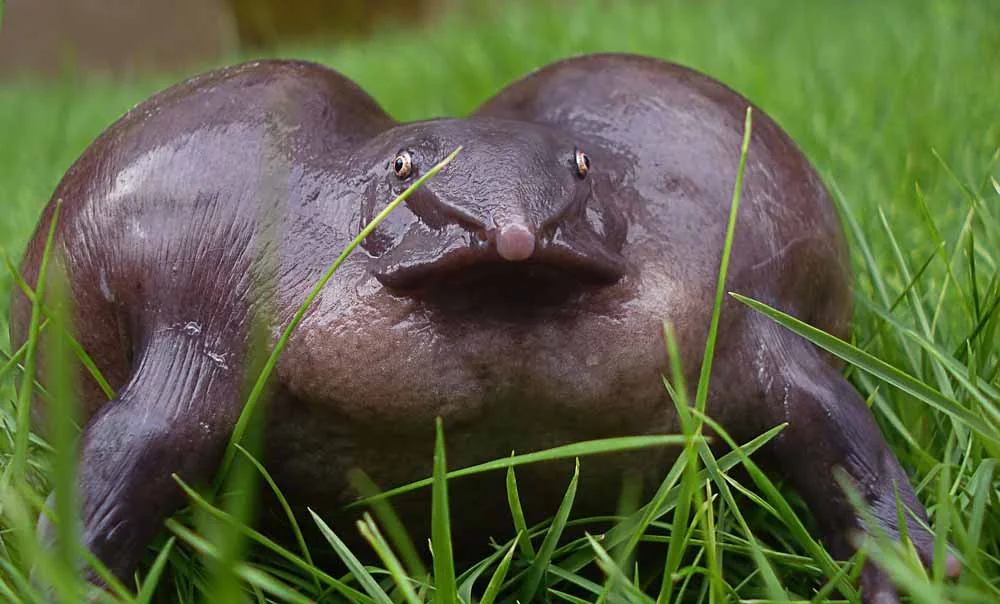
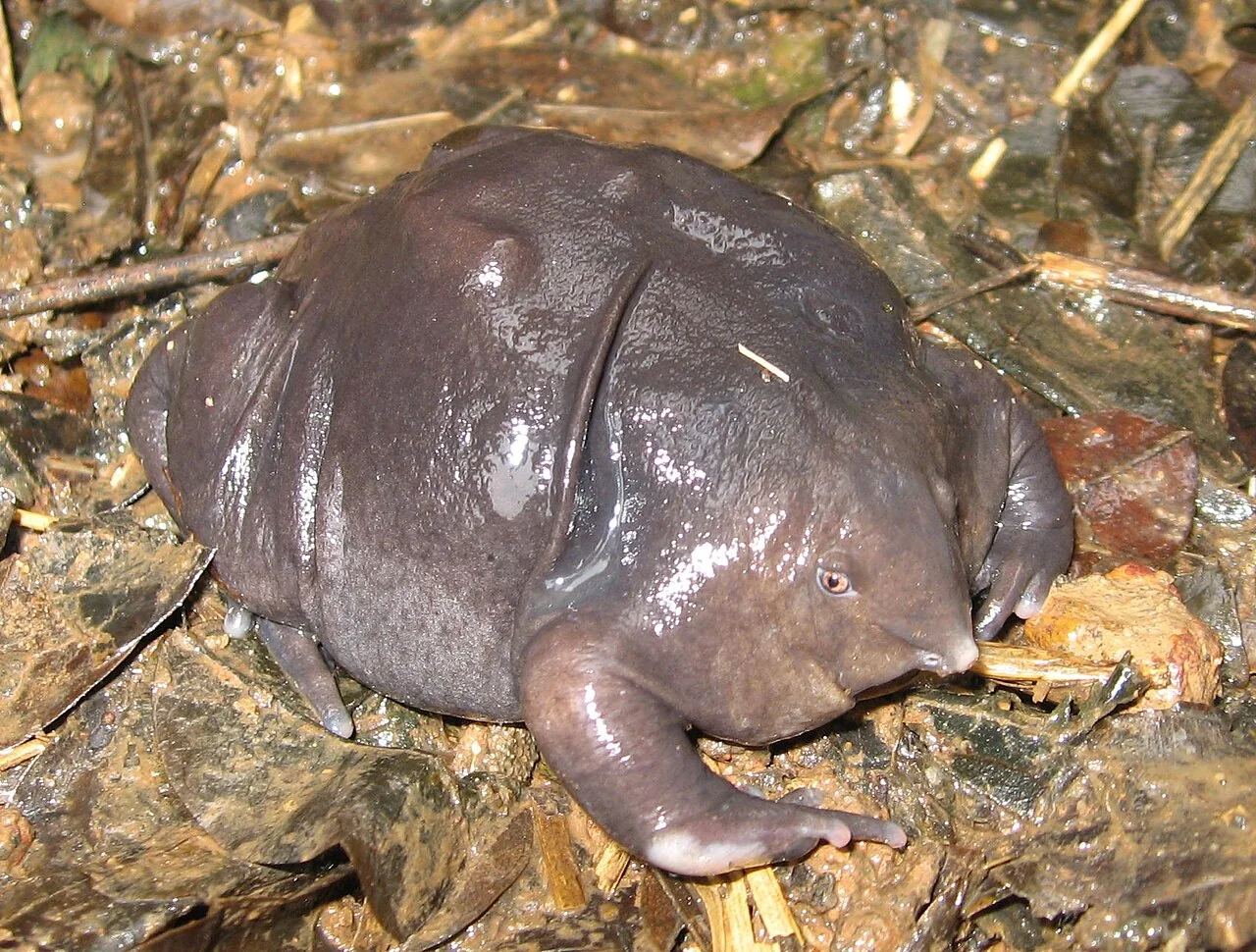
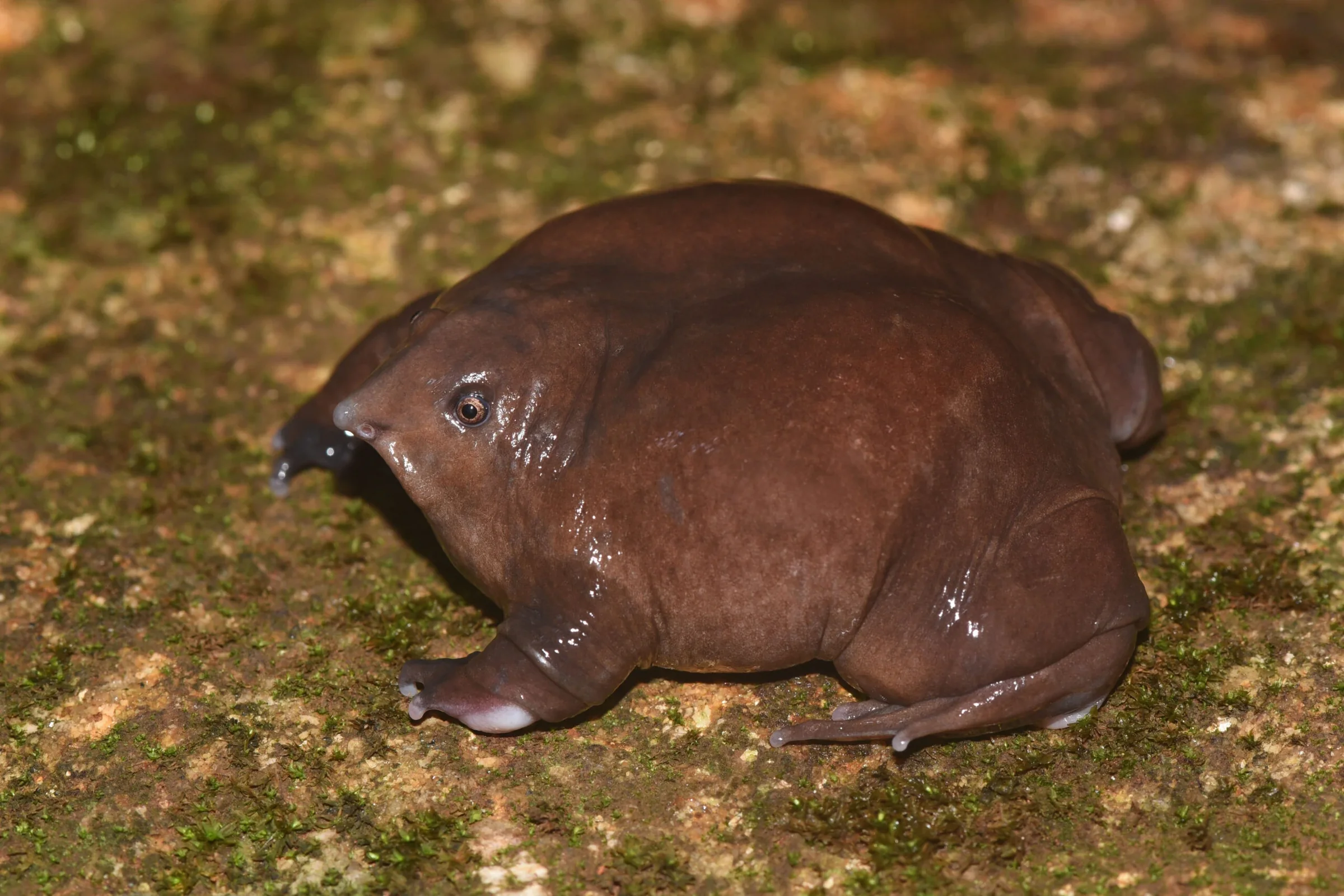
Adults are dark purple-brown, smooth-skinned and unusually round for frogs. The head appears small in relation to the body, and the snout narrows into a pale point.
Purple frog biology
How does the purple frog live underground?
Strong hind limbs and a compact body allow the frog to burrow backwards into moist soil. It can remain below ground for most of the year, feeding in subterranean insect channels rather than hunting on the surface.
This lifestyle reduces the need for long jumping legs or a wide frog-like head. The animal is shaped for pushing, bracing and feeding in confined spaces.
Purple frog biology
When does the purple frog come to the surface?
Adults emerge during the monsoon and move toward fast-flowing seasonal streams to breed. Their brief appearance above ground explains why sightings are uncommon even in occupied habitat.
Tadpoles attach to rocks in flowing water with specialised mouths. The life cycle therefore depends on both intact forest soil for adults and suitable streams for larvae.
Purple frog biology
Why is the purple frog endangered?
Its known range is limited and fragmented by plantations, roads, dams and other land-use change. Disturbance near breeding streams can affect the short period when reproduction must succeed.
Conservation plans emphasise protected habitat, population monitoring, research on underground ecology and work with communities. The frog cannot be protected by focusing on a pond alone because most of its life happens in surrounding soil.
Conservation
Conservation status: Endangered
A restricted Western Ghats range, specialised breeding streams and continued habitat change make the purple frog vulnerable. Protecting connected forest soil and clean monsoon streams is more useful than treating it as a seasonal curiosity.
Evidence and further reading
Purple frog sources
Source 1 · American Museum of Natural History
Nasikabatrachus sahyadrensisUsed for: Accepted scientific name, family placement and original description.
Source 2 · Natural History Museum
Rainbow nature: life in majestic purpleUsed for: Underground life and brief monsoon emergence.
Source 3 · Zoological Society of London
Purple FrogUsed for: Discovery, evolutionary importance and conservation context.
Source 4 · EDGE of Existence
Nasikabatrachus sahyadrensisUsed for: Burrowing ecology, range and conservation priorities.
Source 5 · Indian Amphibians
Purple Frog Species AccountUsed for: Habitat and fossorial behaviour.