Definition and identity
What is a star-nosed mole?
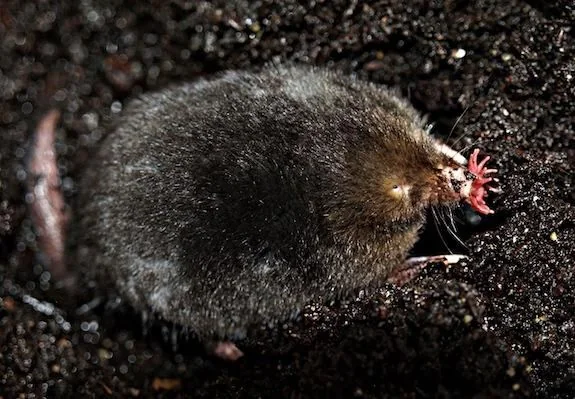
The star-nosed mole is a semi-aquatic member of the mole family. It digs tunnels like other moles but is closely associated with wet habitats and is also an effective swimmer.
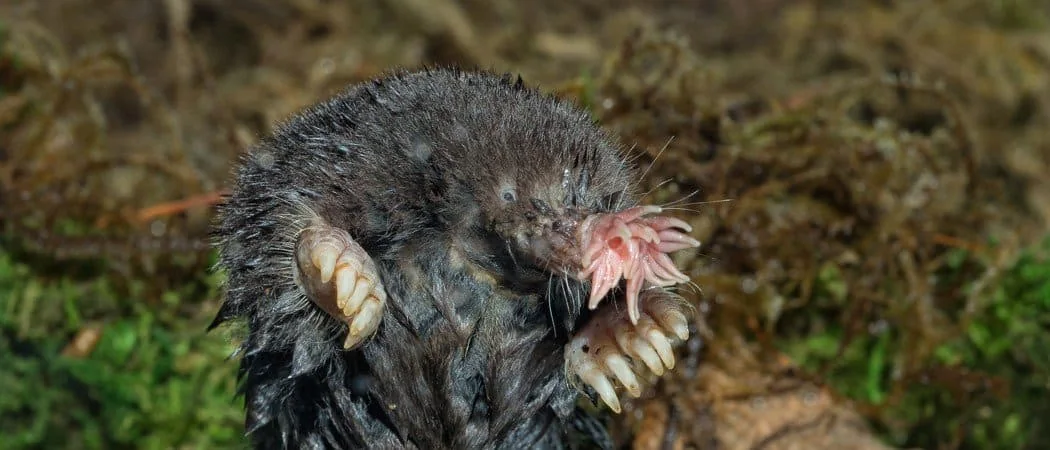
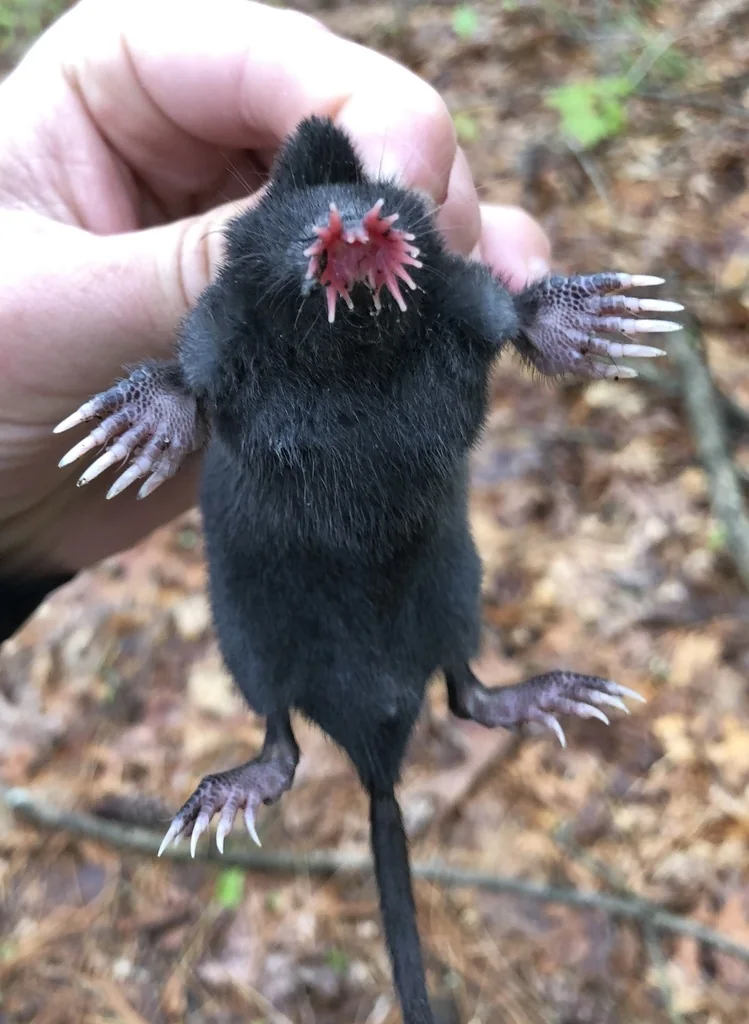
Its dark fur, strong front feet and cylindrical body suit underground movement. The star is the obvious difference: eleven rays sit on each side of the nose, forming a symmetrical sensory surface around the nostrils.
Star-nosed mole biology
How does the star-shaped nose work?
Each ray is covered with tiny sensory structures called Eimer's organs. As the mole moves, the rays make rapid contact with soil, water, objects and possible prey. The information is processed by a large specialised region of the brain devoted to touch.
Vanderbilt research shows that the rays are not all used equally. The shortest central pair acts as a high-resolution touch area. When another ray encounters something promising, the mole shifts this central pair onto the object before deciding whether to eat it.
Star-nosed mole biology
Where does the star-nosed mole live and what does it eat?
Star-nosed moles occur in moist lowlands across parts of eastern North America. Marshes, wet meadows, peatlands and the edges of streams provide soft soil for tunnels and access to aquatic prey.
Their diet includes worms, insects, molluscs, crustaceans and other small invertebrates. The sensory star shortens the time needed to inspect and identify small prey in places where vision is limited.
Star-nosed mole biology
Why does the star-nosed mole look so strange?
Human faces place smooth skin around the nose, so a ring of moving appendages can look alien or damaged. In the mole's environment, the star is neither. It is a precise biological instrument.
The animal demonstrates how a familiar organ can be expanded for a different sense. Its nose is still involved in breathing and smell, but the visible star is dominated by touch.
Conservation
Conservation status: Least Concern
The species is not considered globally threatened, but it depends on wetlands and moist soils. Drainage, development and local water changes can still remove suitable habitat even when the species remains secure across its wider range.
Evidence and further reading
Star-nosed mole sources
Source 1 · Vanderbilt University Catania Lab
Star-Nosed MoleUsed for: Nasal rays, Eimer's organs and sensory organisation.
Source 2 · Animal Diversity Web
Condylura cristataUsed for: Distribution, habitat, feeding and behaviour.
Source 3 · American Society of Mammalogists
Star-nosed MoleUsed for: Species identity and conservation category.