
Habitat field guide
Coastal animals living between ocean, cliffs and breeding ground
Coasts concentrate food and breeding activity into narrow edges. They can also expose animals to wind, waves, human disturbance and pollutants carried across large distances.
Animals in this guide
2 connected profiles
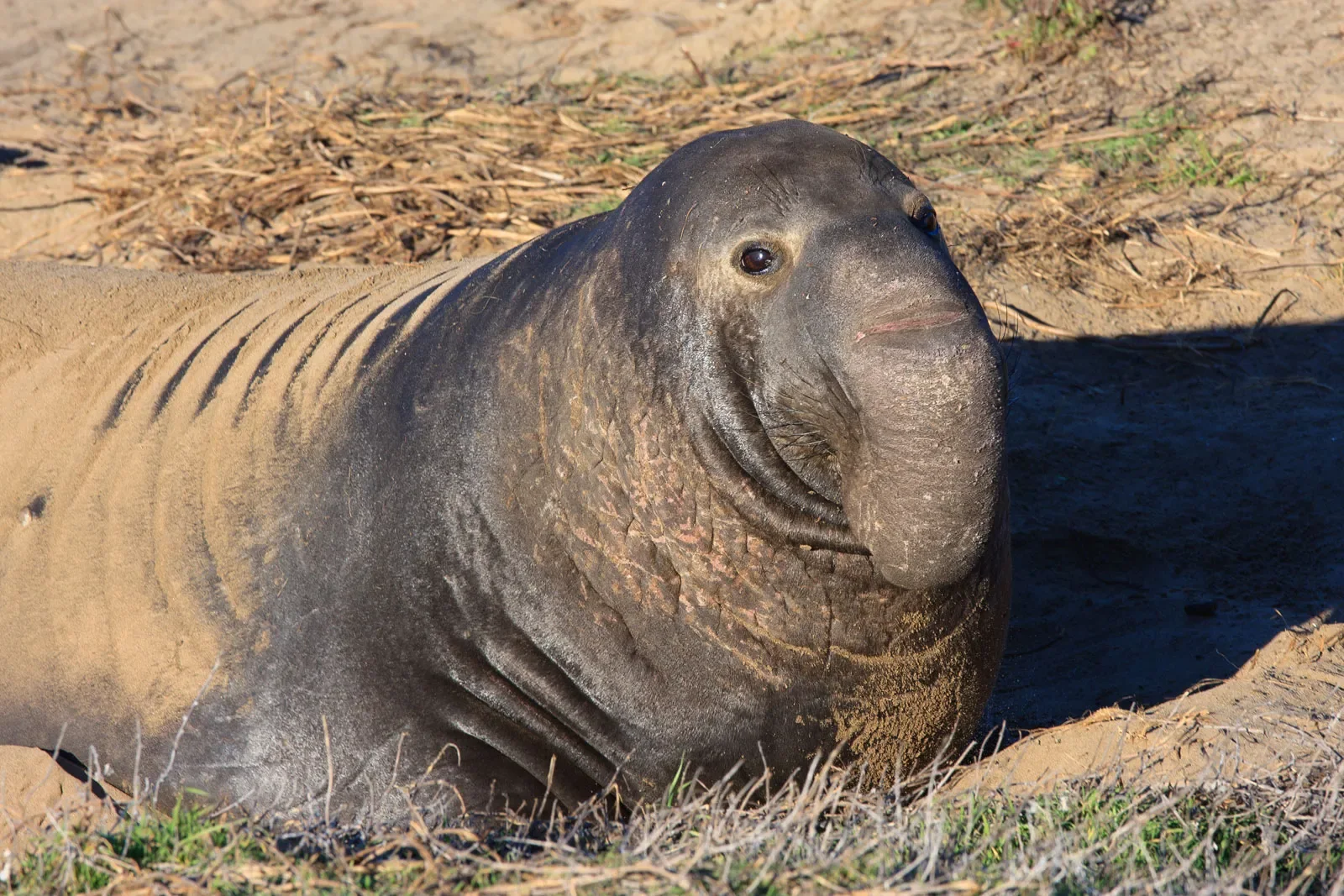
Mammal
Southern elephant seal
The mature male inflates his nose while roaring. The enlarged resonating structure helps a call carry across a noisy beach and reinforces the visual impression of body size.
Read profile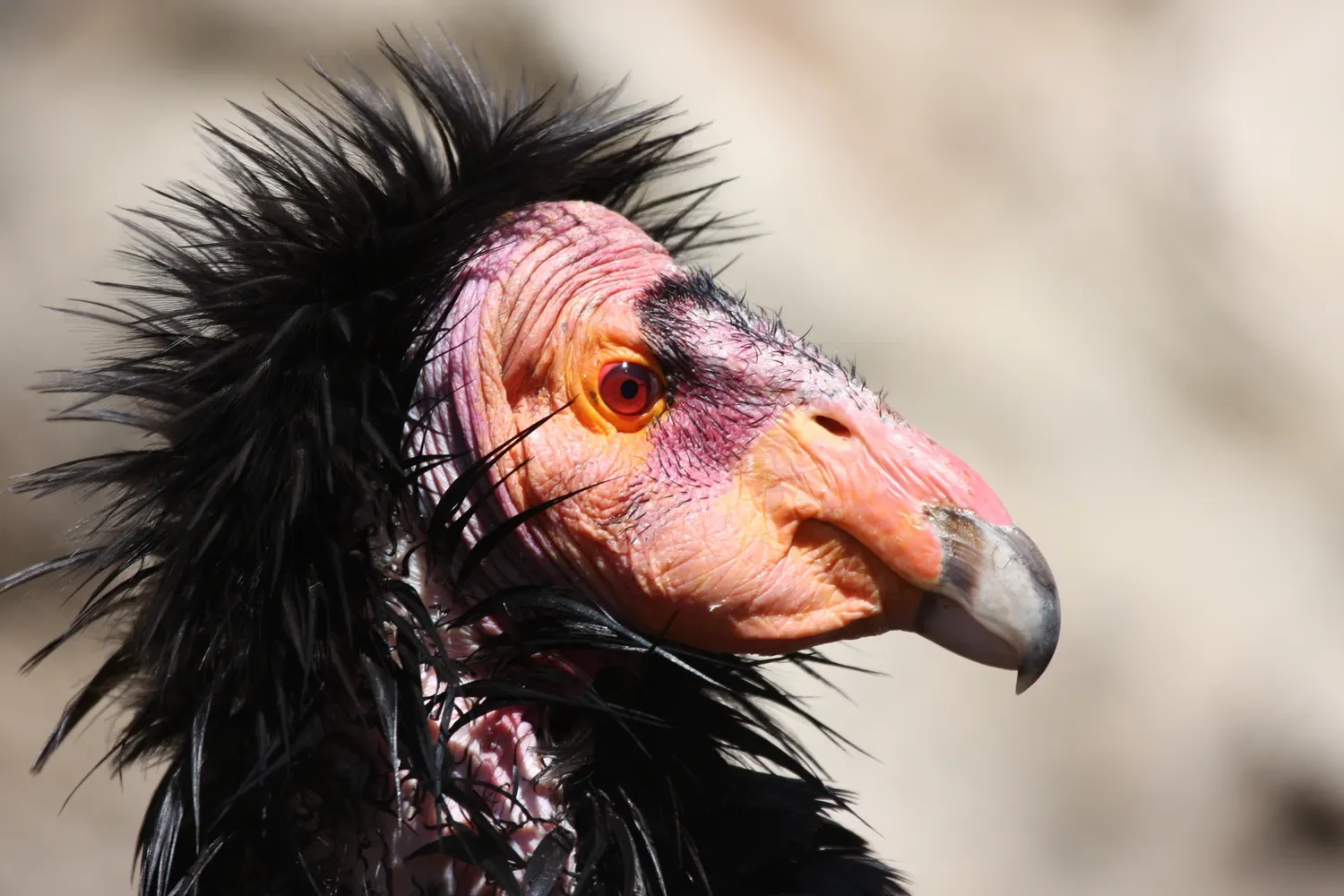
Bird
California condor
A featherless head is practical for a bird that reaches into carcasses. Exposed skin is easier to clean than blood-soaked feathers and can change colour during excitement.
Read profile01
Why do coastal breeding sites matter?
Southern elephant seals spend much of their lives at sea but return to land for breeding and moulting. Crowded beaches make body size, sound and the male's inflatable nose important parts of social competition.
California condors nest and roost on cliffs and may forage across coastal as well as inland landscapes. A protected nest site is only one requirement because adults range widely to find carrion.
02
Why can threats travel across a coastline?
A marine predator can encounter fishing activity and changing food webs far from its breeding beach. A soaring scavenger can encounter lead from carcasses after leaving a protected cliff.
Coastal conservation therefore depends on connections between places. Protecting one colony, island or nesting wall cannot remove every threat encountered during the rest of an animal's movements.
03
How do coastal animals divide life between land and sea?
An elephant seal feeds at sea but needs land for birth, nursing and moulting. Its diving body and its crowded breeding behaviour belong to different parts of the same life cycle.
Condors reverse the direction of that connection. They breed on land and move through the air over wide coastal or inland areas to find food. A coastal label describes one important setting, not the animal's entire world.
04
Which coastal disturbances matter most?
Noise, people, vehicles and introduced predators can disrupt a breeding site. Farther away, fishing activity, contaminants and changes in food availability can affect animals that later return to the same coast.
The relevant threat depends on the species and season. Good management protects enough space for breeding while also addressing hazards along feeding and travel routes.
Continue exploring
Compare this guide with the wider collection.