Definition and identity
What is an axolotl?
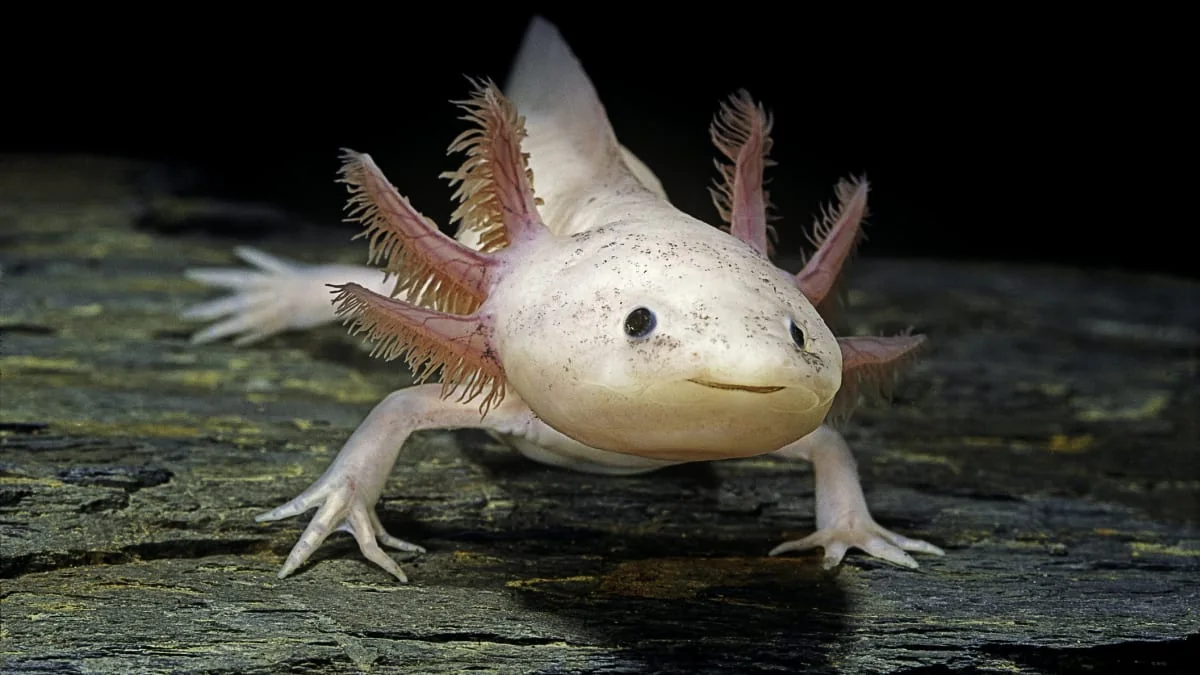
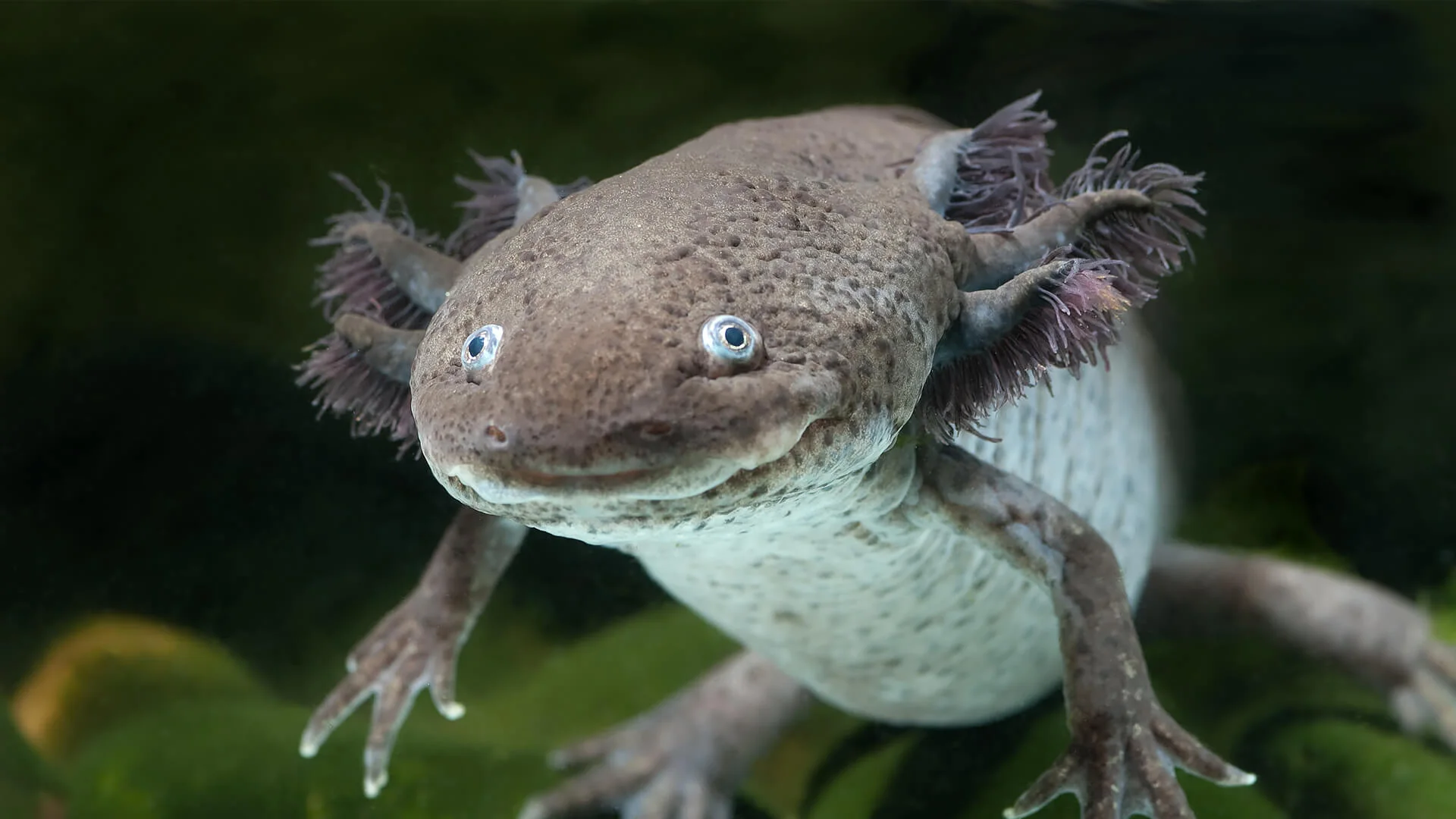
An axolotl is a salamander, not a fish. The name should refer specifically to Ambystoma mexicanum, although other Mexican Ambystoma species can retain aquatic juvenile traits and may look similar.
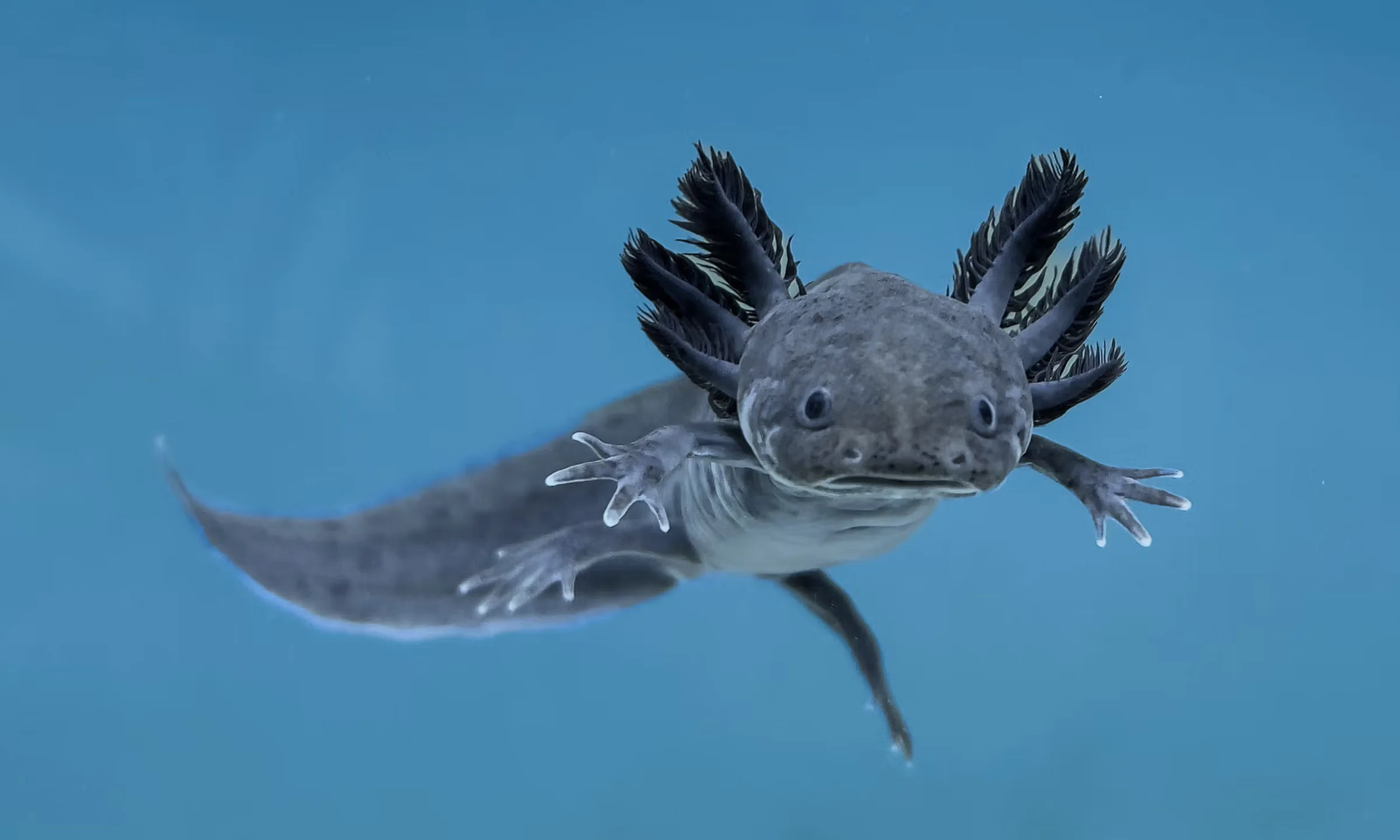
Wild axolotls are usually dark and mottled, which provides camouflage. Pale pink, white, golden and other colour forms are common in captivity because people have selectively bred them. The familiar pink pet does not represent the typical wild colour.
Axolotl biology
Why do adult axolotls still have gills?
Most mole salamanders transform from an aquatic larva into a more terrestrial adult. Axolotls normally become sexually mature while retaining larval features, a condition called paedomorphosis.
The external gills take oxygen from water, while lungs and skin also contribute to respiration. Axolotls can sometimes be induced to metamorphose under unusual hormonal conditions, but that is not their normal healthy life cycle and should not be treated as routine pet care.
Axolotl biology
What can an axolotl regenerate?
Axolotls can regenerate limbs and repair parts of several organs and tissues without forming the same kind of scar seen in humans. This ability has made them an important research organism in developmental and regenerative biology.
Regeneration is not invulnerability. An axolotl can still be injured, infected or killed, and repeated damage is harmful. Scientific interest in tissue repair should not be turned into a claim that the animal cannot suffer lasting consequences.
Axolotl biology
Where do wild axolotls live and what do they eat?
The species is native to the lake system of the Valley of Mexico. Much of that habitat has disappeared, and the remaining wild population is associated with the canals and wetlands of Xochimilco in Mexico City.
Axolotls are suction feeders. They draw worms, insect larvae, crustaceans, small fish and other suitable prey into the mouth. Habitat loss, water pollution and introduced fish that compete with or eat axolotls have contributed to the wild decline.
Conservation
Conservation status: Critically Endangered
Large captive and laboratory populations do not make the wild species secure. Wild axolotls persist in a small, heavily altered freshwater system. Protecting water quality, chinampa habitat and refuge areas while controlling introduced predators is central to their conservation.
Evidence and further reading
Axolotl sources
Source 1 · American Museum of Natural History
Ambystoma mexicanumUsed for: Accepted taxonomy and scientific-name history.
Source 2 · Natural History Museum
Axolotls: amphibians that never grow upUsed for: Paedomorphosis, regeneration, appearance and conservation context.
Source 3 · Animal Diversity Web
Ambystoma mexicanumUsed for: Native range, habitat, diet and life history.
Source 4 · U.S. Geological Survey
Axolotl Species ProfileUsed for: Identification and retained larval traits.