Definition and identity
What is a saiga antelope?
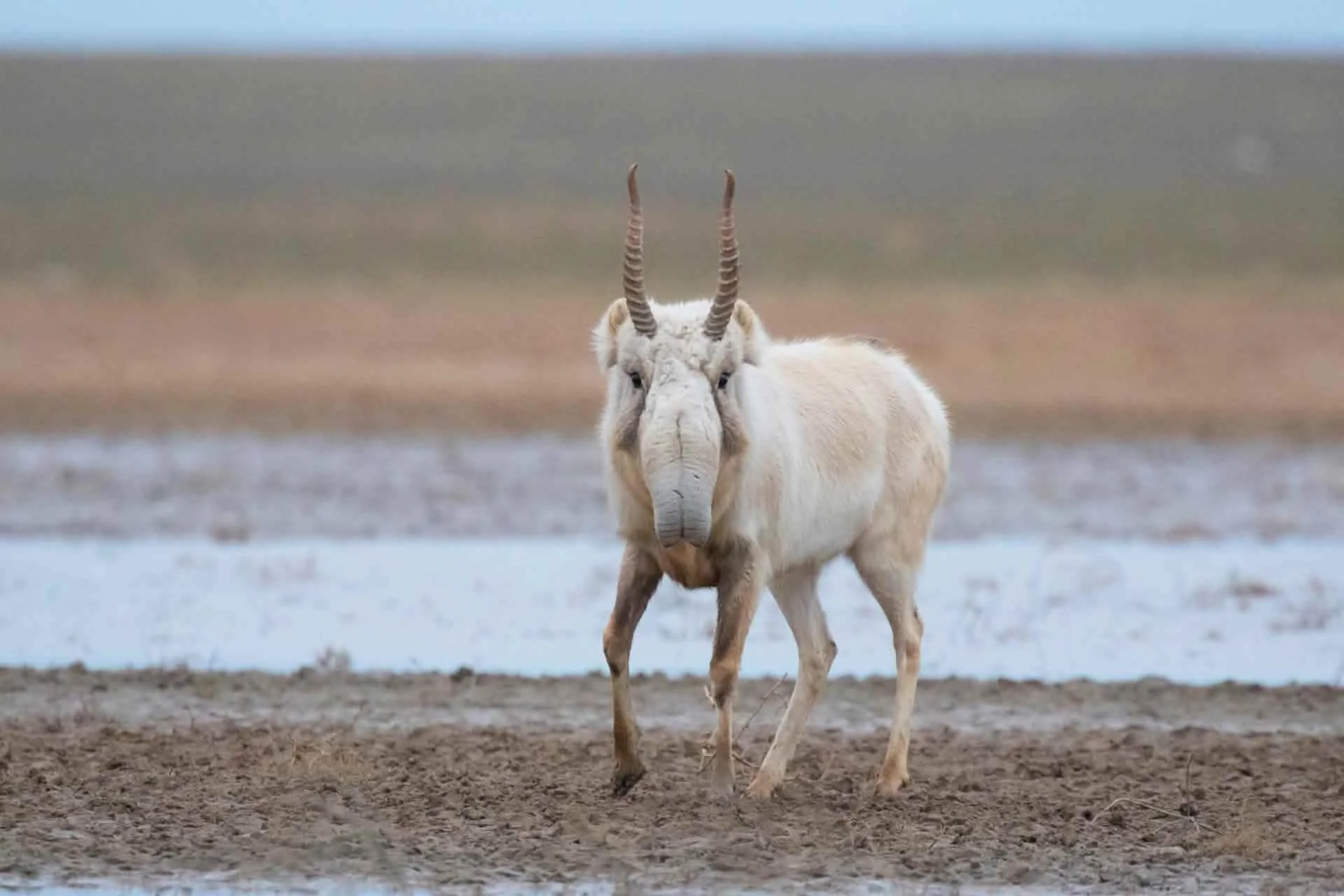
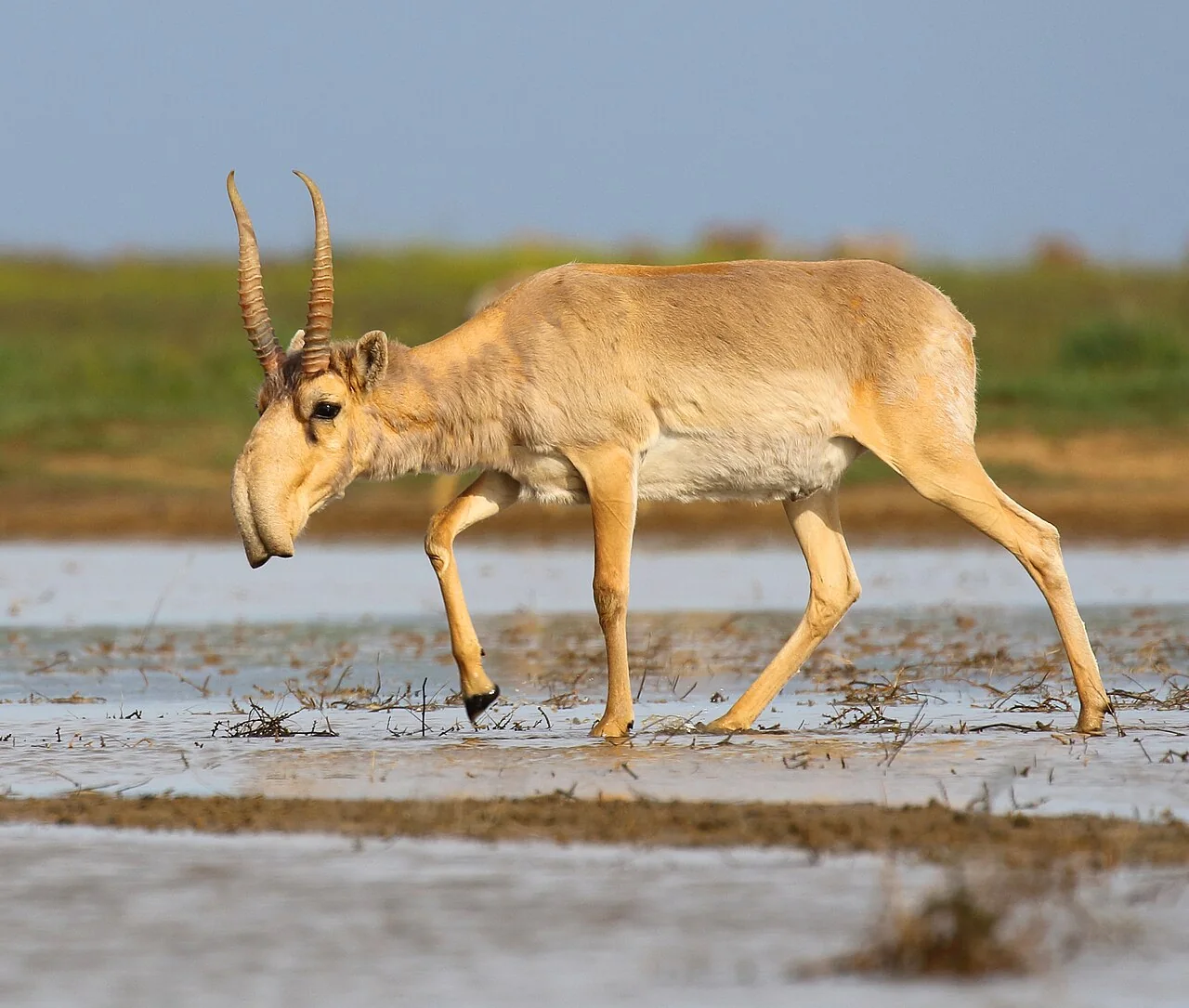
The saiga is a stocky antelope adapted to open, dry landscapes and long seasonal movements. Herds travel to find grazing, water and safer calving areas as conditions change across the steppe.
Taxonomic treatment differs among conservation authorities. Some separate the Mongolian form as Saiga borealis, while others retain it as a subspecies within Saiga tatarica. Population statements should therefore name both the authority and geographic scope.
Saiga antelope biology
How does the saiga's nose work?
The nose contains enlarged internal passages lined with tissue that conditions incoming air. In summer it helps filter dust thrown up by moving herds. In winter it warms and humidifies very cold, dry air before that air reaches the lungs.
The hanging shape also makes the face look shortened from the front. It is not a swollen injury or a loose trunk. It is a permanent respiratory adaptation to an exposed continental climate.
Saiga antelope biology
Where do saigas live and what do they eat?
Saigas occupy steppe, semi-desert and desert margins in Central Asia. Large herds can move over long distances, crossing administrative borders and infrastructure in response to snow, drought, forage and breeding needs.
They graze and browse a variety of grasses, herbs and shrubs, including plants that other livestock may avoid. Their movements distribute grazing pressure across a landscape rather than keeping it in one small territory.
Saiga antelope biology
How did the saiga recover from near collapse?
Saiga numbers collapsed after the end of the Soviet period as poaching increased, particularly for male horns. The species also suffered catastrophic disease-related mass mortality, including the 2015 event in Kazakhstan.
Protection, enforcement, monitoring and international cooperation supported a major rebound. The IUCN category improved to Near Threatened in 2023. That is a conservation success, but mass disease, illegal hunting, barriers to migration and conflict over grazing mean the recovery is not permanent or uniform across every population.
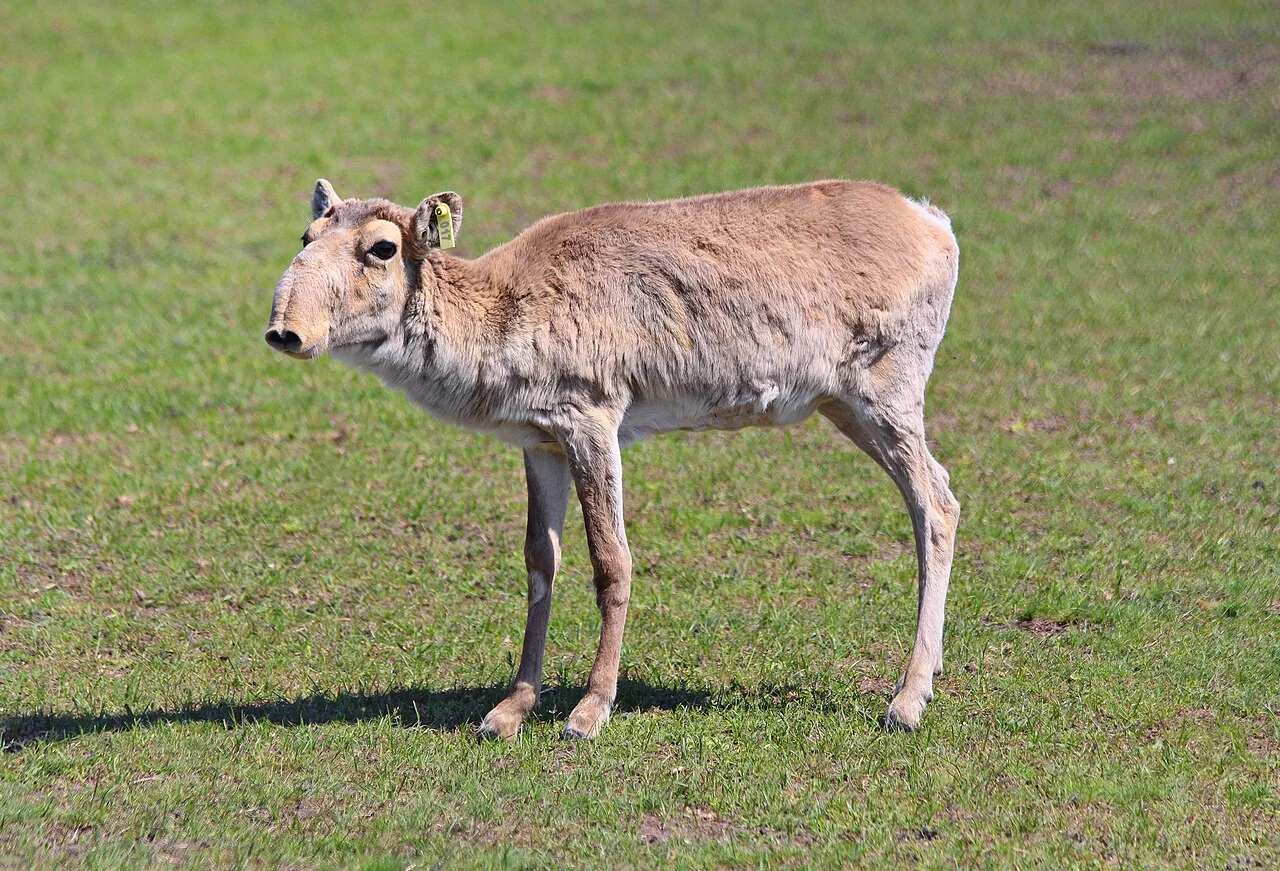
Conservation
Conservation status: Near Threatened
The 2023 reassessment reflects a remarkable increase, especially in Kazakhstan. Near Threatened does not mean conservation work is finished. Smaller populations, cross-border movements, disease risk, poaching and infrastructure still require active management.
Evidence and further reading
Saiga antelope sources
Source 1 · Convention on Migratory Species
Saiga tatarica species profileUsed for: Nasal adaptation, migratory habitat, distribution and taxonomy cautions.
Source 2 · Saiga Conservation Alliance
Saiga conservation triumph and ongoing challengesUsed for: 2023 Near Threatened reassessment and uneven population recovery.
Source 3 · Convention on Migratory Species
Saiga AntelopeUsed for: International conservation framework, range states and management priorities.
Source 4 · Convention on Migratory Species
Threats and ChallengesUsed for: Historic decline, poaching and mass-mortality context.
Source 5 · Wildlife Conservation Society
Saiga Reclassified to Near ThreatenedUsed for: 2023 IUCN category change and recovery context.
Source 6 · Convention on Migratory Species
Saiga Overview ReportUsed for: Recent population distribution, taxonomy and trend cautions.