Definition and identity
What is an alligator snapping turtle?
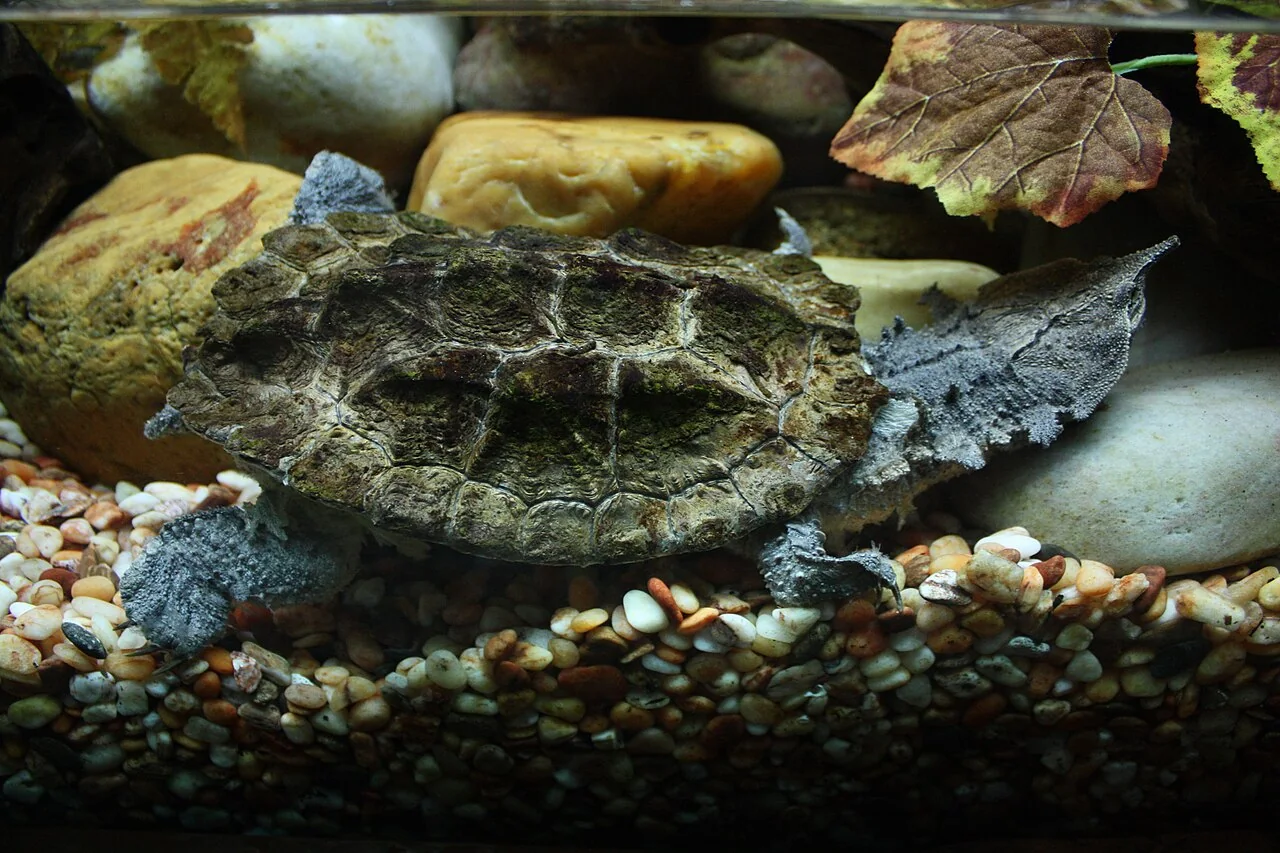
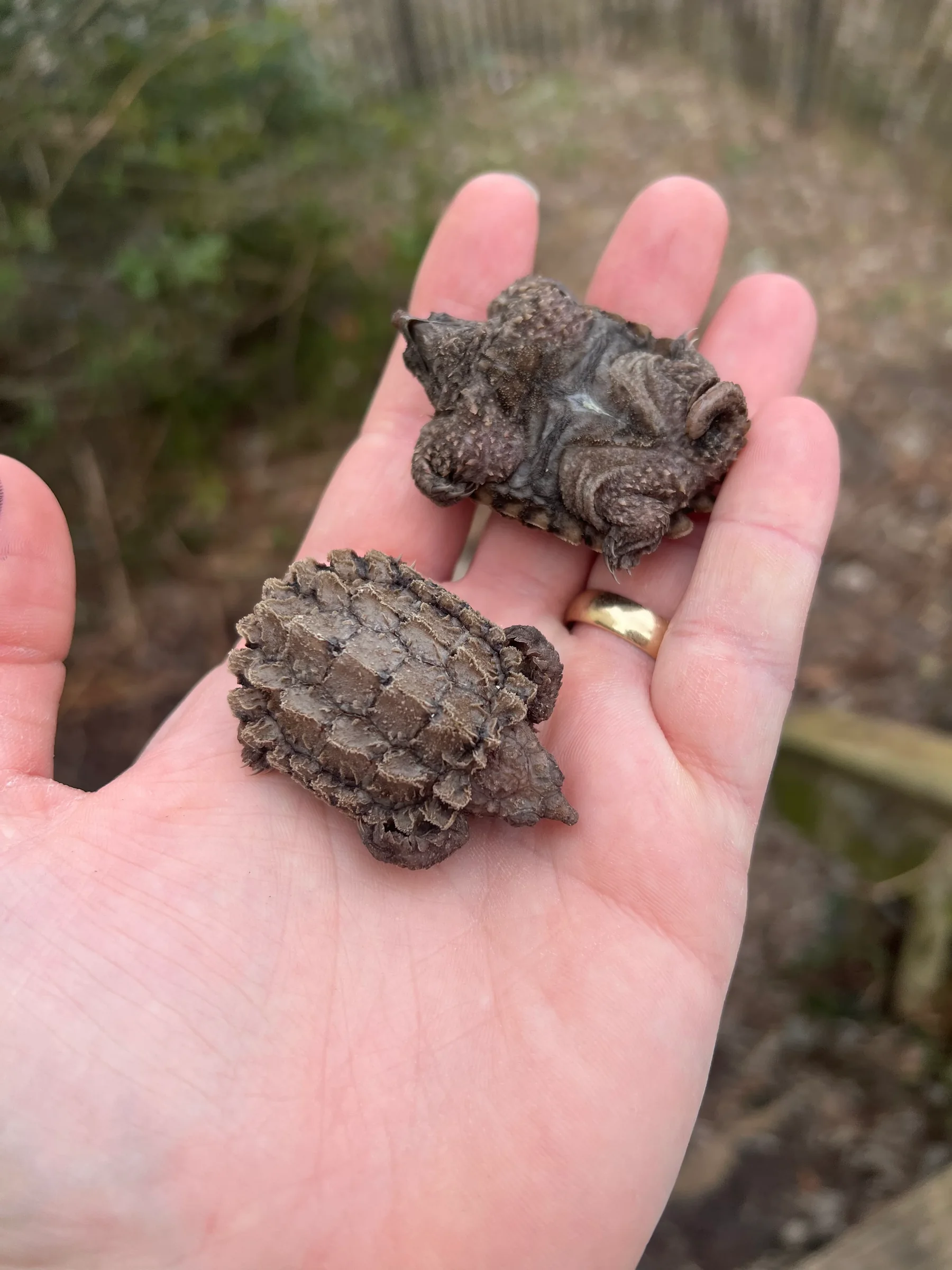
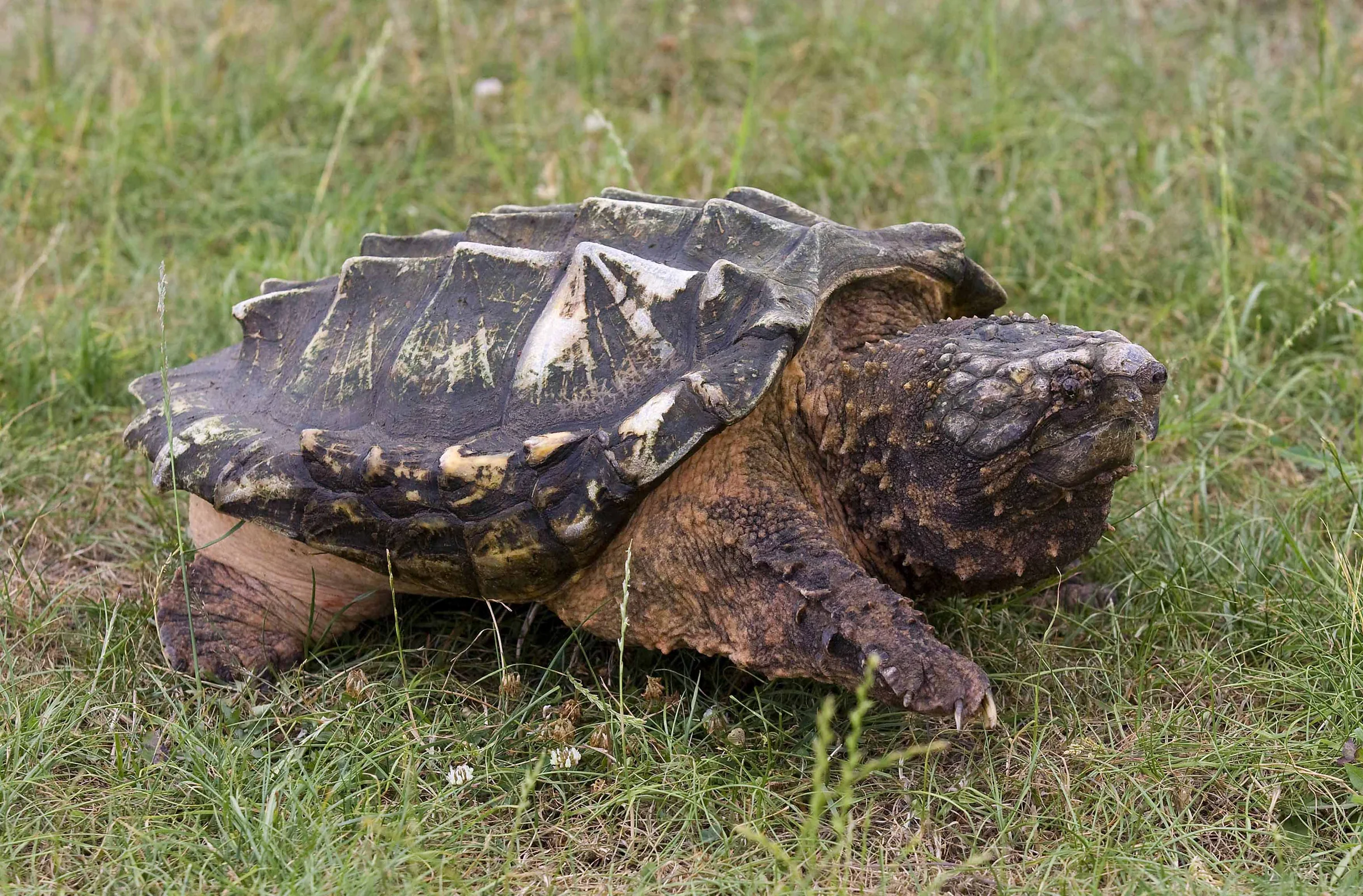
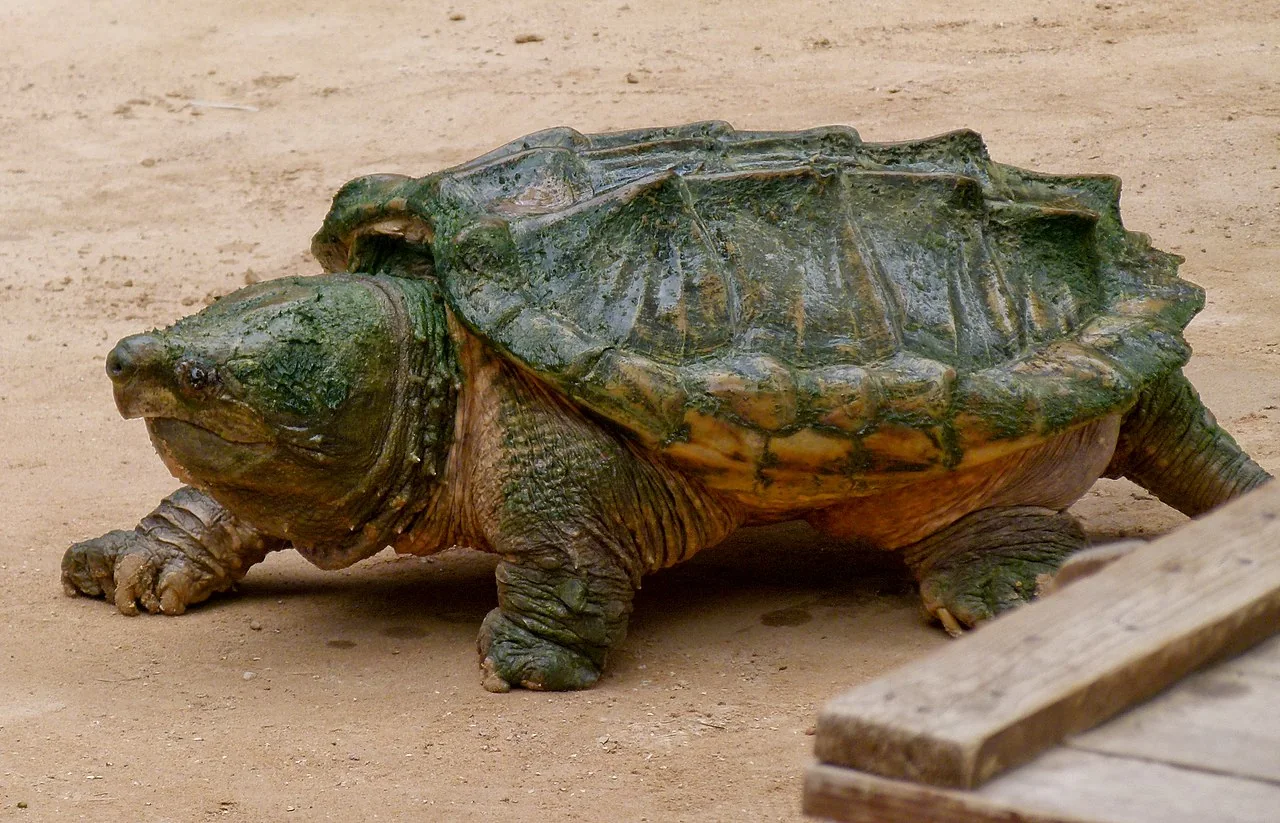
This species belongs to the snapping turtle family but differs from the more familiar common snapping turtle. Three raised keels run along the shell, the head is proportionally larger and fleshy projections around the eyes help break up its outline.
Adults are heavily aquatic. They usually walk along the bottom rather than swimming in open water, while females leave the water to nest on land. Slow growth and late maturity make lost adults difficult for a population to replace.
Alligator snapping turtle biology
How does the tongue lure catch prey?
The turtle lies still with its mouth open and moves a small pink appendage on the tongue. In murky water the movement can resemble a worm, drawing a fish toward the jaws while the rest of the turtle remains camouflaged.
The lure is one feeding method, not the animal's entire diet. Alligator snapping turtles also take prey they encounter and may consume molluscs, crayfish, carrion and other aquatic animals.
Alligator snapping turtle biology
Why does it look prehistoric?
The jagged shell, hooked beak, algae-covered back and thick tail resemble popular images of prehistoric reptiles. In biological terms, these are modern structures that provide camouflage, protection and feeding power in dark river habitat.
The turtle should not be handled. Its bite can cause serious injury, but it does not chase people on land or use the tongue lure against humans. Distance protects both the observer and the animal.
Alligator snapping turtle biology
Where does it live and what threatens it?
The species occupies connected river systems in the central and southeastern United States. Deep channels, submerged cover and access to suitable nesting ground all matter across its long life cycle.
Historic commercial harvest removed many breeding adults. Illegal collection, fishing bycatch, hooks, habitat alteration and nest loss remain concerns. The species was still proposed, but not listed, under the U.S. Endangered Species Act in the 2025 turtle checklist.
Conservation
Conservation status: Endangered
The IUCN category changed to Endangered in 2025. State protections vary, and a proposed federal threatened listing had not been finalized in the 2025 global turtle checklist. Long life, late maturity and low adult replacement make preventing avoidable deaths especially important.
Evidence and further reading
Alligator snapping turtle sources
Source 1 · U.S. Fish and Wildlife Service
Alligator Snapping TurtleUsed for: Range, anatomy, reproduction, threats and feeding lure.
Source 2 · IUCN Tortoise and Freshwater Turtle Specialist Group
Turtles of the World 2025Used for: Current IUCN and United States listing status.