Definition and identity
What is a Dong Tao chicken?
Dong Tao is an indigenous Vietnamese chicken breed rather than a separate species. It shares the domestic chicken's scientific identity but has a recognisable local breeding history and body form.
Research places the breed in Hưng Yên Province and describes it as a valued genetic resource. It has been raised for meat, household production and cultural status, with limited availability contributing to high prices.
Dong Tao chicken biology
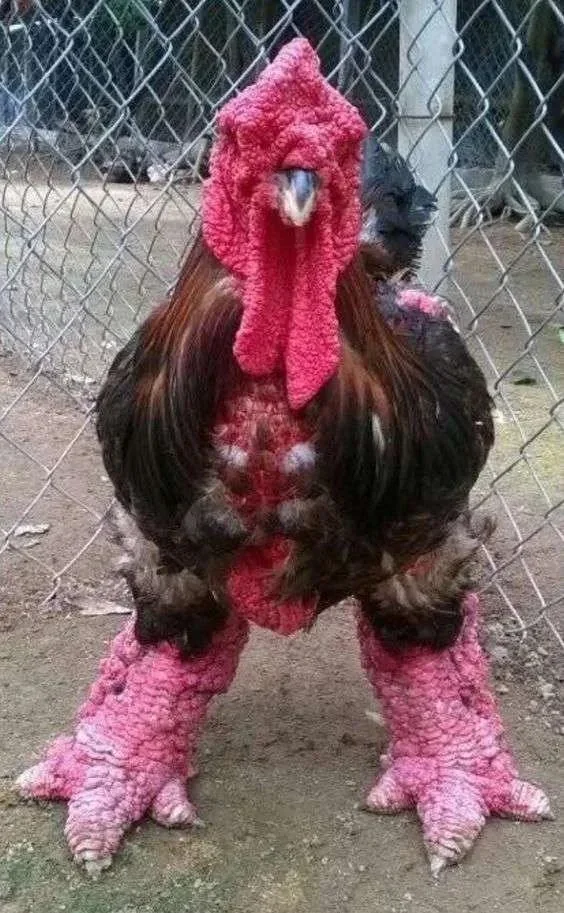
Why are Dong Tao chicken legs so thick?
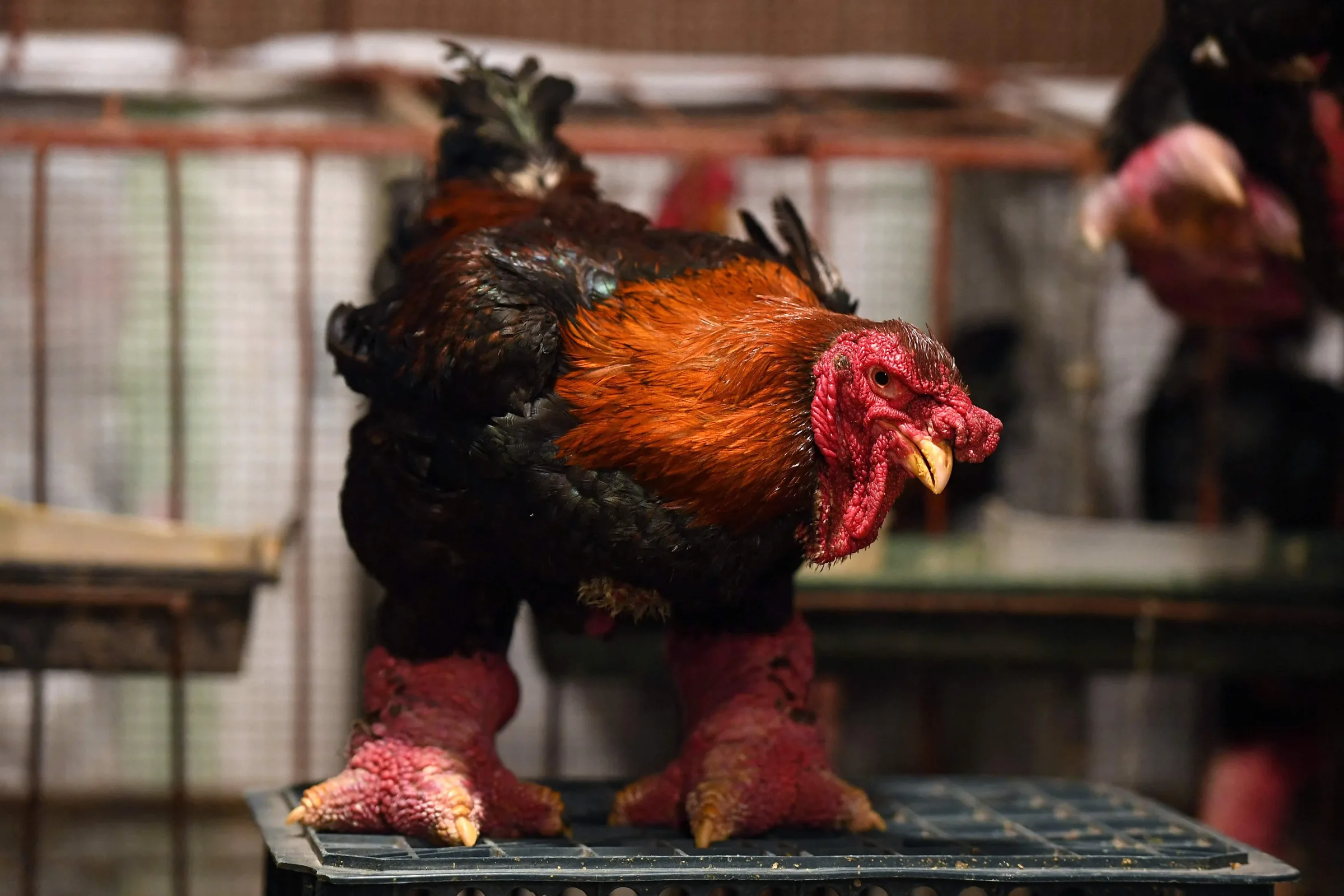
A detailed anatomical study found unusually thick and large tarsometatarsal bones and enlarged lower portions of related leg structures. The visible size therefore reflects bone and muscle morphology, not simply swollen skin.
The trait is a product of selective breeding. It should not be described as a survival adaptation that wild chickens evolved for a particular habitat, and extreme appearance alone does not diagnose disease.
Dong Tao chicken biology
Why do the scales look so unusual?
Large legs spread the normal arrangement of poultry scales across a much wider surface. Individual birds vary, and photographs often emphasise mature males with the most dramatic proportions.
The result challenges the familiar image of a chicken standing on narrow legs. Here the unusual body part reflects human selection, showing that not every animal in this collection was shaped mainly by natural selection.
Dong Tao chicken biology
What does research say about the breed?
Published studies describe growth, carcass traits, morphology and genetic diversity. A 2024 review also noted that evidence is still limited and that comprehensive comparisons with other breeds are lacking.
Claims about rarity, price or superiority change with location and market conditions. The durable biological point is the breed's distinctive leg morphology and its value as part of Vietnam's domestic animal diversity.
Conservation
Conservation status: Domestic breed
Wild-species Red List categories do not apply to Dong Tao chickens. Conservation in this context means maintaining a locally developed genetic resource, avoiding excessive inbreeding and preserving reliable breed records.
Evidence and further reading
Dong Tao chicken sources
Source 1 · Journal of Poultry Science
Musculoskeletal System of the Dong Tao FowlUsed for: Anatomy of the enlarged lower legs.
Source 2 · World's Poultry Science Journal
Dong Tao Chickens in Vietnam: A Critical ReviewUsed for: Origin, cultural use, morphology and evidence limitations.
Source 3 · Vietnam Journal of Agricultural Sciences
Growth, Carcass Yield and Meat QualityUsed for: Household production and measured growth traits.