Definition and identity
What is a common warthog?
The common warthog is one of two living warthog species. It occupies open habitats where grazing, digging and access to shelter are more important than dense body hair.
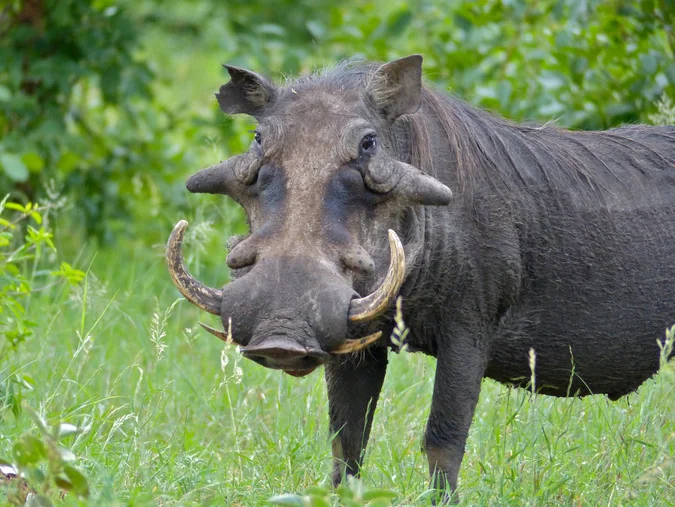
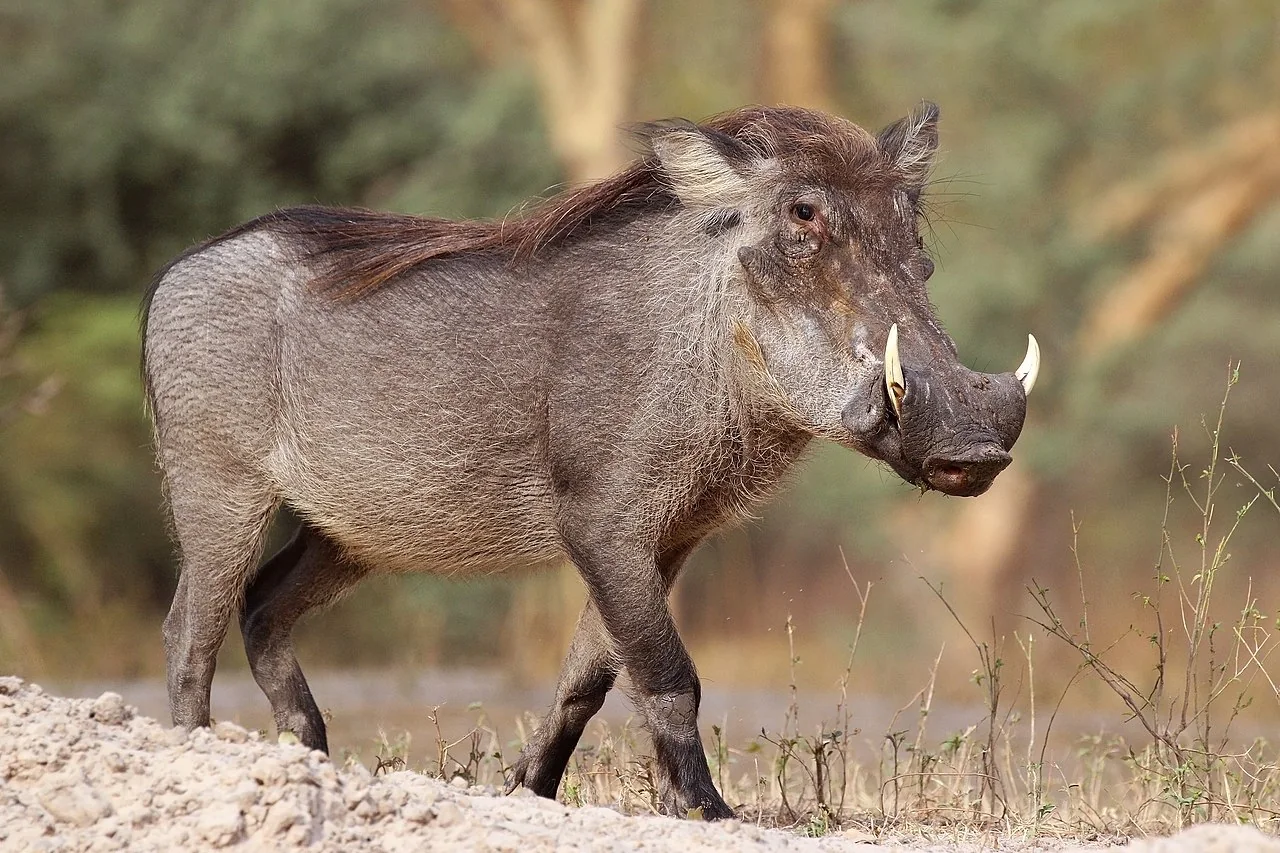
A large flat head supports tusks, jaw muscles and a broad muzzle. Sparse hair helps with heat, while a mane rises along the back and tail signals can remain visible above grass.
Common warthog biology
What are a warthog's warts and tusks for?
The facial warts are thick pads of connective tissue, not contagious growths. They are especially prominent in males and help protect the face during pushing and tusk contact.
Upper canine teeth grow into long curved tusks, while lower canines sharpen against them. Tusks serve in defence, competition and moving soil, though the snout and feet do much of the everyday foraging work.
Common warthog biology
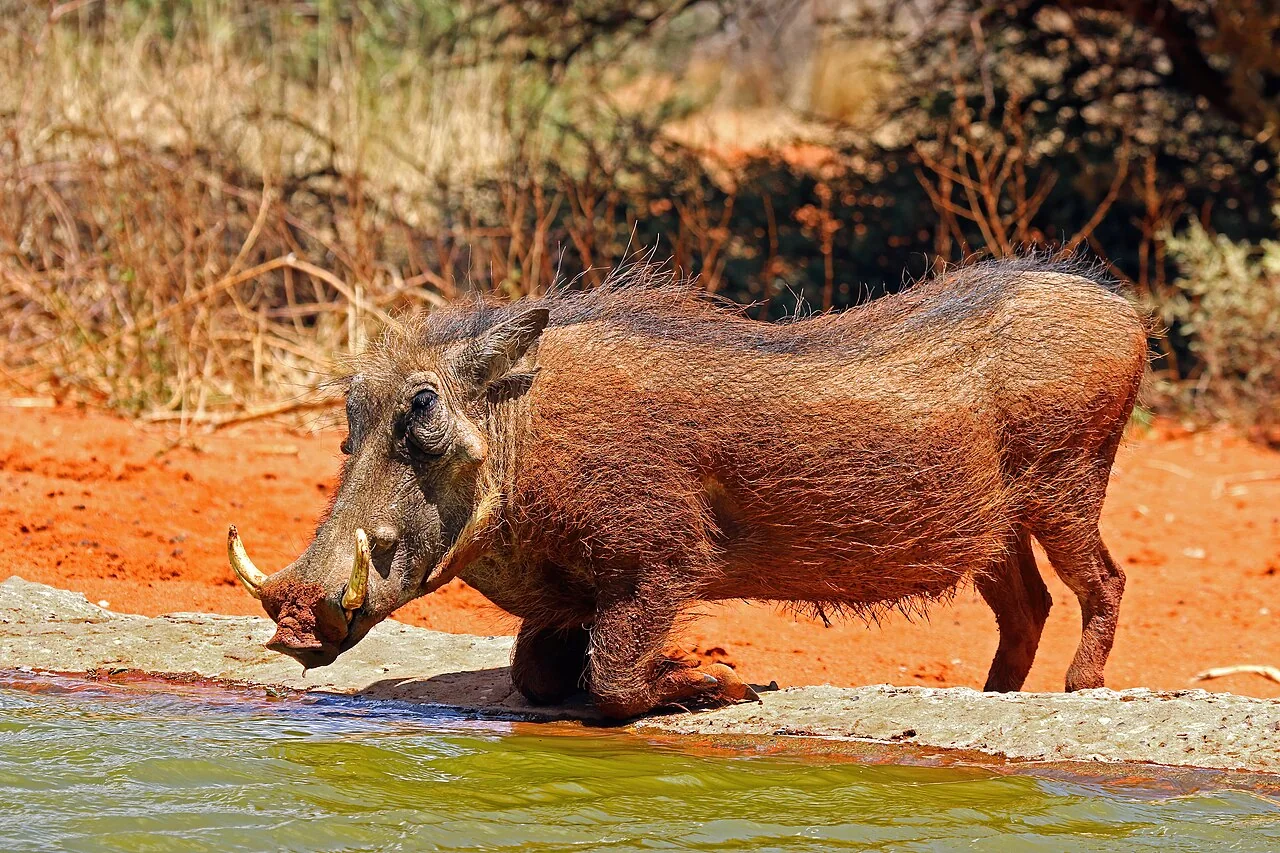
Why do warthogs kneel to eat?
Warthogs often bend their front legs and rest on padded wrists while cropping short grass. This posture brings the broad mouth close to low vegetation without requiring a shorter neck.
During dry periods they dig for roots, bulbs and rhizomes and may eat a wider variety of foods. They can survive seasonal change by adjusting both diet and activity.
Common warthog biology
Where do warthogs sleep and raise young?
They use burrows, often ones excavated by aardvarks, for shelter from weather and predators. A warthog commonly backs into the entrance so its tusks face outward.
The species remains widespread and Least Concern, but hunting, drought, fencing and disease can affect local groups. A broad global category does not describe every population equally.
Conservation
Conservation status: Least Concern
Common warthogs remain widespread across sub-Saharan Africa. Local abundance can still change with hunting, livestock disease, fencing, drought and loss of access to water or burrows.
Evidence and further reading
Common warthog sources
Source 1 · Animal Diversity Web
Phacochoerus africanusUsed for: Anatomy, tusk measurements, habitat, diet and behaviour.
Source 2 · Toronto Zoo
WarthogUsed for: Facial pads, tusks and external anatomy.