Definition and identity
What is a giant anteater?
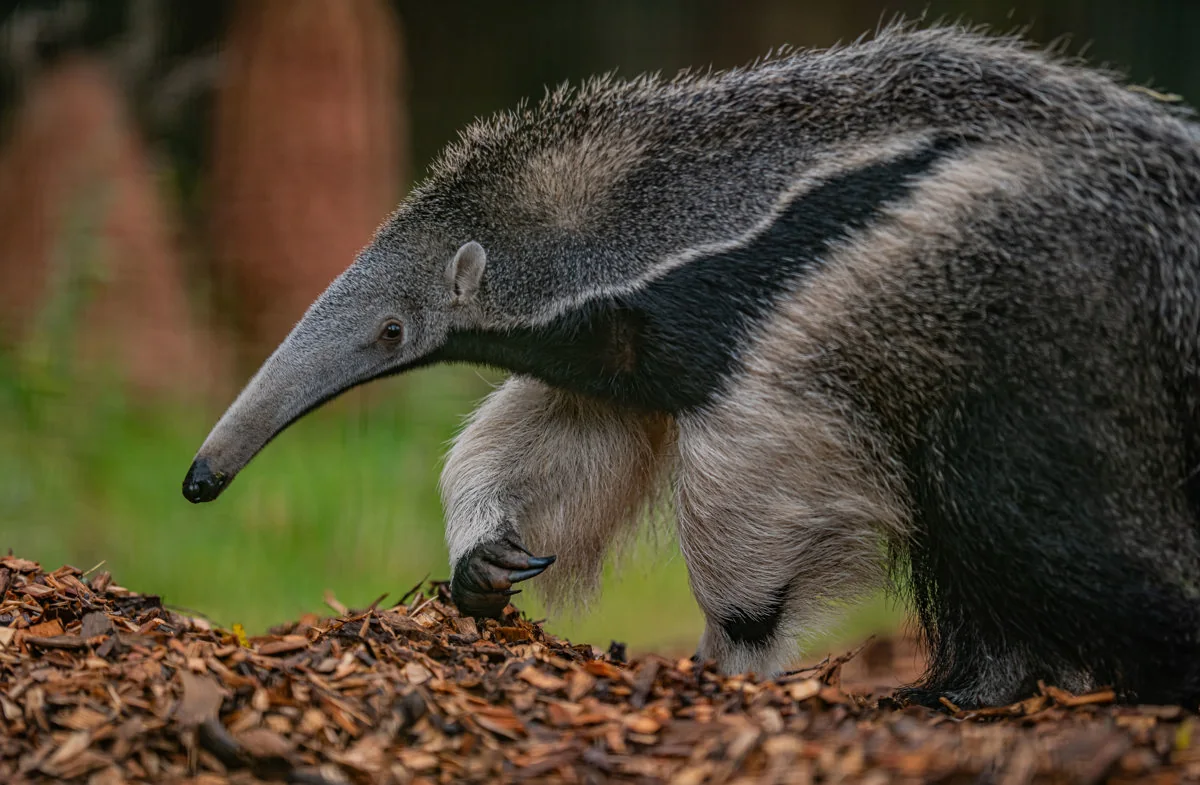
The giant anteater is the largest of the four living anteater species. It is a xenarthran, more closely related to sloths and armadillos than to bears or pigs.
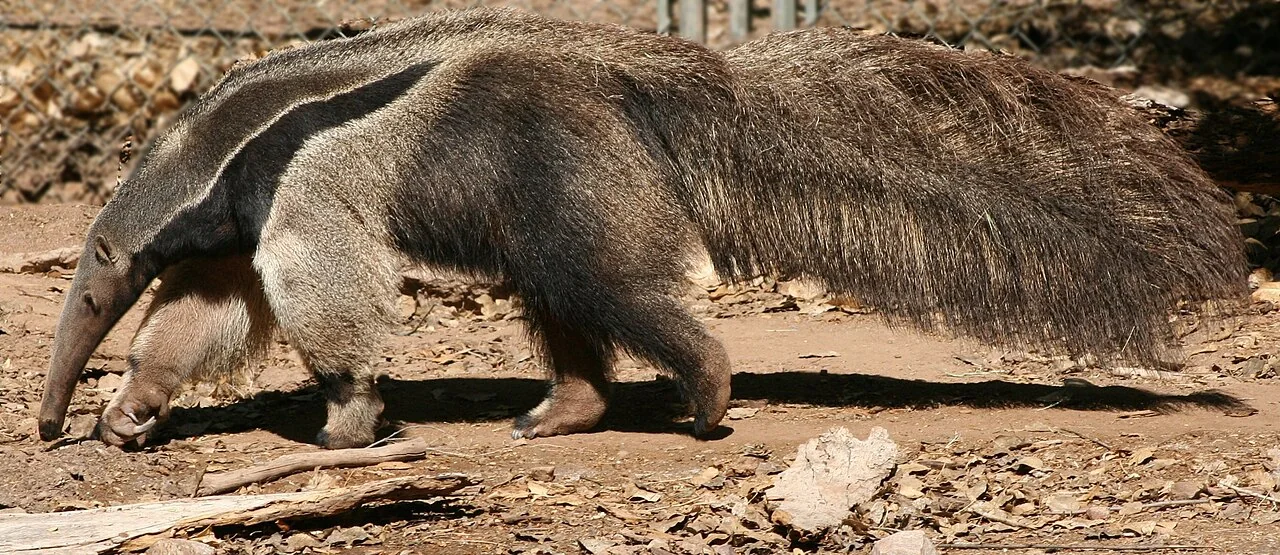
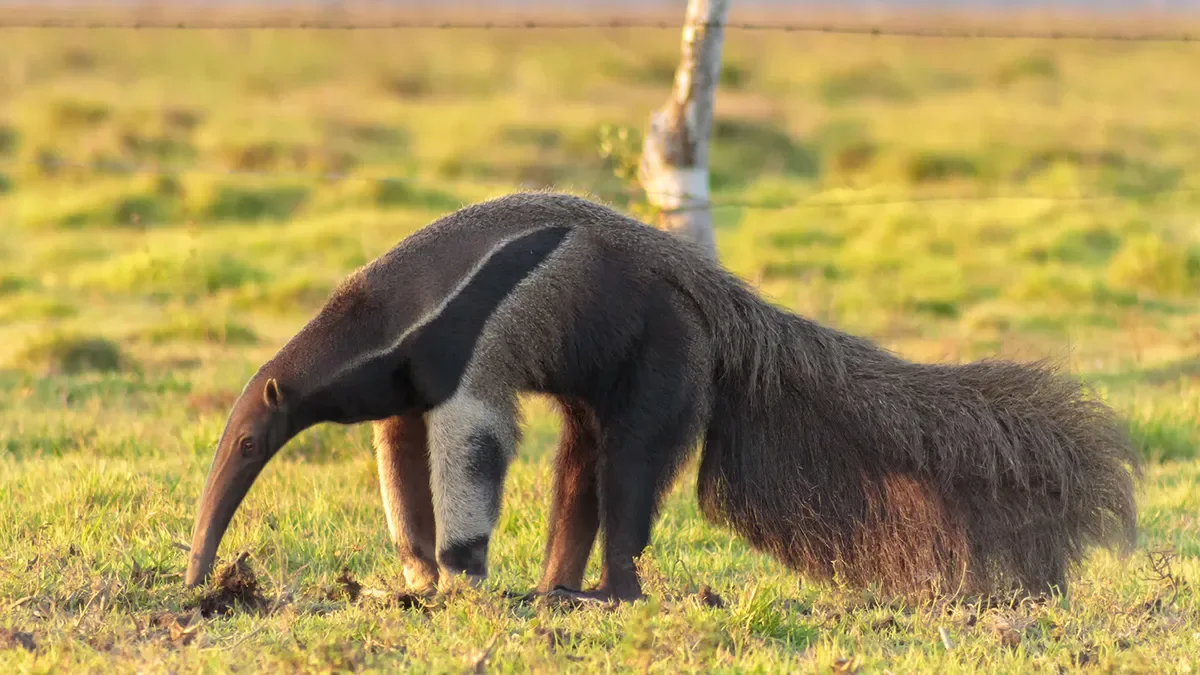
A black shoulder stripe, long tail and small head make the body appear strangely balanced. Each part serves movement, insulation, defence or the specialised task of opening insect colonies.
Giant anteater biology
How does a giant anteater eat without teeth?
Powerful front claws tear a small opening in an ant or termite nest. The animal then inserts a tongue coated with sticky saliva, flicking it rapidly in and out before defensive insects overwhelm the feeding site.
It takes a limited number of insects from each colony and moves on. Visiting many nests spreads feeding pressure and reduces the time spent exposed to biting ants or termite soldiers.
Giant anteater biology
Why does it walk on its knuckles?
The foreclaws are valuable tools and weapons, so the anteater curls them inward and walks on the sides of its front feet. This keeps sharp tips from wearing against the ground.
When threatened, an anteater may rear up, balance with its tail and strike with its forelimbs. Its narrow mouth should not be mistaken for helplessness.
Giant anteater biology
Where do giant anteaters live?
Giant anteaters use open grassland, wetlands and forest mosaics. They need enough insect colonies and cover, and their daily activity can shift in areas with more people.
Habitat conversion, road collisions, fire, hunting and low reproductive rate contribute to decline. Large home ranges make connected landscapes particularly important.
Conservation
Conservation status: Vulnerable
Giant anteaters have disappeared from parts of their former range. Habitat loss, vehicle strikes, uncontrolled fire and low reproductive output make connected, safely managed landscapes important to recovery.
Evidence and further reading
Giant anteater sources
Source 1 · Smithsonian's National Zoo
Giant AnteaterUsed for: Anatomy, feeding, habitat, behaviour and conservation.
Source 2 · Muséum national d'Histoire naturelle
The Giant AnteaterUsed for: Taxonomic identity and diet overview.