Definition and identity
What is a deep-sea anglerfish?
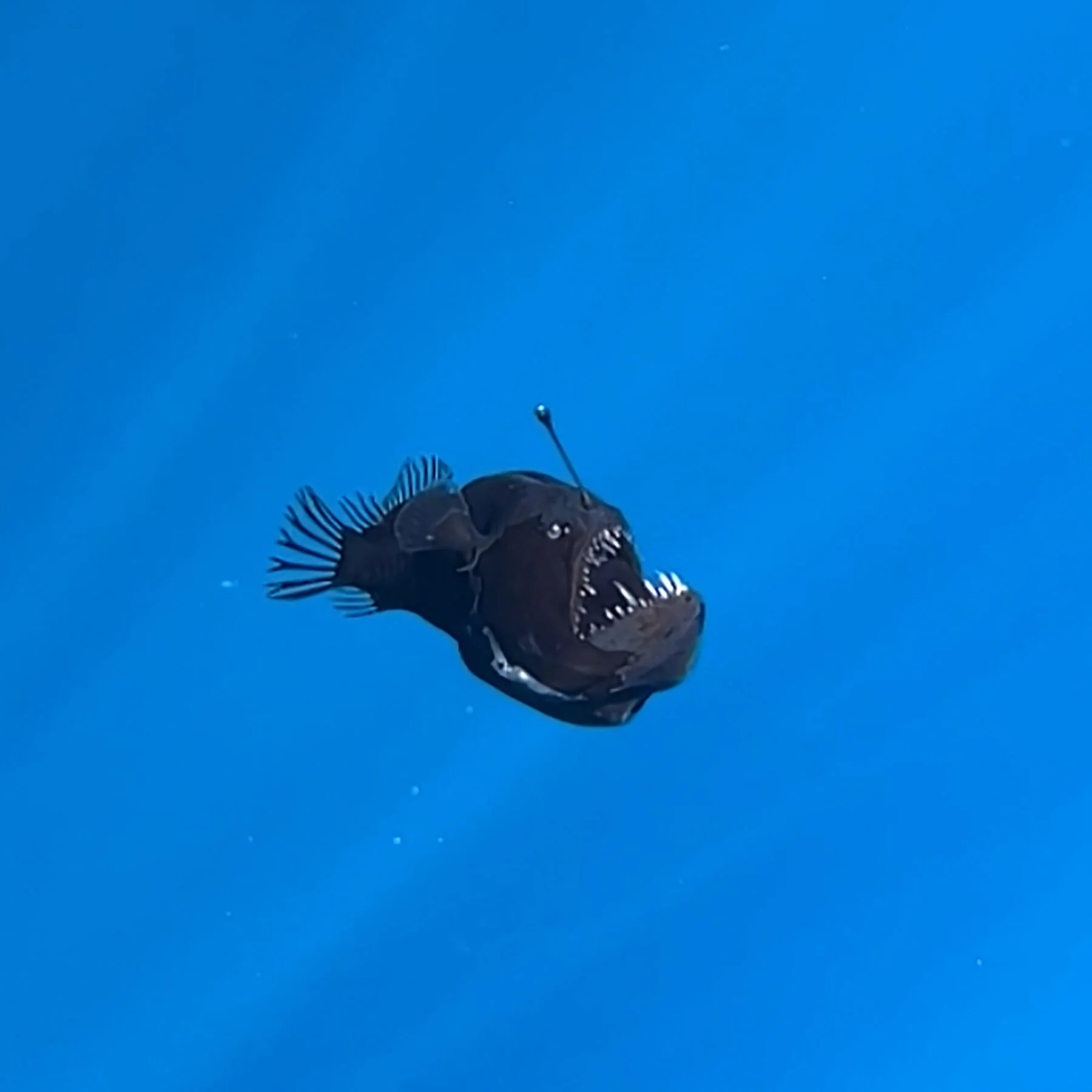
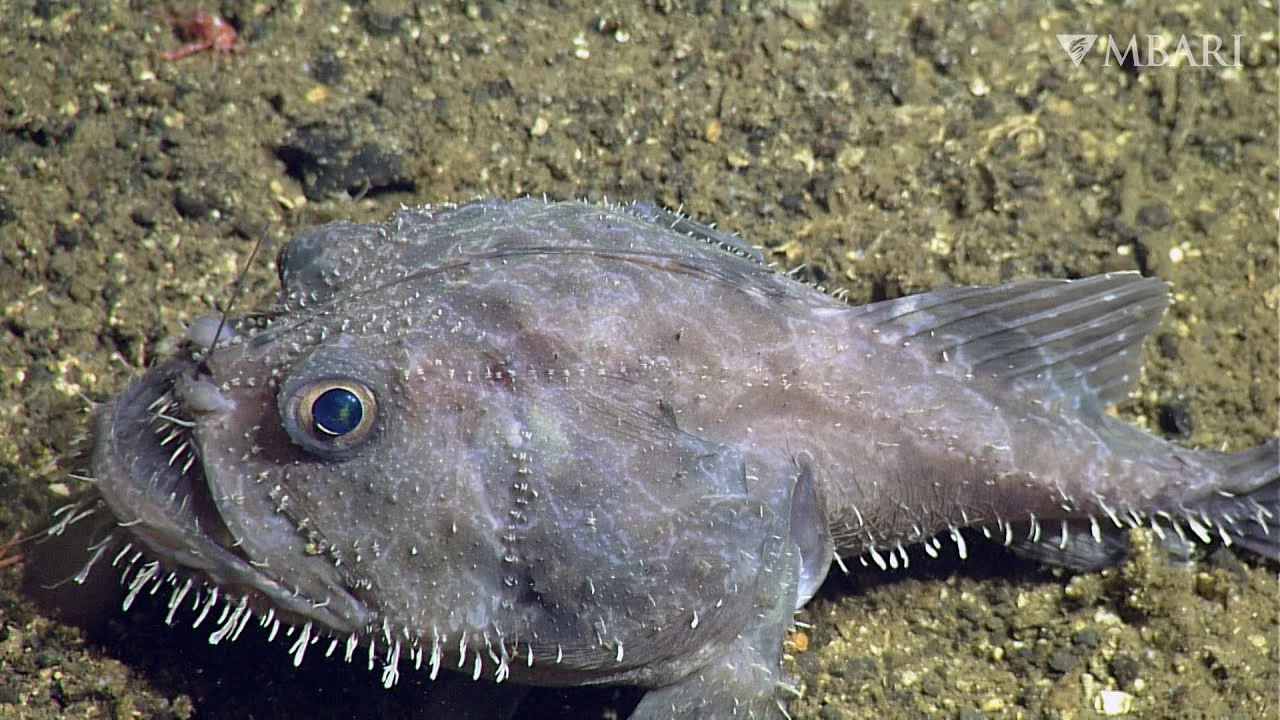
Anglerfish belong to the order Lophiiformes, which also includes shallow-water frogfish and bottom-dwelling monkfish. Deep-sea anglerfish usually refers to the pelagic ceratioid families that live away from the seafloor in dim or completely dark water.
Because the name covers many species, there is no honest single answer for maximum size, depth, colour or conservation status. The familiar image is usually an adult female; males of some species look so different that early specimens were once difficult to match with females.
Deep-sea anglerfish biology
How does the anglerfish lure work?
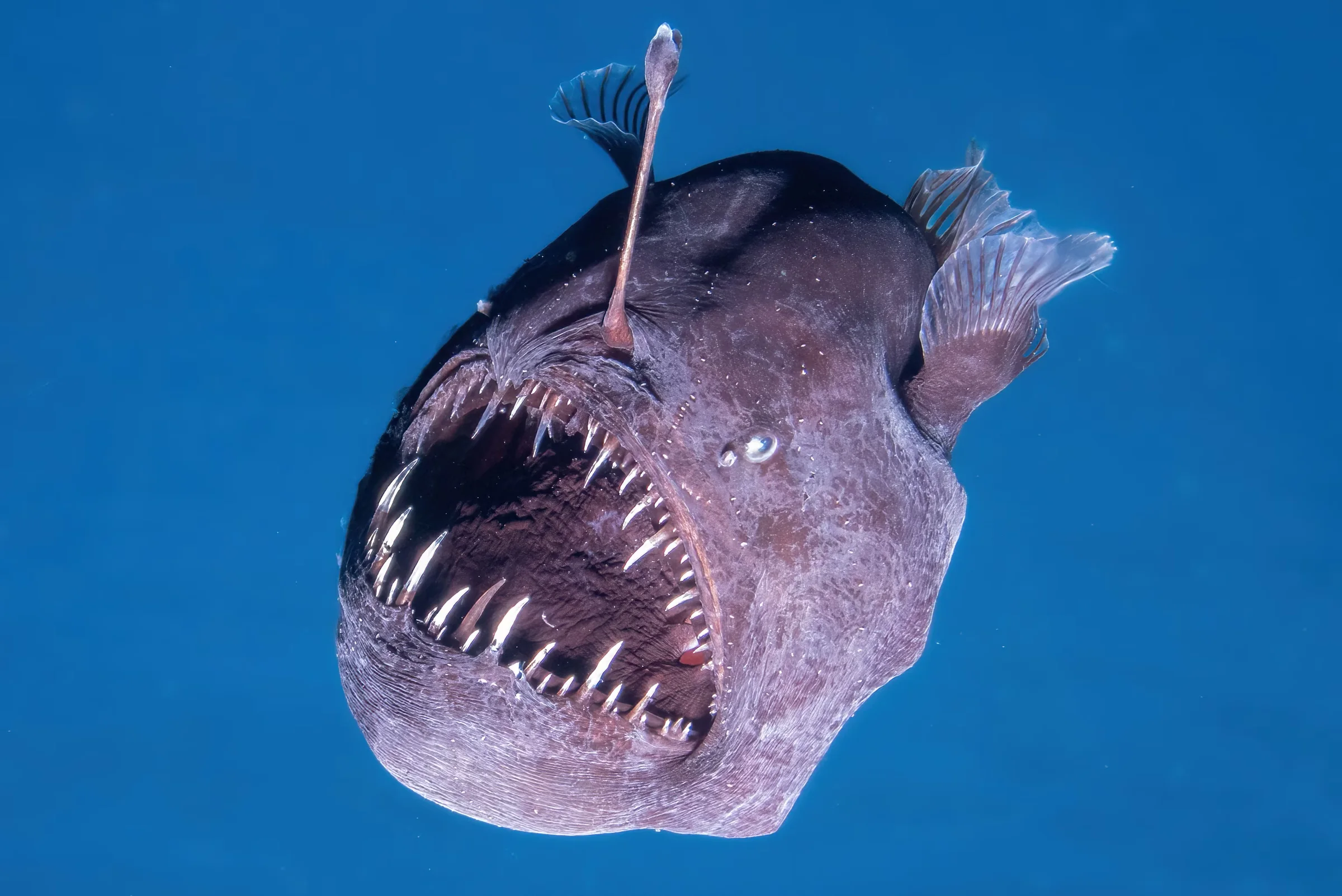
The lure grows from the first spine of the dorsal fin. A fleshy structure at the tip can produce light in many deep-sea species, often through a relationship with luminous bacteria. Movement and light can attract attention or help the fish inspect nearby animals.
A large mouth, expandable stomach and long teeth help some species take prey that is substantial relative to their own body. The teeth angle inward and help prevent captured prey from backing out.
Deep-sea anglerfish biology
Why are male anglerfish so small?
In several deep-sea lineages, tiny males locate females and bite onto them. In species with permanent attachment, tissues and circulation connect, and the male becomes a long-term source of sperm. Other anglerfish attach temporarily or mate without fusion.
This variation is important. The popular claim that every male anglerfish permanently becomes part of a female is false. Sexual parasitism evolved in some deep-sea groups, not across the entire anglerfish order.
Deep-sea anglerfish biology
Why do deep-sea anglerfish look frightening?
Human reactions focus on teeth, a dark body and a glowing object near the face. Those structures solve problems created by low light and widely scattered prey. A small, streamlined mouth would be less useful when feeding opportunities are rare.
Many published photographs show preserved specimens rather than living fish. Preservation can change body volume, colour and posture, so one image should not be used to describe every species or its appearance in the water.
Conservation
Conservation status: Varies by species
Deep-sea anglerfish are a multi-species group, so one Red List category would be misleading. Many species are poorly observed, and the absence of a well-known decline is not evidence that every population is secure.
Evidence and further reading
Deep-sea anglerfish sources
Source 1 · Smithsonian Ocean
Anglerfish Lure Prey Throughout the OceanUsed for: Taxonomic diversity, lure anatomy and family-level differences.
Source 2 · NOAA Ocean Exploration
Fishes of the Midnight ZoneUsed for: Deep-sea families, bioluminescence and mating adaptations.
Source 3 · Natural History Museum
The bizarre love life of the anglerfishUsed for: Species-specific variation in male attachment and sexual dimorphism.
Source 4 · MBARI
Dreamer anglerfish filmed alive in 4KUsed for: In-situ observation of lure deployment and live appearance.